History of the Strasbourg Christmas Market
It began with a sermon in 1570, nearly died in the 1970s and came back as the biggest event in France. Four and a half centuries of Christkindelsmärik.
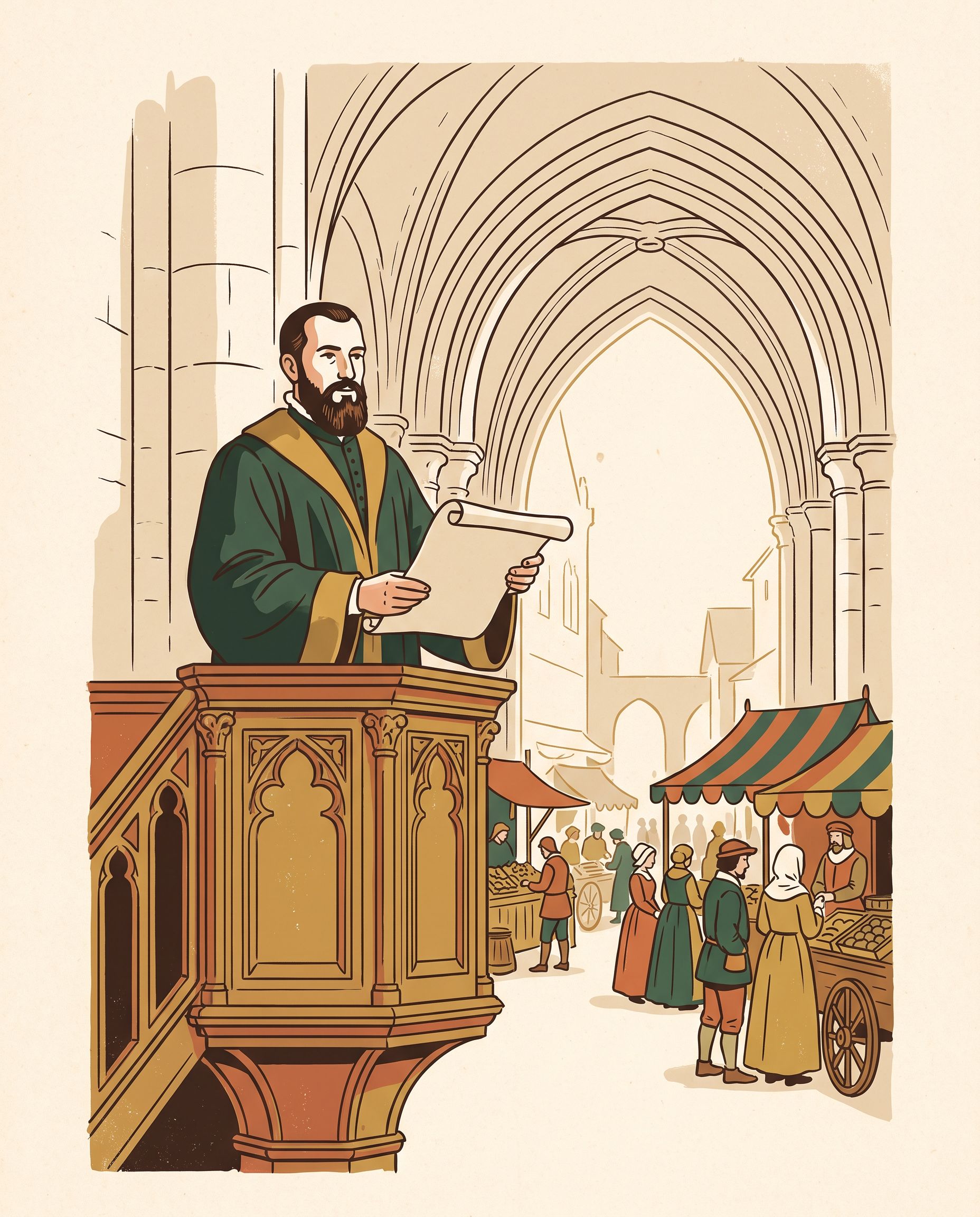
It all begins with a sermon. In 1570, in a Strasbourg cathedral that had turned Protestant, the preacher Johannes Flinner thundered from the pulpit against a custom he considered scandalous: giving children presents on Saint Nicholas' day, a cult of saints that, in his words, smelt of popery.
On 4 December 1570 the city's Council of Twenty-One ruled. The Saint Nicholas fair was abolished, but the traders could keep their market under new patronage, that of the Christ Child, the Christkindel.
The Christkindelsmärik was born, and with it the oldest Christmas market in France, still going 450 years later. If you have ever wondered why Christmas presents arrive on 25 December rather than on 6 December, part of the answer was decided here.
Before 1570: the Saint Nicholas market
Strasbourg did not wait for the Reformation to trade in winter. From the late twelfth century the Rhine valley had markets tied to the feast of Saint Nicholas, the Klausenmärik, held around 6 December.
Parents bought toys, gingerbread, sweets and candles there for the magical night of well-behaved children. In Strasbourg those huts ringed the cathedral.
The continuity therefore runs deeper than the official date suggests. The year 1570 did not create a market; it transformed one that had already existed for centuries.
1570: the Reformation renames Christmas
Strasbourg adopted the Reformation in 1525. The Saint Nicholas market then became a theological problem: to Lutheran pastors, celebrating a saint was Roman idolatry.
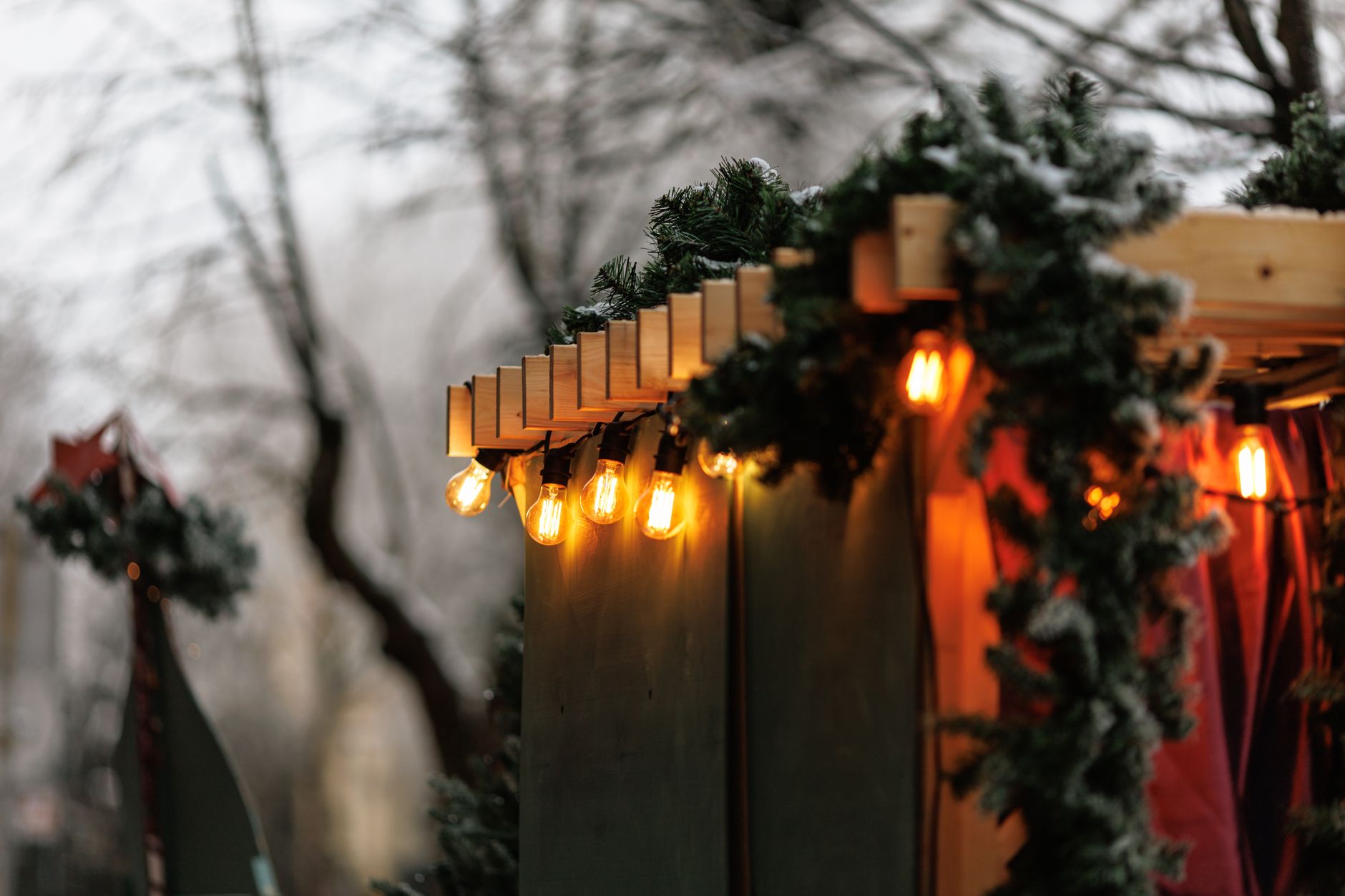
The 1570 solution was a masterpiece of pragmatism. Keep the market, change the patron. Presents would no longer be brought by Saint Nicholas on 6 December but by the Christ Child on the night of 24 December. In passing, Strasbourg had just invented something that now seems obvious: presents at Christmas.
A pleasing detail: in Alsace the Christkindel is traditionally embodied as a female figure, a young woman dressed in white and crowned with light, cousin to Scandinavian figures such as Saint Lucy. Local folklore never entirely surrendered to doctrine. Her story, and that of Hans Trapp who accompanies her, is on our page about the Christkindelsmärik on Place Broglie.
Four centuries of moving house
The market was first held near the cathedral, on the Fronhof, today's Place du Château. In 1785 the Baroness of Oberkirch described a fair "intended for children" that ran until midnight in the week before Christmas. Then the market followed the changing city.
- Around 1830: a move to Place d'Armes, today's Place Kléber, in the commercial heart of the city.
- 1848: a brief spell in front of the old railway station, now Place des Halles.
- 1863: the city lines up "handsome huts" on Place Kléber and restricts the list of permitted goods, to preserve the link with the Nativity. The argument about how authentic the market is did not start yesterday.
- 1870 to 1871: the move to Place Broglie, the former horse market, which remains its historic address to this day.
Only the First World War interrupted the tradition, from 1914 to 1918. In the 1960s the Christkindelsmärik, open from 1 to 24 December, was still above all the market of Strasbourg's own residents.
People came for their glass baubles from Meisenthal, their gingerbread from Gertwiller and their tree from the famous "fir alley", to be decorated only on the evening of the 24th, as local custom required.
The 1970s and 1980s: the market that nearly died
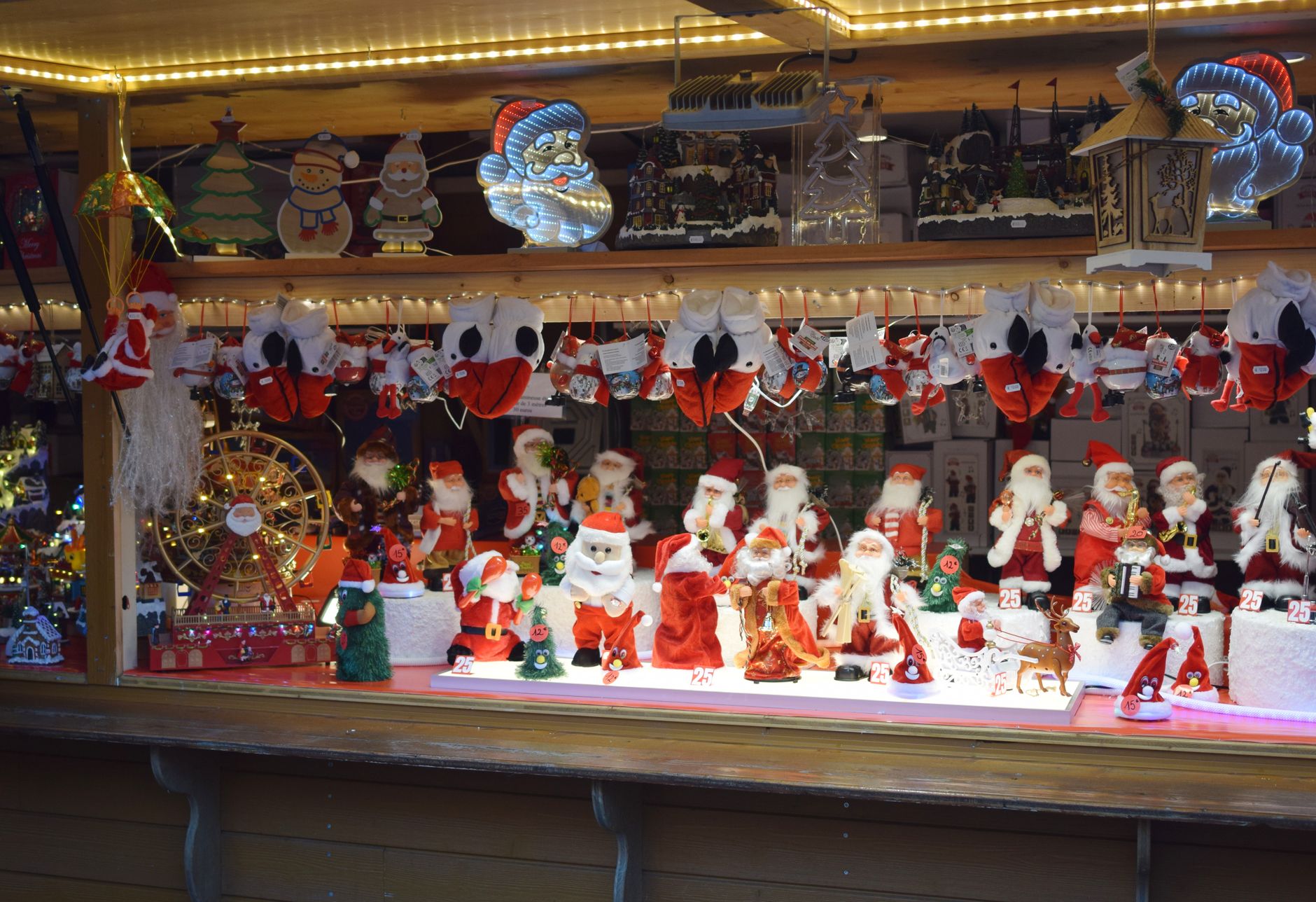
This is the chapter nobody tells: the Christkindelsmärik came very close to disappearing. Undercut by supermarkets and by German shops on the far bank of the Rhine, and considered expensive, it went through two decades of stagnation.
A cartoon by the satirist Germain Muller summed up the era: disappointed Parisians in front of a closed market and unlit streets on the evening of 24 December. Strasbourg, capital of Christmas? Not yet.
The spark came from elsewhere. In 1987 the small market at Kaysersberg, built on cultural and spiritual foundations, drew 200,000 visitors a year. The region saw the potential and launched a campaign under the line that Christmas has a homeland, and it is Alsace.
1992: the Capital of Christmas is born
Strasbourg answered on a grand scale. In 1992 the city declared itself the Capital of Christmas, spread the market across a dozen squares and pulled the whole thing under one identity.
The success was spectacular: around 2 million visitors a year through the 2010s, the title of best Christmas market in Europe in 2014, and now more than 3 million visitors, with 3.4 million in the record year of 2024 and 3.05 million in 2025 according to municipal reviews, for roughly 250 million euros of economic impact.
The market has not stopped changing since. The charitable Village du Partage arrived on Place Kléber in 2002, the social economy Marché OFF launched in 2015, a citizens' jury has driven reform since 2021 with short supply chains, energy saving and wider aisles, and the event was certified ISO 20121 for sustainable events in 2025.
A municipal commission even polices the authenticity of what is sold: churros and paninis banned, choucroute and tarte flambée encouraged.
The recent trials
Recent history has its dark pages too. On 11 December 2018 a terrorist attack struck the market and cost five people their lives. The city has since reinforced a security system that had already been strengthened after the Berlin attack of 2016, with a pedestrian perimeter and checks at every entrance to the Grande Île.
And in 2020, for the first time in centuries, the pandemic cancelled the market. Only the Great Tree stood on Place Kléber, the symbol of a tradition that bends without breaking.
What this history changes about your visit
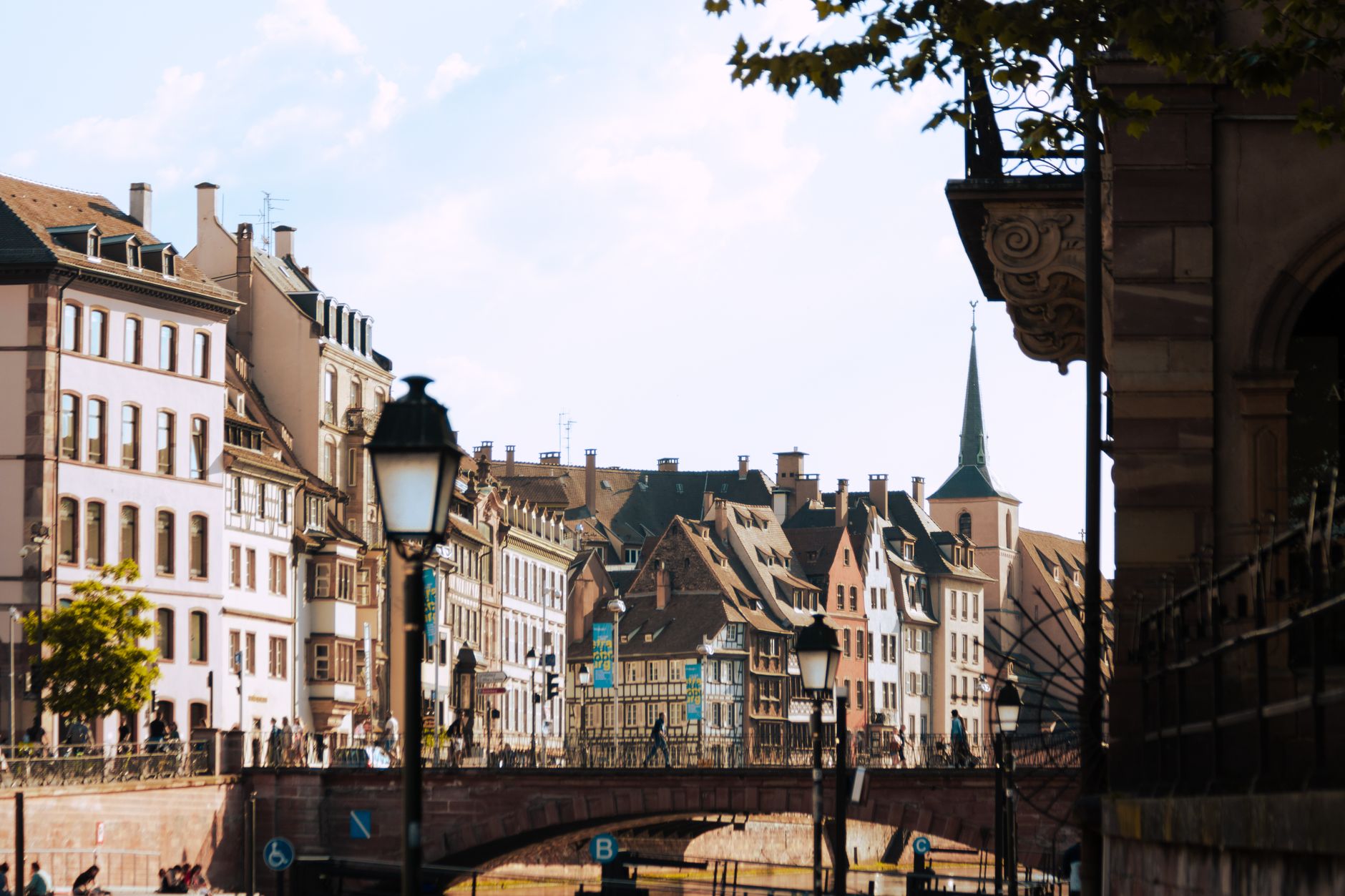
Knowing the story of the Christkindelsmärik changes the walk. Place Broglie stops being a row of chalets and becomes a stage where 150 years of tradition are replayed every winter.
Walking past the cathedral reminds you where the whole thing started, on the square at its foot. And the Great Tree on Place Kléber takes on another dimension once you know what it stood for, alone on an empty square, in 2020.
For organising the visit itself, our complete guide to the Christmas market and the map of the markets take over.
Sources
Archives and historical notes (the Council of Twenty-One decision of 4 December 1570, the Baroness of Oberkirch's account of 1785), the official noel.strasbourg.eu site and its history section, encyclopaedias and historical summaries (Clio-Texte, France Bleu Alsace), municipal reviews from 2022 to 2025 for the attendance figures.
Frequently asked questions
How old is the Strasbourg Christmas market?
Why was the market renamed in 1570?
Has the market always been on Place Broglie?
Has the Strasbourg Christmas market ever been cancelled?
Is Strasbourg really the oldest Christmas market in Europe?
Margot Keller
A Strasbourgeoise by choice for fifteen years, Margot looks after the practical pages and the Christmas market file. Every year she walks the markets from opening day, to tell the honest mulled wine from the tourist trap.