Things to Do in Colmar: The Day, Done Properly
Colmar is half an hour from Strasbourg and easy to get wrong. The two museums close on different days, and one of them shuts for all of January.
Colmar is the easiest day trip in Alsace and the one most often booked on the wrong day of the week. The train from Strasbourg takes 26 to 35 minutes and runs every 30 minutes, so the logistics solve themselves.
What actually decides whether your day works is which day you choose, and almost every guide buries that at the bottom of the page. Here it is at the top.
The day of the week decides your visit
The Musée Unterlinden closes on Tuesdays. The Musée Bartholdi closes on Mondays, and for the whole of January.
So a Tuesday in Colmar costs you the Isenheim Altarpiece, which is the main reason most visitors make the trip at all. A Monday in January costs you both museums at once, and leaves you with a very pretty walk.
Unterlinden also closes on the main French public holidays. If your dates are flexible, aim for Wednesday to Sunday and stop thinking about it. If they are not, read on: the town is still worth the train, but it becomes a different day out.
Musée Unterlinden and the Isenheim Altarpiece
This is the main event, and for anyone with an interest in art it justifies the journey on its own. The museum stands on Place Unterlinden in a former Dominican convent, extended by a modern building from Herzog and de Meuron.
The Isenheim Altarpiece by Grünewald is displayed so that you can see its different openings, and it is one of the few paintings in Europe that stops people mid sentence. Around it: fine art from the Middle Ages to the twentieth century, archaeology and decorative arts.
| Ticket | Price |
|---|---|
| Adult | €14 |
| Ages 12 to 17, students under 30 | €9 |
| Reduced (income support, jobseekers, disability) | €6 |
| Weekly closing day | on Tuesdays |
| Suggested visit | 2 to 3 hours, 3 to 4 in depth |
One honest note about the altarpiece. If you care about art or religious history, give it at least an hour and it will repay you. If museums bore you, it is still a strong ten minutes, but the town is what will make your day, not the building.
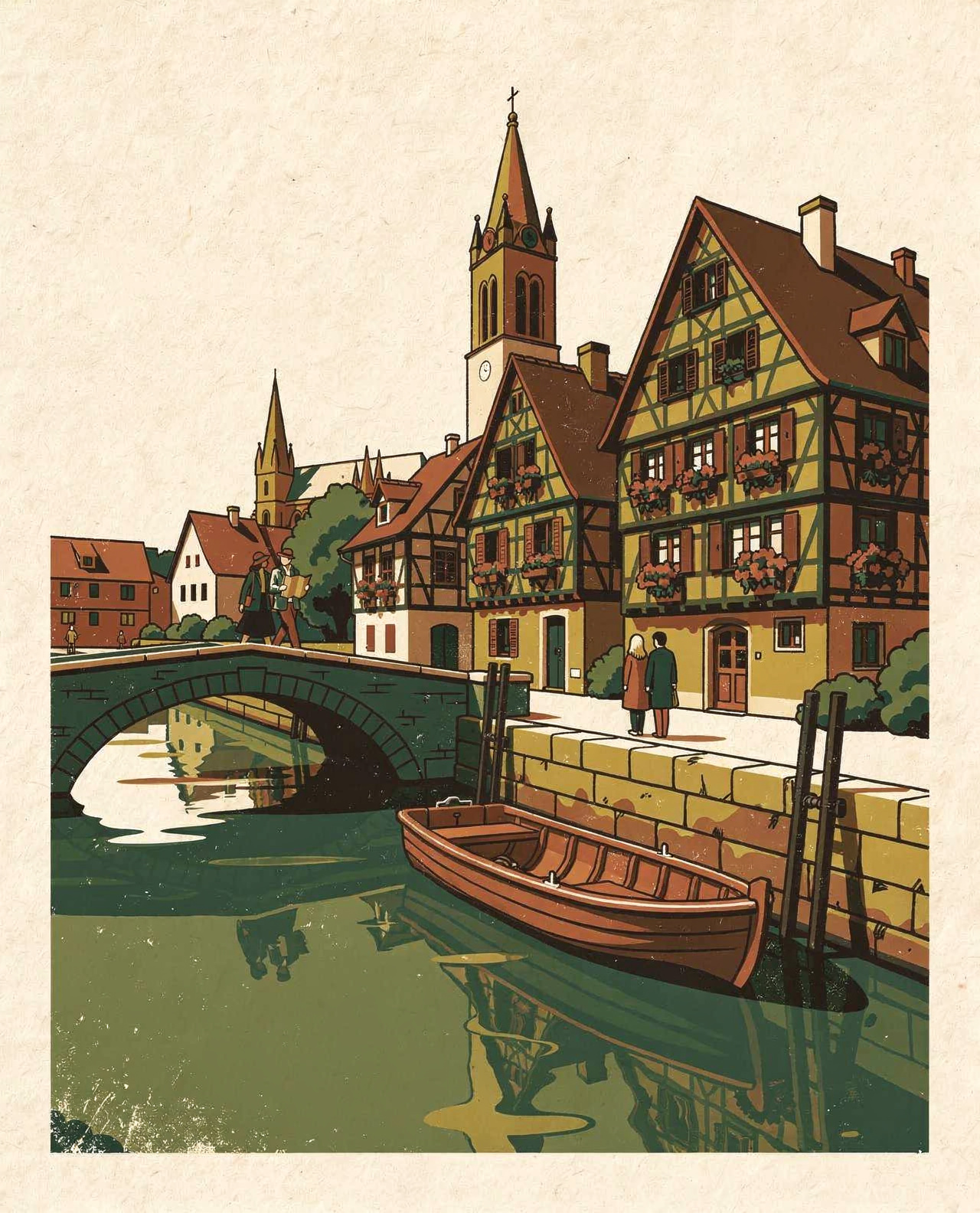
Petite Venise and the old town on foot
The good news is that most of Colmar is free and happens outdoors. The old town is compact, and everything below sits within a fifteen minute walk of the station.
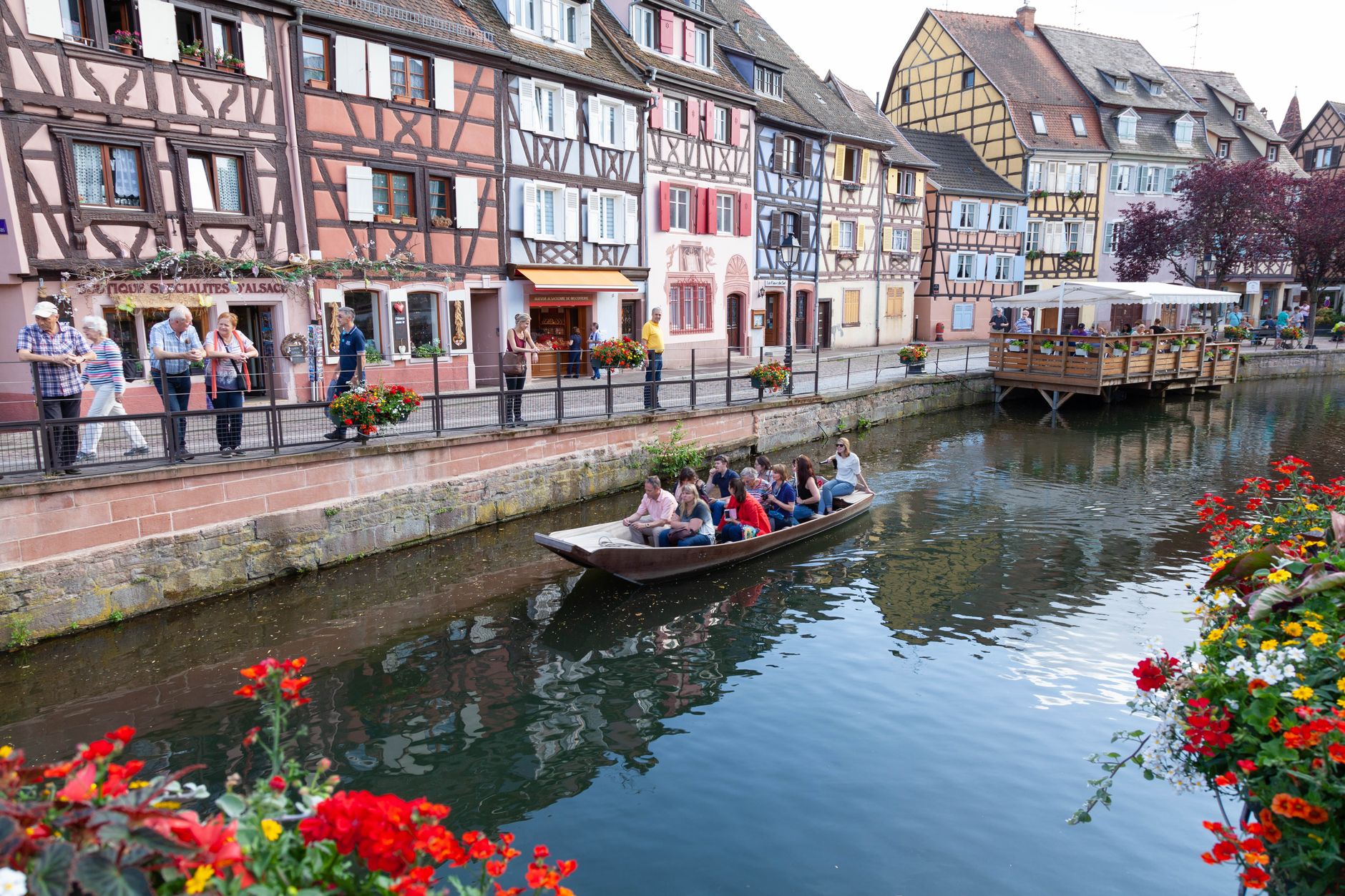
- Petite Venise, around the quai de la Poissonnerie and rue Turenne. The canal view everyone photographs, open at any hour, 12 to 15 minutes from the station.
- The Tanners' quarter, with its tall half-timbered houses built with open lofts for drying hides. Free, 8 to 10 minutes from the station.
- The covered market on the quai de la Poissonnerie, free to enter and a better lunch than most of the terraces outside. Hours vary through the week, so check on the door.
- The Collégiale Saint-Martin and the Maison Pfister at 11 rue des Marchands, whose façade you can admire for nothing at all.
The order that works, walking out of the station: the Tanners' quarter first, then the covered market and Petite Venise, then back up through rue des Marchands to the Maison Pfister and the Collégiale. That puts the canals in front of you before the coach parties reach them, and leaves the museums for the afternoon.
One practical detail nobody mentions: Colmar has no tram. Everything is done on foot from the station, which is perfectly comfortable, because the town is small and flat.
Musée Bartholdi and the Statue of Liberty
Auguste Bartholdi, who sculpted the Statue of Liberty, was born at 30 rue des Marchands, and his birthplace is now a museum. Models, drawings and sculpture, including work for the Lion of Belfort.
Admission is €5, which makes it the best value hour in Colmar. It closes on Mondays and for the whole of January, so it is the first thing a badly timed trip loses.
Allow an hour, or an hour and a half if sculpture is your subject. Combined with the Maison Pfister and the Renaissance façades of rue des Marchands, it makes a tidy loop of about an hour on foot.
The flat-bottomed boats
The boat trip through Petite Venise is the signature activity, and it is short. Flat-bottomed boats worked by local boatmen, coordinated by the tourist office under the name Colmar au fil de l'eau.
The season does not cover the whole year, and the queue gets long in summer and during the Christmas market. We are not printing an adult fare here, because the published figure is not clear enough to trust: ask at the tourist office when you arrive.
If you only have three hours in town, this is not the priority. If you have a full day, or a child who has just walked past four canals without being allowed on any of them, it is.
How long you need
All three formats end the same way, with an evening train back to Strasbourg, which is where your bed should be. Strasbourg has the rooms, the restaurants and the late connections, and this one is three minutes from Place Kleber for anyone who wants the walk home to be a short one.
Sofitel Grande Île★ 4,5 · 3,538 reviews
Three hours
What an unhurried morning departure and an afternoon return actually give you. Old town and Petite Venise on foot in an hour to an hour and a half, then a fast pass through Unterlinden aimed at the altarpiece and the main hall.
What you lose: a calm museum visit, the Bartholdi entirely, and a proper sit-down lunch. You will eat standing up, and you will feel it.
A full day
The right format. Leave Strasbourg around nine, walk the old town and Petite Venise before lunch, eat sitting down, then do Unterlinden in the afternoon once the morning coach groups have gone. Add the Bartholdi or the boats if there is time, and come back in the early evening.
Half a day
Workable if you give up on the museums and concentrate on the streets. Colmar is still beautiful without them, and the old centre stands up on its own.
What does not work is trying to bolt a wine village on to the same day. The villages are a bus ride beyond Colmar, and squeezing one in turns a good day into two rushed half days with a lot of waiting in between. Give the villages their own day, or skip them.
Getting there and getting around
That last paragraph is the one that catches people out: the villages sit a bus ride beyond Colmar, on services never designed for visitors. The guided day to Colmar, Riquewihr, Eguisheim and the Haut-Koenigsbourg is the version that chains them, and the trade is a shorter stop in Colmar itself.
From Strasbourg, trains take 26 to 35 minutes and run every 30 minutes during the day, starting early and returning into the late evening. There is no logistics problem to solve.
Coming from further afield, the sensible route is Paris to Strasbourg in 1 hr 45 min, then Colmar as a day out. Strasbourg has more rooms, more trains and more waiting for you when you return in the evening.
Colmar is also the gateway to the wine route villages. Eguisheim sits about 6 km away, roughly 4 miles, and Riquewihr, Ribeauvillé and Kaysersberg are reached by bus from Colmar station rather than by train, on seasonal or regular services depending on the time of year.
Eating in Colmar
The same rule as Strasbourg, only more so: the terraces on Petite Venise and along rue des Marchands are calibrated for people passing through once. Step two streets away and the cooking changes noticeably.
We do not publish a list of Colmar addresses. We have not tested them ourselves, and our verification work covers Strasbourg. Trust recent reviews over the biggest sign on the street, and book ahead for dinner at weekends.
So, is Colmar worth visiting?
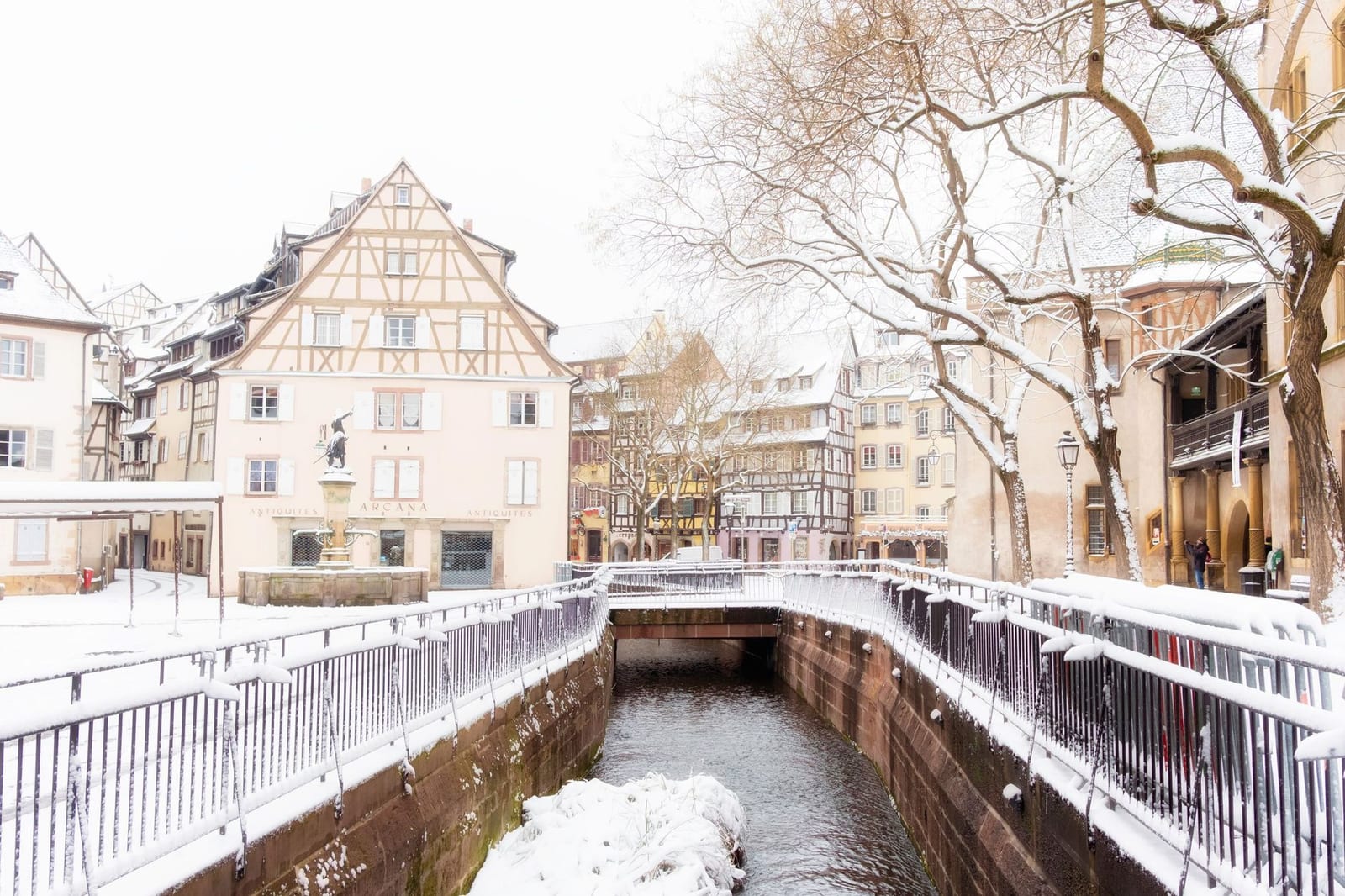
Yes, on one condition: go on a day when the museums are open, or go knowing that you are coming for the streets. Both are legitimate trips. Confusing them is what produces the disappointed reviews.
It is worth it if you like painting, architecture, or simply walking through a small town that has kept its shape. It is less worth it if you need a big city day out, or if the only slot you have is a Saturday in August spent behind coach groups.
The quietest hours are the first ones. Unterlinden is calmest at opening and again late in the afternoon, and the canals belong to the residents until the mid morning trains arrive. A weekday outside the French school holidays turns the whole day into a different experience.
Two of the biggest names in Colmar cost nothing at all, which is worth saying plainly. Petite Venise and the Tanners' quarter are streets, not attractions, and nobody sells tickets for them. Budget for one museum, one sit-down meal and the train, and the rest of the day is free.
In December it becomes a different proposition entirely, beautiful and packed at the same time. We set out that trade-off in our guide to the Colmar Christmas market.
To plan the rest of your trip, browse our attractions and our itineraries.
Frequently asked questions
Is Colmar worth visiting?
Which day should I avoid in Colmar?
Can you do Colmar as a day trip from Strasbourg?
How long do you need in Colmar?
How much does the Musée Unterlinden cost?

Théo Lindner
Théo grew up between Strasbourg and the Vosges. He walks every route before publishing it, times every leg, and would rather cut a stop than pretend a day is longer than it is.