Where is Strasbourg? France, Alsace, on the Rhine
Strasbourg is in north east France, capital of Alsace, on the German border. How far it is from Paris, from Germany, and why the city has a German past.
Strasbourg is in France, in the far north east of the country. It is the capital of the Grand Est region and of the historic province of Alsace, and the main city of the Bas-Rhin department.
It stands on the Rhine, which is the border with Germany: the German bank is about 4 km (2.5 miles) east of the cathedral. Paris is roughly 490 km (305 miles) west by road, or 1 hr 45 min by direct train.
And that position is why half the city looks German. Strasbourg was a free city of the Holy Roman Empire for centuries, became French in 1681, then belonged to the German Empire from 1871 to 1918. All of those layers are still standing, side by side.
This page is the orientation page, not a sightseeing guide. Where the city sits, how far it is from everywhere that matters, and what its position changes for you once you arrive.
Strasbourg on the map
The coordinates are roughly 48.6 degrees north and 7.75 degrees east, which puts Strasbourg at about the same latitude as Munich and Vienna, and slightly south of Paris.
The city is the prefecture of the Bas-Rhin, the northern of the two Alsatian departments, and it has been the capital of the Grand Est region since the French regional reform of 2016. Before that it was the capital of Alsace, and locally that is still the word everyone uses.
Two rivers do the work. The Ill splits in two around the historic centre and rejoins downstream, making an island. The Rhine runs along the eastern edge of the city and is the national border.
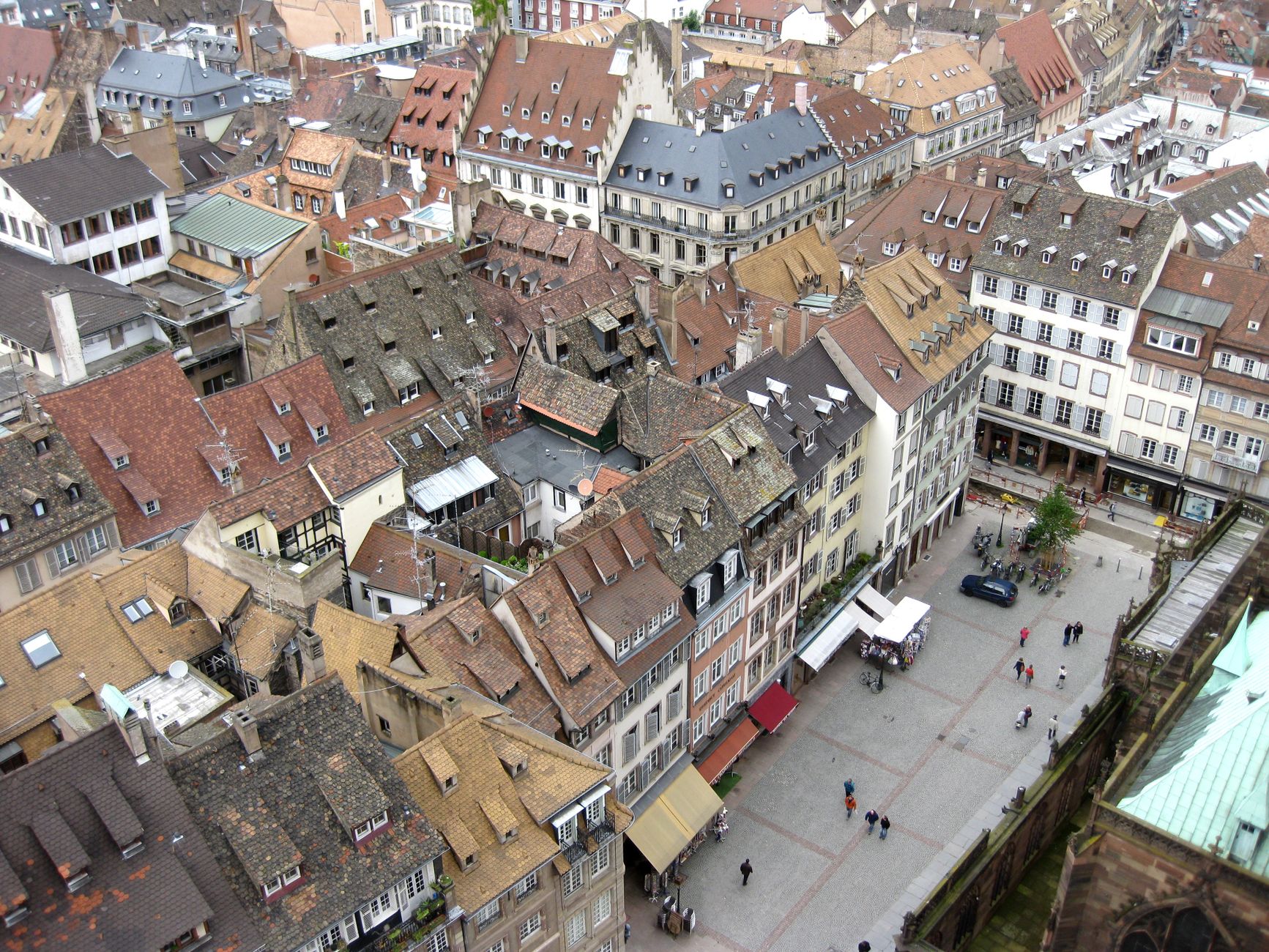
The commune covers 78 km² (about 30 square miles) divided into fifteen official quarters, but a visitor only ever uses four of them. Almost everything you have come to see is on the Grande Île, an oval of about 1,500 metres by 800 metres that you cross on foot in twenty minutes.
How far is Strasbourg from Paris?
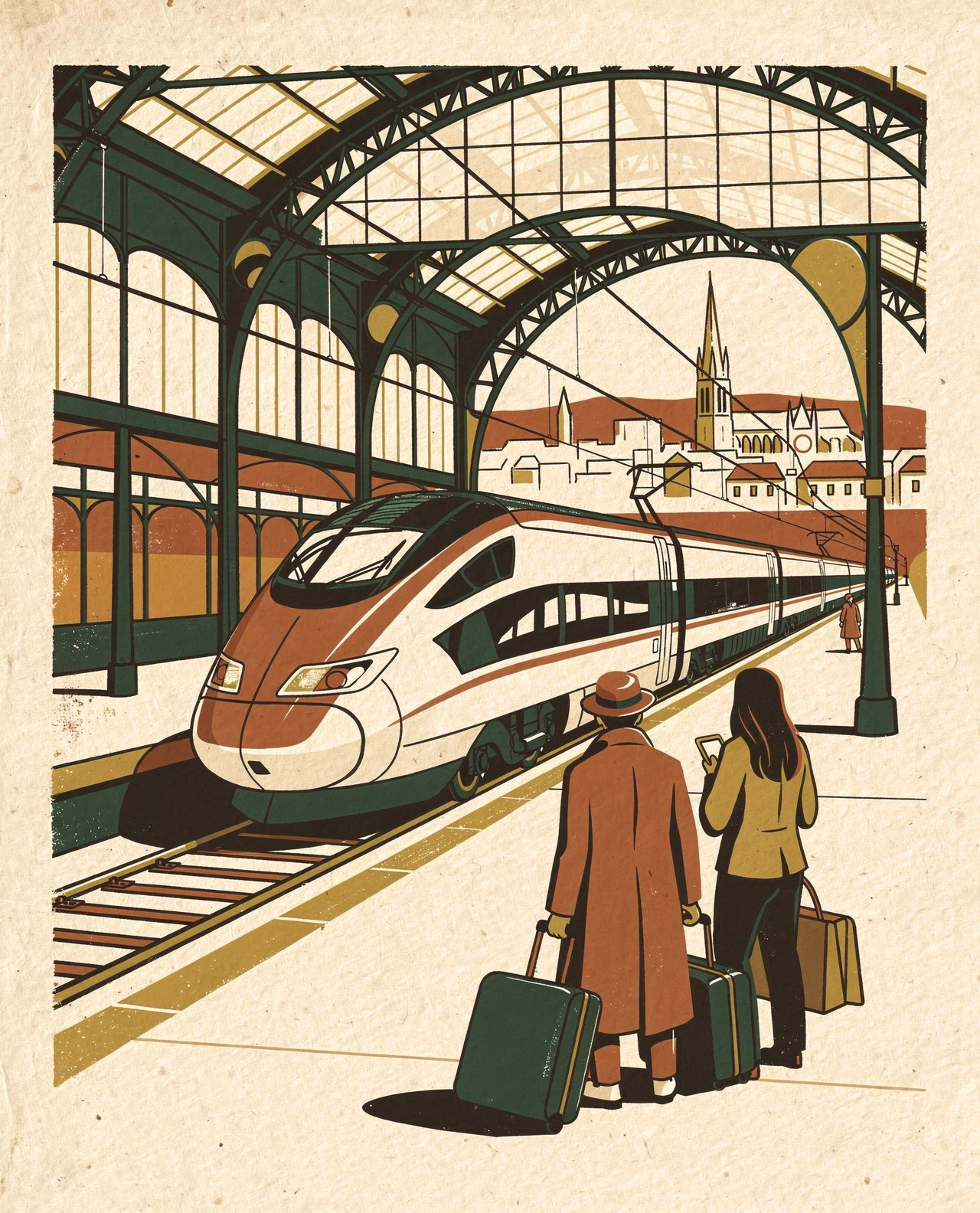
About 490 km by road, and 1 hr 45 min on the fastest direct trains from Paris Gare de l'Est. That is the single number most visitors want, and it is the reason Strasbourg works as a two or three day break from Paris rather than a separate holiday.
The train wins outright here. Strasbourg's main station is inside the city, not beside it: you walk out of the hall and reach the cathedral in about twelve minutes.
How far is Strasbourg from everywhere else
The useful way to read distance in this part of Europe is by rail, because the German and Swiss borders are close enough that the car adds nothing.
| From | Fastest direct train |
|---|---|
| Paris Gare de l'Est | 1 hr 45 min |
| Basel SBB, Switzerland | 1 hr 17 min |
| Stuttgart Hbf, Germany | 1 hr 23 min |
| Frankfurt, Germany | 1 hr 50 min |
| Lyon Part-Dieu | 3 hr 48 min |
| Lille Europe | 4 hr 54 min |
| Colmar, Alsace | 26 to 35 minutes |
| Sélestat, Alsace | 20 minutes |
Read that table again and the geography clicks. Strasbourg is better connected to Karlsruhe and Stuttgart than to most of France, and Switzerland is closer than Lyon.
Where exactly is the German border?
On the eastern edge of the city, and you can ride a tram across it. The Rhine is the border, and the German town on the far bank is Kehl.
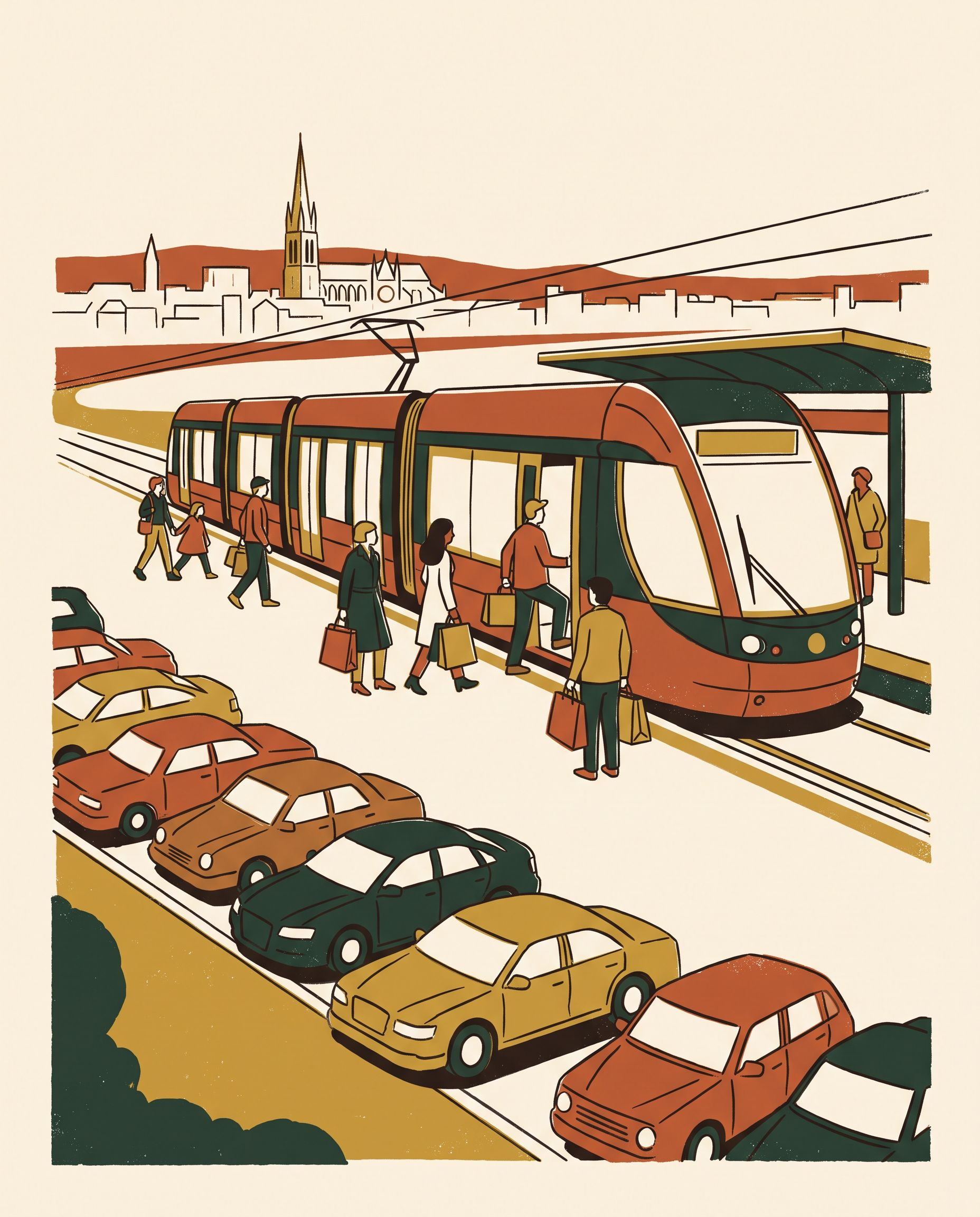
Tram line D crosses the river and reaches Kehl Rathaus in 24 minutes from Homme de Fer, the central tram interchange, running every every 13 to 16 minutes during the day. No passport check, no fuss, and the shops on the other side keep German opening hours.
That crossing is not a novelty for locals, it is daily life. It also means a visitor can add half a day in Germany to a Strasbourg trip without organising anything at all.
Why Strasbourg has a German history
Because it spent most of its existence outside France. Strasbourg was a free imperial city of the Holy Roman Empire, German speaking, self governing, and it stayed that way through the Middle Ages and the Reformation.
Louis XIV annexed it in 1681. It stayed French for not quite two centuries, then the newly founded German Empire took Alsace in 1871 and held it until 1918. France recovered it after the First World War, Nazi Germany annexed it again from 1940 to 1944, and it has been French ever since.
You can see that timeline in the street plan without knowing any of it. The medieval half timbered core is the free imperial city. The vast avenues and monumental facades just north of it, the quarter called the Neustadt, were built by the German Empire between 1871 and 1918 to make Strasbourg the showcase capital of its new province.
UNESCO listed the Grande Île in 1988, the first time a whole city centre was inscribed, and extended the listing to the Neustadt in 2017. In other words, the German chapter is now protected as world heritage alongside the French one.
The local language, Alsatian, is a Germanic dialect, and it is why the street signs in the centre are bilingual and why so many surnames and dishes sound German. Alsace is not Germany, and it is not quite the rest of France either.
Is Strasbourg in Europe, and why is it called a capital of Europe?
That last point is worth acting on rather than noting. If your dates land on a session week, book early rather than clever, and know that the European quarter itself is a perfectly good place to sleep: this one faces the Parliament, sits on a tram line into the centre, and holds the largest indoor pool of any hotel in the city.
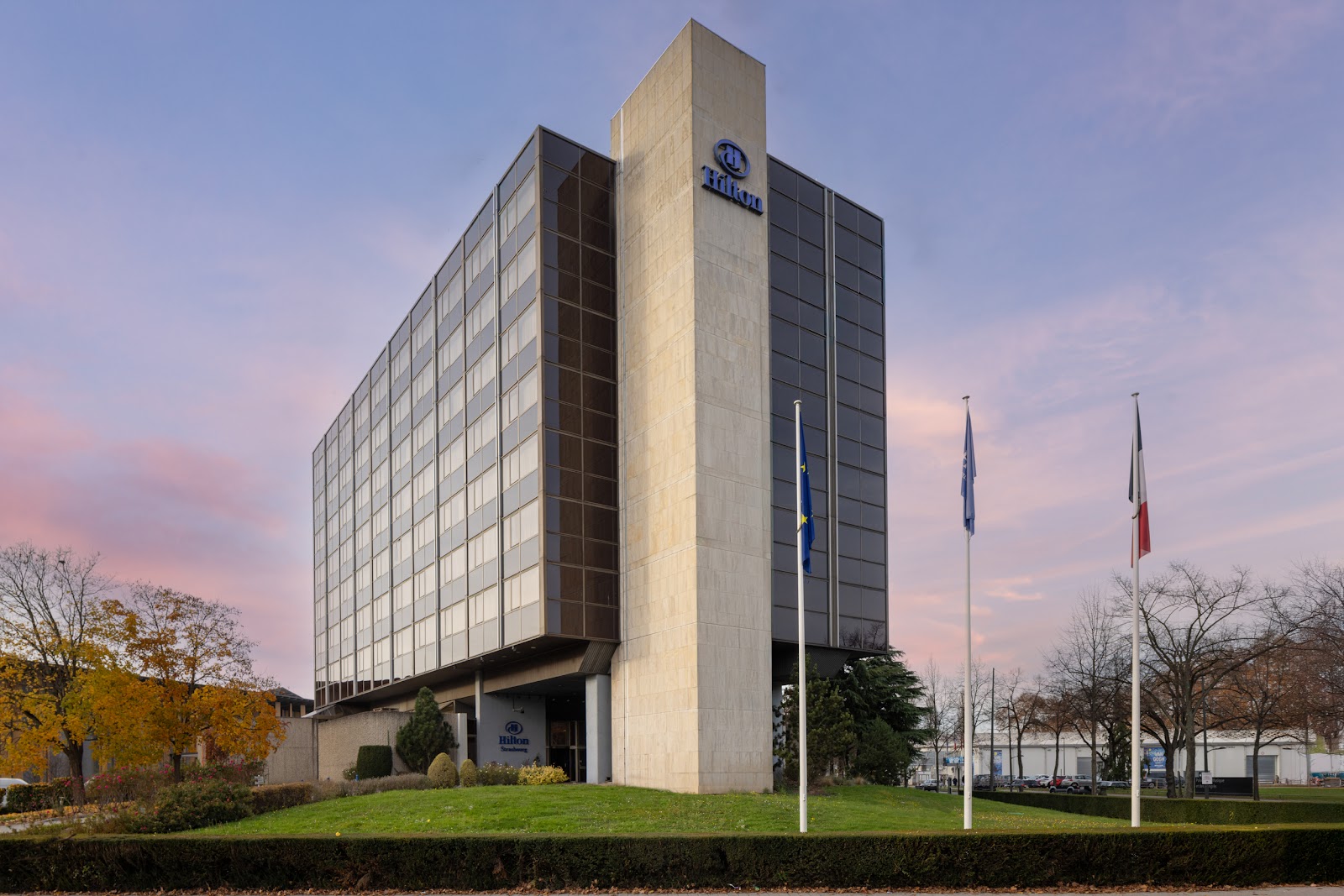
Hilton Strasbourg★ 3,8 · 3,560 reviews
Strasbourg is in France, so yes, it is in the European Union and in the Schengen area. If you are travelling from Germany or Switzerland, the practical answer is that there is nothing to do at the border.
The city is also one of the seats of the European institutions, which is where the phrase capital of Europe comes from. The European Parliament, the Council of Europe and the European Court of Human Rights all sit here, in a quarter north east of the centre, well away from the old town.
For a visitor this matters in one very concrete way: hotel prices jump during parliamentary sessions and congresses, on dates that have nothing to do with school holidays. Check your dates before you book.
Getting there, in one paragraph each
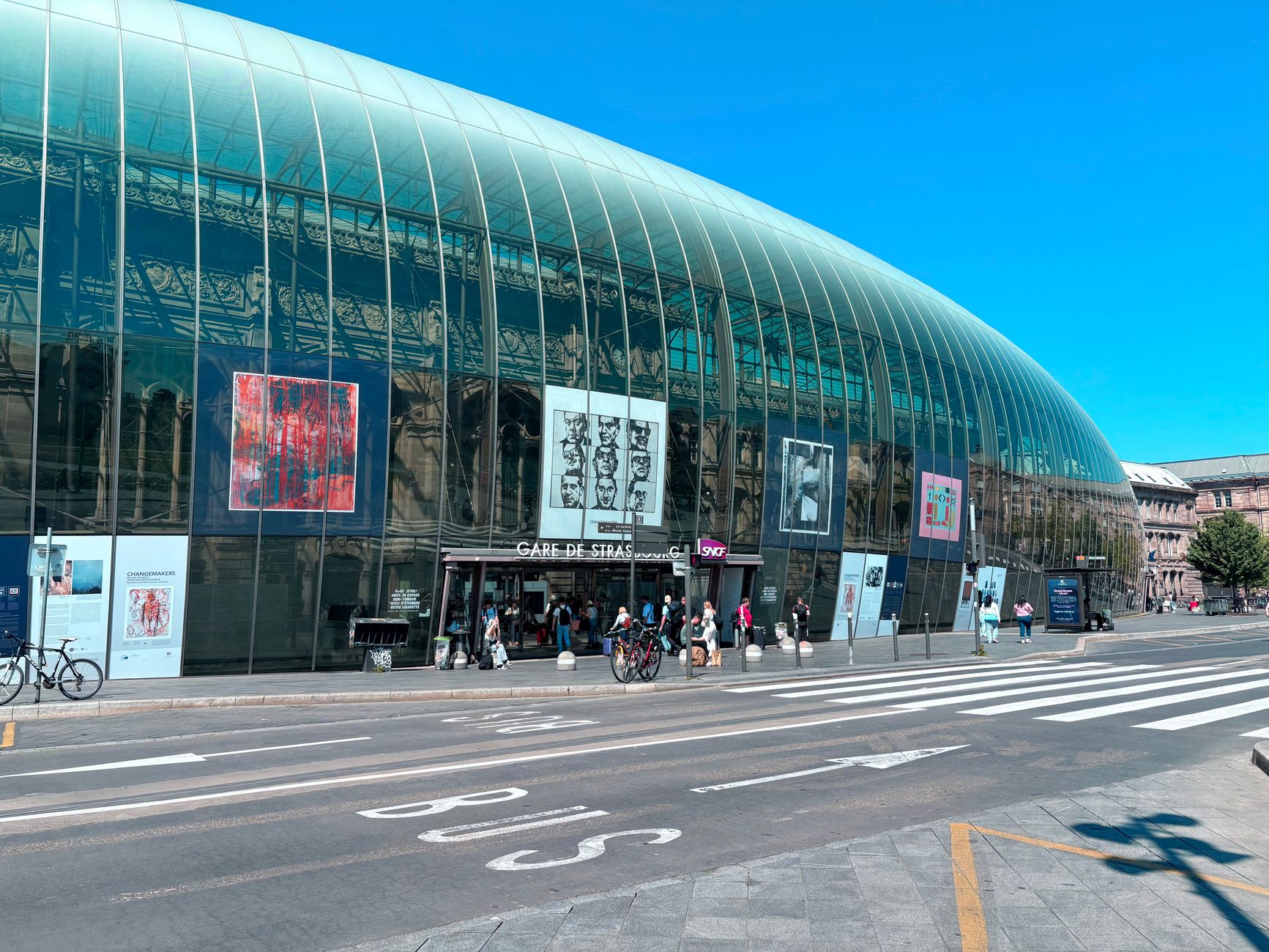
By train. The best option, by a distance. Strasbourg Gare Centrale is about one kilometre from place Kléber, a twelve minute walk, or four minutes on tram lines A and D from the underground station beneath the forecourt.
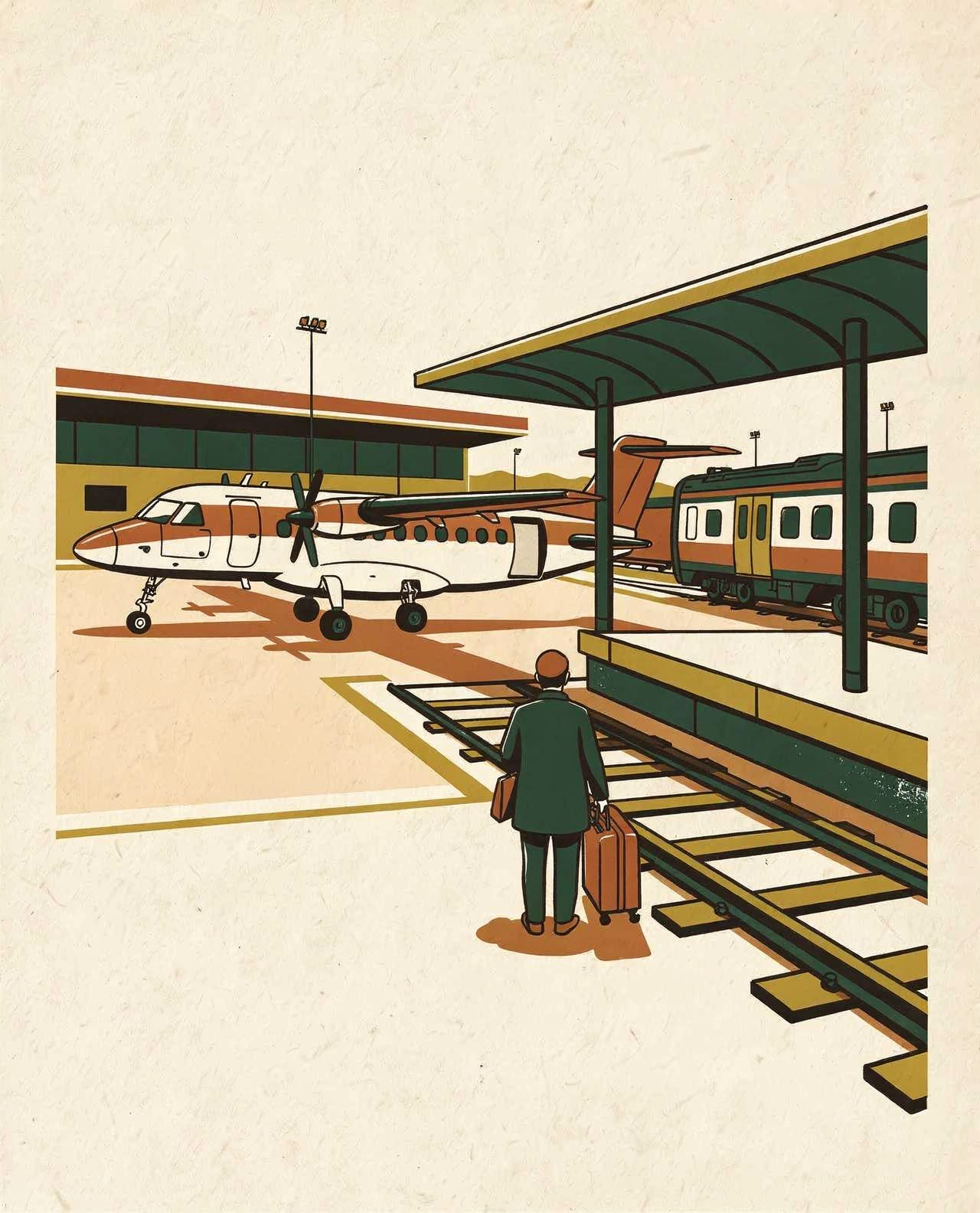
By plane. Strasbourg Entzheim is a small regional airport, around 50 destinations served by roughly 15 airlines. A shuttle train links it to the main station in 9 minutes. Many visitors from further afield fly to Frankfurt, Basel or Paris and finish by train.
By car. Possible, and mostly pointless. The Grande Île is largely pedestrianised and street parking is expensive, so the local system is to leave the car at a park and ride on the edge of town for €4.20 a day, tram travel included for everyone in the vehicle.
What the location means for your trip
If everything is walkable, then where you sleep decides how much of the city you actually see. Sleeping on the island itself is the shortcut, and this is its only five-star, minutes from Place Kléber. It is not the cheap answer, and this is the right moment to work out whether it is yours.
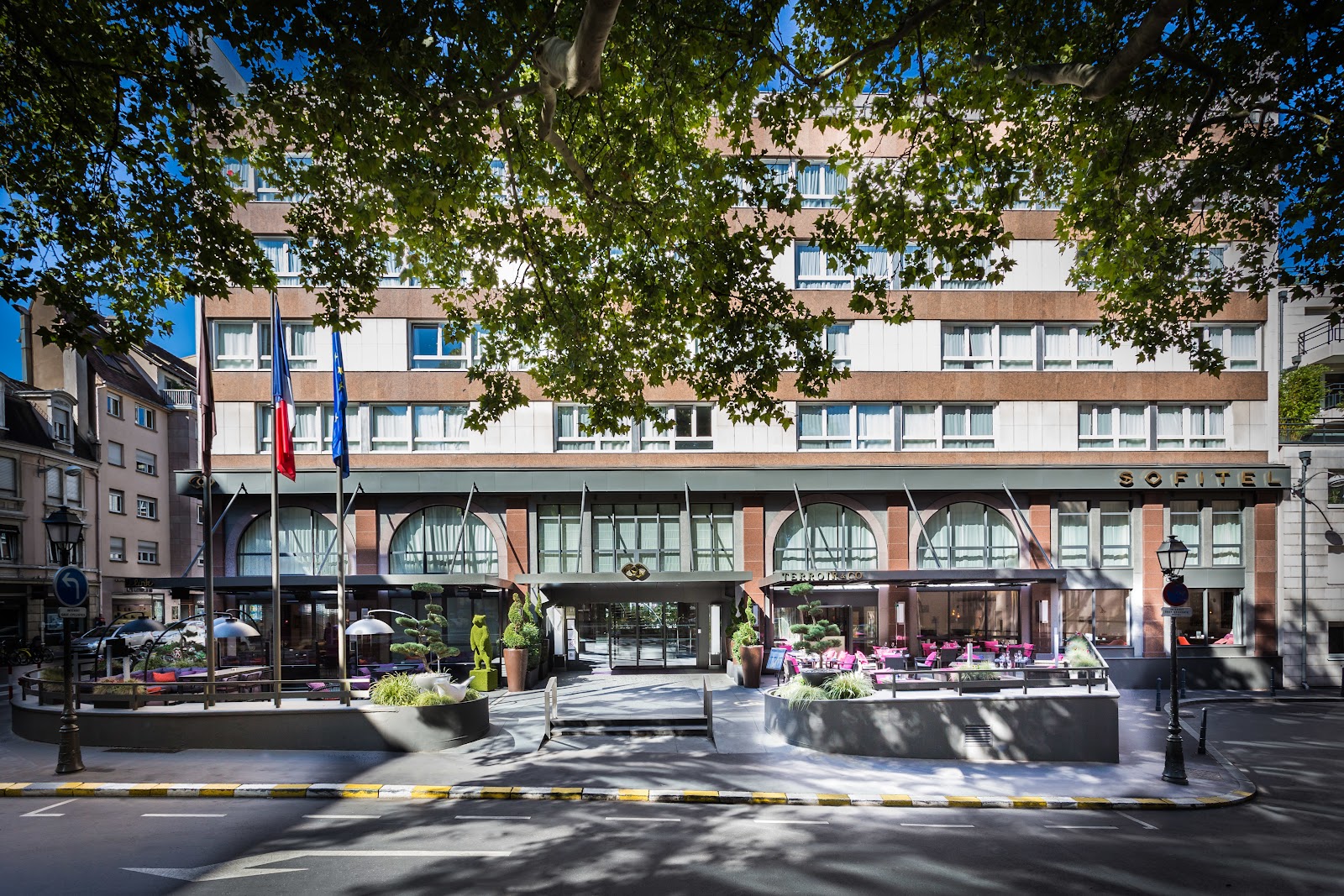
Sofitel Grande Île★ 4,5 · 3,538 reviews
Three consequences, and they shape every itinerary we write.
- Everything is walkable. The centre is an island you cross in twenty minutes. You will use the tram to arrive and to reach the European quarter, and almost never otherwise.
- Alsace is a train ride away. Colmar is 26 to 35 minutes from the main station, Sélestat 20 minutes. A third day in Strasbourg is really a day in the rest of Alsace.
- Germany is an afternoon. Kehl on the tram, or the Black Forest and Freiburg by regional train.
If you now want to know how long to stay, our page on how many days to spend in Strasbourg gives the honest answer by profile. If you are still deciding whether to come at all, we answer that plainly in is Strasbourg worth visiting.
And for arrival logistics, station, airport, parking and tram, everything sits in our practical section.
Frequently asked questions
What country is Strasbourg in?
How far is Strasbourg from Paris?
Is Strasbourg close to Germany?
Was Strasbourg ever German?
Is Strasbourg in the European Union?
Théo Lindner
Théo grew up between Strasbourg and the Vosges. He walks every route before publishing it, times every leg, and would rather cut a stop than pretend a day is longer than it is.