Things to Do in Strasbourg: What to See, in What Order
Everything worth seeing in Strasbourg sits on one island you cross in twenty minutes. Here is what to do, in what order, and what you can skip.
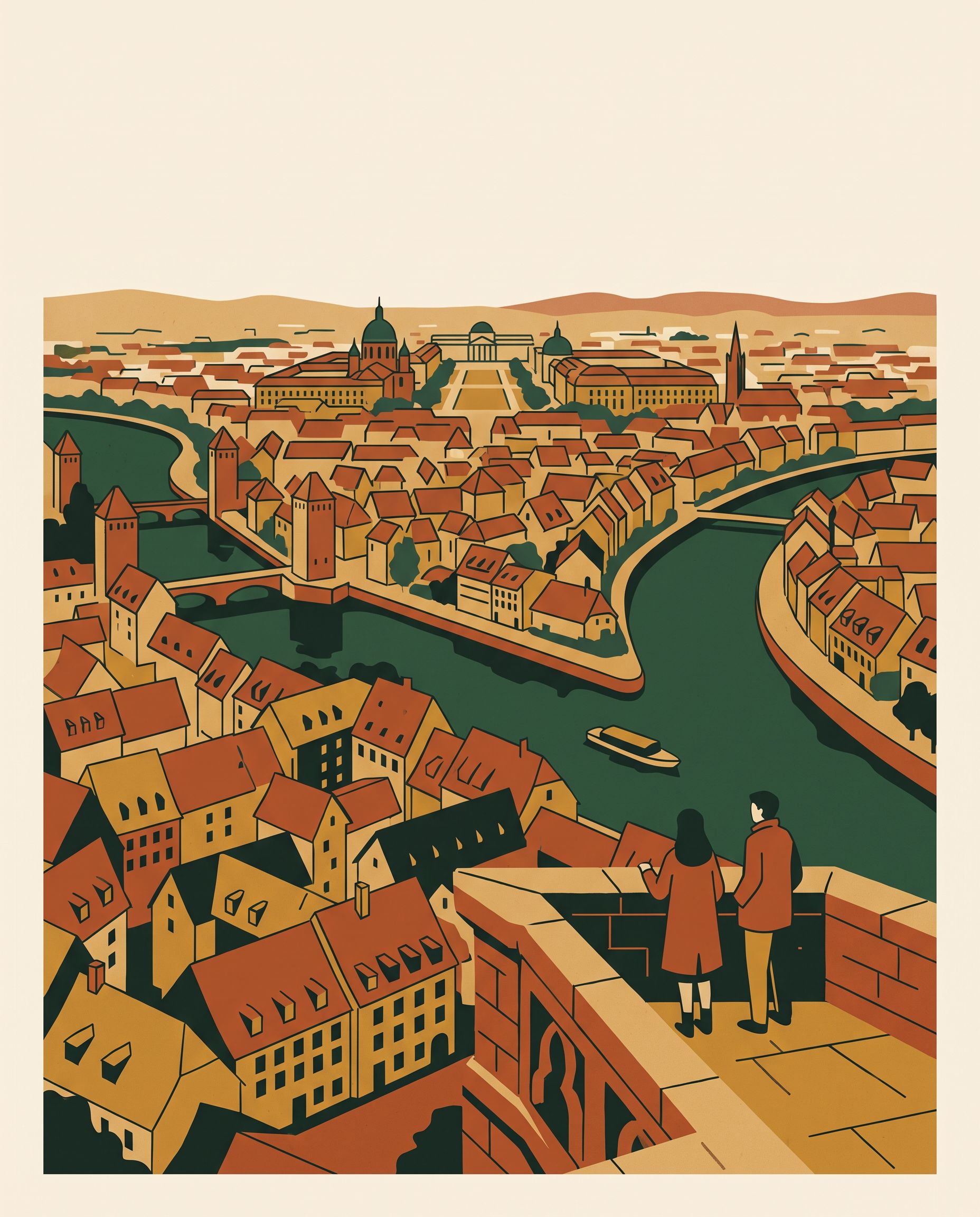
Almost everything you come to Strasbourg for sits on a single island, roughly 1,500 metres by 800 (about a mile by half a mile), which you walk across in twenty minutes. That changes the question completely.
You are not choosing between sights scattered across a city. You are deciding what order to walk them in, so you do not cross the same bridge three times. This is the running order we give friends who fly in: what earns the queue, what deserves an hour rather than a morning, and what you can leave out without regret.
The short version: what to see, in what order
If you read nothing else, take this sequence. Every step is a ten-minute walk from the last, and it puts the two sights that reward an empty street at the front of the day.
- The cathedral, first thing in the morning: the nave, then the tower platform.
- The cathedral quarter: place du Chateau, the Kammerzell house, the lanes down to place Gutenberg.
- Petite France, walked east to west, one hour.
- The Covered Bridges and the Barrage Vauban, at the western tip, for the free panorama.
- A boat trip on the Ill, mid-afternoon, sitting down.
- The Neustadt, late in the day, when the light hits the sandstone.
Six stops, one day, no backtracking. The rest of this page explains how long each one really takes, and where most guides quietly mislead you.
Strasbourg Cathedral, and why it deserves your whole first morning
Notre-Dame de Strasbourg has a single spire of 142 metres, finished in 1439, which made it the tallest building in the world for more than two centuries. It is also three separate visits stacked in one building: the nave, the astronomical clock and the platform, with different entrances, different times and different tickets.
Go at the morning opening, when the light crosses the stained glass in an almost empty nave. From late morning to mid-afternoon in season you visit inside a continuous stream of tour groups. The nave also closes for a stretch late in the morning, which catches out a lot of visitors, so check the day's times before you plan around it.
Ten minutes outside before you go in
Walk back to the far side of the square first. The pink Vosges sandstone facade is a book in stone: hundreds of statues, three carved portals, a rose window more than 13 metres across. Look for the Wise and Foolish Virgins on the south side, and the Tempter with his back crawling with toads and snakes, which everyone walks straight past on the way to the door.
The astronomical clock, and the time everyone misses
The full parade of automata runs once a day, at 12.30pm. The apostles file past Christ, the cock crows three times, Death strikes the hour. Access to the show is by the south portal, and tickets are sold on the day only.
Plenty of visitors discover the clock at one in the afternoon, half an hour too late. If it matters to you, build the day around it and eat afterwards. If it does not, do not block your morning for it.
The platform: 332 steps, and no lift
The way up is outside the building, on the place du Chateau side, 332 steps of spiral staircase cut into the tower. At the top, 66 metres up, you get the roofs of the old town, the Alsace plain, and on a clear day the Vosges on one side and the Black Forest on the other.
Tickets are €8 full price and €5 concession, sold on site only: no online booking, no skip-the-queue option, no way around the queue if you turn up at the wrong hour. Numbers on the circuit are capped, and access closes temporarily when it is busy or the weather turns.
So climb early or do not climb at all. The haze off the plain lifts before midday, the staircase becomes an oven on summer afternoons, and the round trip takes 45 minutes with time to look.
Three things almost nobody notices
- The Pillar of the Angels, thirteenth century, in the south transept, and the carved staircase rail facing it.
- The rose window from outside at sunset, from rue Merciere: the few minutes a day when the sandstone really turns pink.
- The green ray: at the equinoxes a shaft of light crosses a window and strikes the pulpit canopy at solar noon.
If the building grabs you, the Musee de l'Oeuvre Notre-Dame is thirty metres from the south portal and holds the original facade sculptures and the medieval plans.
Petite France, the Covered Bridges and the Barrage Vauban
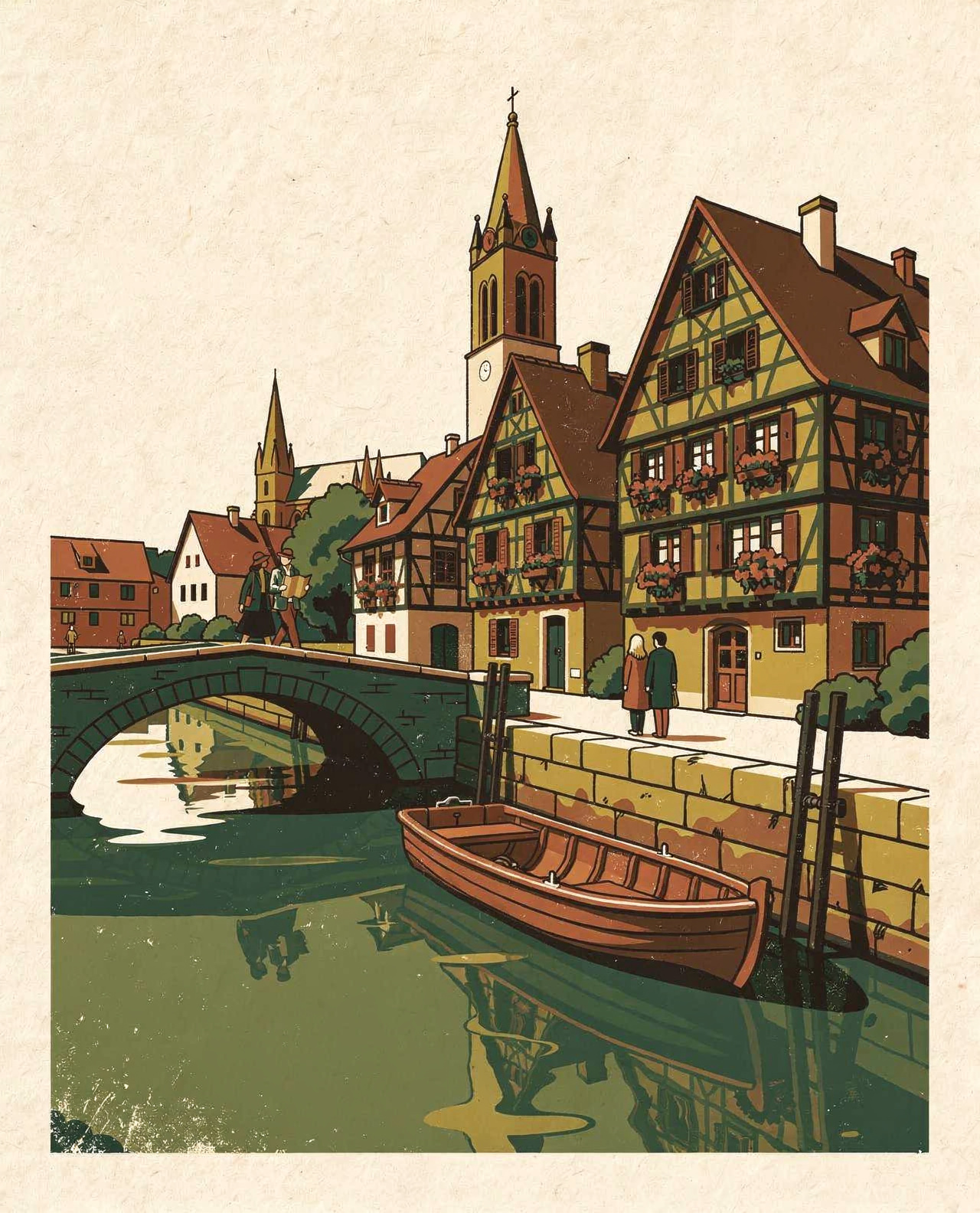
Petite France is the south-western tip of the island: four arms of the river Ill, timber-framed houses leaning over the water, a working lock, three medieval towers at the end. It is also the point in the city that saturates fastest. The quarter is 1.3 km (0.8 miles) end to end, and on a summer Saturday afternoon you cross it at walking pace, in a crowd.
Walk it east to west, and most people do the opposite. Enter by the church of Saint-Thomas, almost always empty, which holds the Silbermann organ Mozart played in 1778. Follow the quays through place Benjamin-Zix and the rue du Bain-aux-Plantes, and keep the Barrage Vauban for last, so the terrace shows you everything you have just walked.
Allow an hour and a quarter at an easy pace, two and a half if you stop for a drink. Anyone telling you to give Petite France half a day has not walked it. One thing worth slowing down for: the lock in the middle of the quarter, where boats rise and fall about two metres. It is free, and almost nobody stops to watch.
The Covered Bridges at the western end were built between 1230 and 1250 as a defensive line. The name is a trap: they have not been covered since 1784, when the wooden roof came off during the rebuild in stone.
Behind them, the Barrage Vauban was built in 1690 to Vauban's plans, and it was a weapon: lowering the sluices flooded the south of the city to stop an attacker.
Today you climb onto the roof, and the terrace is free: the best view in Strasbourg after the cathedral platform, and most visitors walk past without going up. It has been through lift and roof works, so check it is open on the day.
The hours that matter. Seven to half past nine gives you the quarter empty. Eleven to five is the peak, and in July, August and December it is genuinely unpleasant. Half past five to sunset gives the best photographs, and after nine the quays are lit and empty again.
The Neustadt, the quarter nobody sends you to
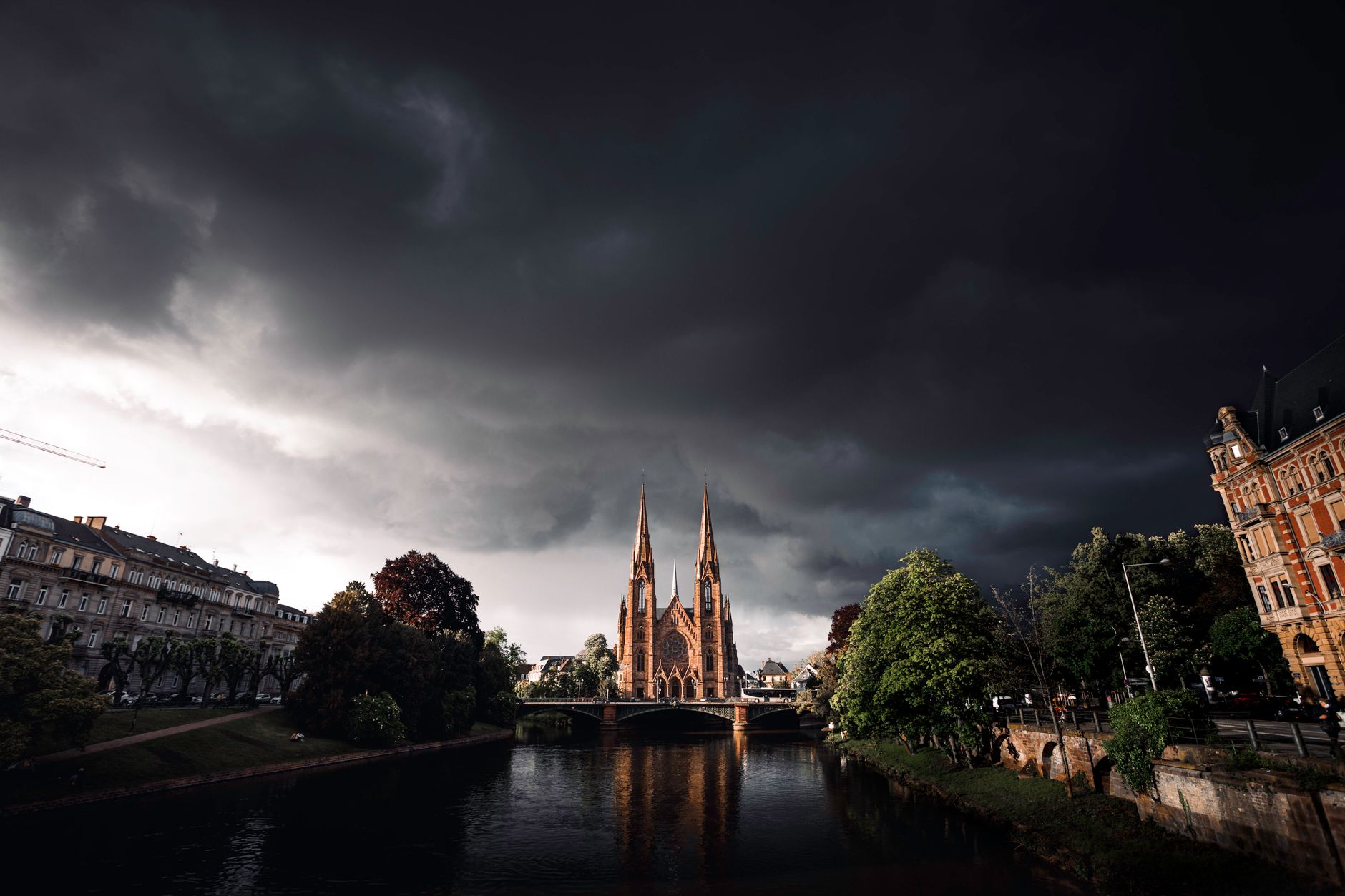
This is where we part company with every other English-language guide to Strasbourg, which stops at the Grande Ile and Petite France.
The Grande Ile has been a UNESCO World Heritage Site since 1988. In 2017 the listing was extended north to the Neustadt, the German imperial town built at the end of the nineteenth century, and that extension is still ignored by almost everyone who visits. It begins twelve minutes' walk from the cathedral.
Cross at place de la Republique and the city changes register entirely: monumental avenues, oversized Wilhelmine facades, a circular garden ringed by state buildings, the Palais du Rhin, and beyond it the church of Saint-Paul with its two spires on the water. It is a complete city, laid out in one go, and the exact opposite of the medieval lanes.
Why it matters more than the guides suggest: Strasbourg changed nationality four times between 1870 and 1945, and this is where you see that history rather than read it on a panel. It costs nothing, has no ticket and no crowd, even in December.
Give it ninety minutes on foot with no fixed route, ideally at the end of an afternoon. On a one-day visit it is the first thing to cut. On a two-day visit it is the first thing to add.
A boat trip on the Ill: touristy, and still the right call
The advice above is to book ahead in summer and in December, and that is exactly where the day goes wrong: the middle-of-the-day departures fill first, and the queue at the pontoon can swallow an hour of a one-day visit. Reserving a boat trip on the Ill in advance fixes the slot, and lets you build the afternoon around it instead of hoping.
Yes, it is a tourist boat. It is also the only way to see the three faces of the city in seventy minutes without walking, and Strasbourg reads better from the water: the best facades in the centre have their backs to the streets.
- First visit: the long circuit, about 1 hr 10. The only one that does both halves of the city, medieval island and European quarter, and the only one through the Petite France lock.
- Already walked the island: the 45-minute European circuit. It concentrates on the institutions, which you will not otherwise see without a deliberate tram trip.
- With children under six: the 45-minute one too. Seventy minutes sitting still is a long time. Forty-five passes.
The strong moment comes early: the boat enters the lock, the gates close, the water moves about two metres and you are level with the windows of the timber-framed houses. Further on, the Covered Bridges seen from below finally show their real height. The audio guide is included in twelve languages, English among them.
Book ahead from June to September and during the Christmas market, when midday departures fill and the queue can cost you an hour. The rest of the year, turning up works. Boats are covered and heated, so this runs all year and doubles as the best hour of a rainy day.
Museums: pick one, and pick it on purpose
Two museums in a day of walking guarantees you enjoy neither. The Palais Rohan, built between 1732 and 1742 for the prince-bishops, sits directly behind the cathedral and holds three museums in one building: it is the obvious rainy-day fallback because you are already standing next to it.
The alternatives: the Museum of Modern and Contemporary Art, opposite the Barrage Vauban and therefore built into the Petite France walk, and the Historical Museum near the cathedral if you want to understand how the city kept changing hands.
A single ticket is €9 full price and €5 concession, and the day pass to all the city museums is €20, which only pays off from three museums onwards. That is not a sensible thing to attempt on a short visit.
Two dates decide the rest. The city museums close on Tuesdays, so if your only day falls on a Monday, drop the museum and spend the time on the Neustadt. They are free the first Sunday of every month, which is the one day worth rearranging for. And the Alsatian Museum is closed for works, not due to reopen before 2028.
What is overrated, and what you can skip without regret
A page that only says nice things is no use to anyone. Six things we would tell you to drop.
- The terraces at the foot of the cathedral. The worst value meal in the city, and the good addresses are three streets away.
- Half a day in Petite France. One hour, then come back at sunset. The time you save belongs to the Neustadt.
- Walking to the European Parliament. Thirty-five minutes each way along uninteresting quays. Take tram E, fifteen minutes, and only if the institutions genuinely interest you.
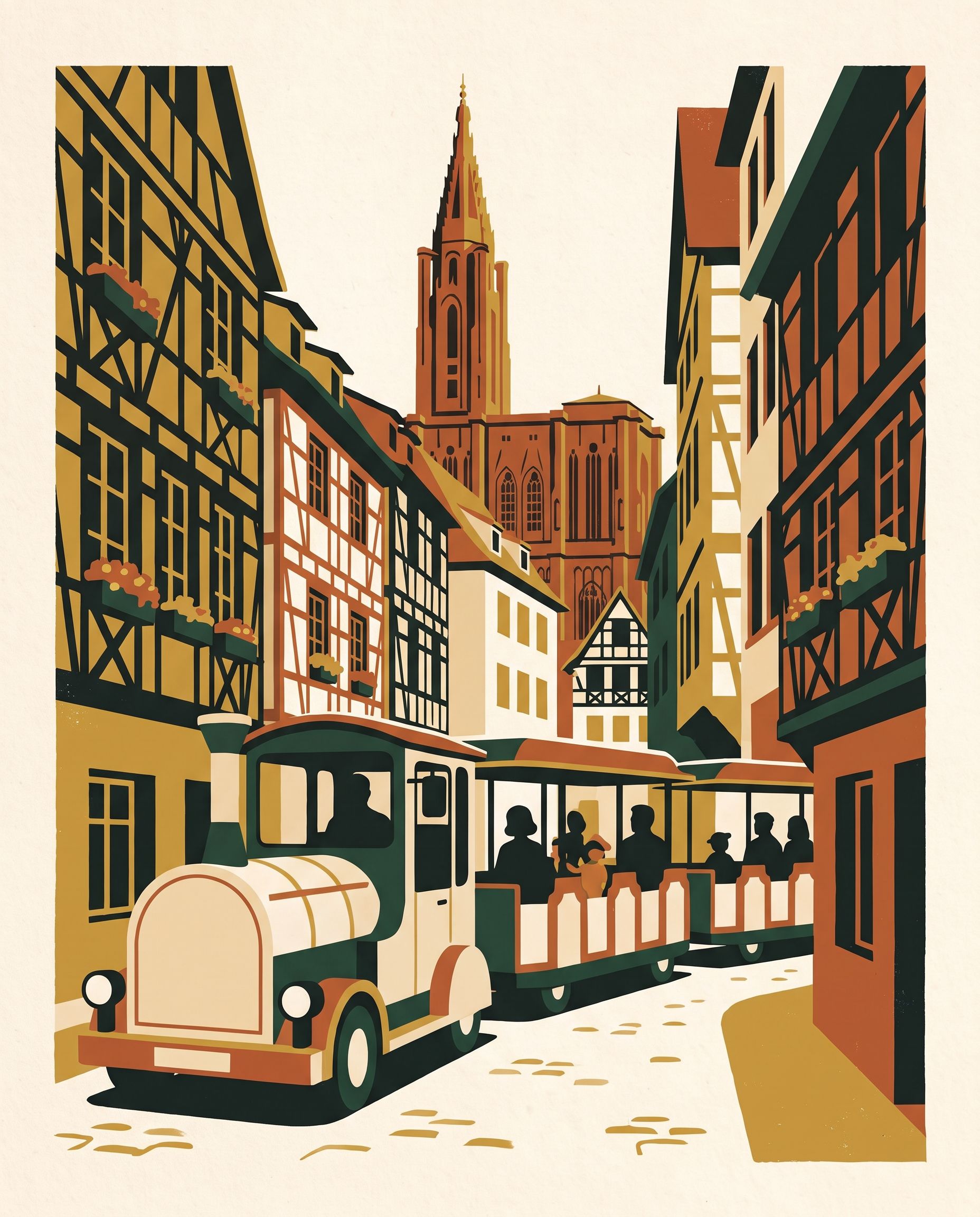
- The little tourist train. It solves tired legs and small children in 45 minutes, which is fair value. It is not a substitute for walking a city this compact.
- Secret underground Strasbourg. The underground military hospital at place des Halles appears in every hidden-Strasbourg article. The city bans access, the entrances have been filled in or welded shut, and there is no regular tour.
- A second museum. Strasbourg is a city you enjoy outdoors.
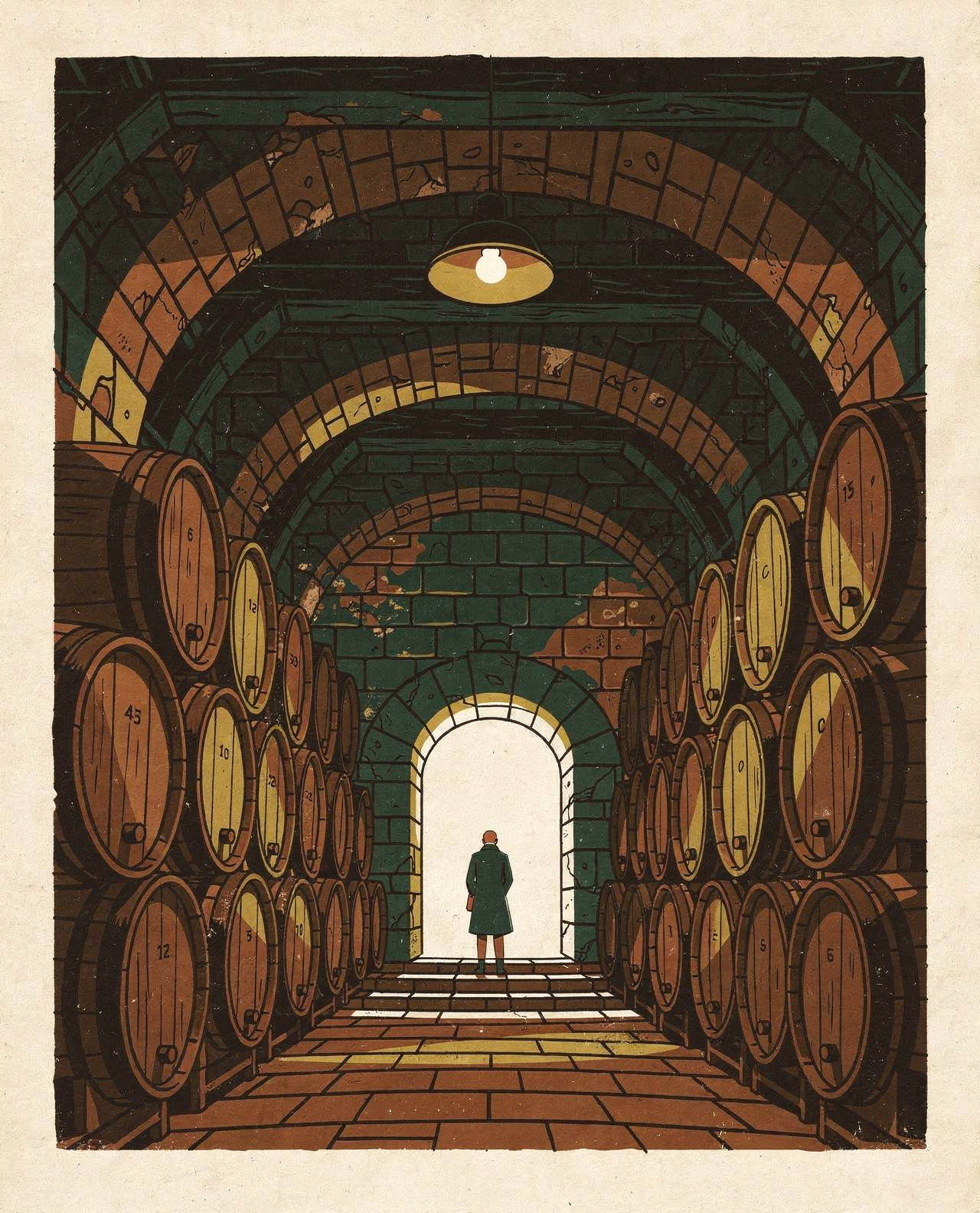
Two genuinely unusual things survive the cull. The historic wine cellar of the Hospices holds monumental casks and a barrel of 1472, one of the oldest wines in the world still in wood: entry is free, the audio guide is €5, and it closes on Sundays and public holidays.
The other is the ring of nineteenth-century German forts around the city, which opens mainly for the European Heritage Days in September. That weekend is the best date in the calendar if you want the genuinely rare stuff.
How much time Strasbourg actually needs
The three-day version sends you out into Alsace, and that is where visitors without a car come unstuck. Colmar is easy by train, the wine villages are not, so a guided day along the wine route is the honest answer for anyone not hiring a car for a long weekend. It removes the rural bus timetable from the plan entirely.
- Two hours between trains. Cathedral, place Gutenberg, a fast there-and-back to Petite France.
- One day. The six stops above fit, on two conditions: start at the cathedral before ten, and keep the boat for the afternoon. You will drop the Neustadt and the museum.
- Two days. The right length. Day one the island, day two the Neustadt, one museum and the European quarter, with an unrushed evening. Our itineraries section breaks both days down hour by hour.
- Three days or more. Add Alsace. Colmar is 26 to 35 minutes away by train, every 30 minutes, and the wine route villages work as a day trip.
One quiet extra that suits English-speaking visitors: tram D crosses the Rhine into Germany. Kehl town hall to the Homme de Fer interchange in the middle of Strasbourg takes 24 minutes on an ordinary city ticket, with no border formalities and no car.
Coming from Paris for the day: does it work?
Enough people ask that it deserves a straight answer. Paris Est to Strasbourg takes 1 hr 45 min at the fastest, so three and a half hours of travel on the day, and the cheapest low-cost adult fare starts around €16.
Yes, it works, on one condition: take the first train, not the mid-morning one. Arrive before ten and you get the cathedral in the quiet, the platform without the queue, lunch, Petite France and a boat trip before you walk back to the station.
What you lose is the evening, one of the best things here: the lit quays between Petite France and the Covered Bridges, and the bars of the Krutenau. You lose the Neustadt too.
Our verdict: a day trip from Paris is a good day and a poor visit, so stretch to one night if you can. The station is 1.2 km (three quarters of a mile) from the cathedral, fifteen minutes on foot or four on tram A or D.
Getting around, eating and where to base yourself
The quarter you sleep in decides how much of this page you actually manage, because everything on it sits within twenty minutes on foot of Place Kleber. This is the address we point people to when they want to step out of the door straight into the old town, and it is the one to book earliest if your dates fall in December.
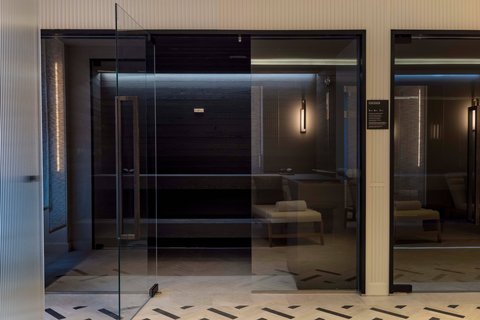
Maison Rouge★ 4,5 · 1,739 reviews
On foot first, tram second
You will not need a car and should not want one. The Grande Ile is largely pedestrianised, street parking is expensive and enforced, and the tram does not run through the island: it goes around it.
Keep the tram for three jobs: getting in from the station, going out to the European quarter and the Orangerie park on line E, and getting home at night. If you do arrive by car, use a park and ride at the edge of the city, €4.20 for the day with unlimited tram and bus for everyone in the vehicle. Our practical section covers the network and the maps.
On the Strasbourg City Card: €5 for an adult, €3.50 for a child, valid 7 days, giving 20 to 50% off the boat trip, the city museums, the cathedral platform and the little train. It is a discount card, not an access pass: it pays for itself the moment you do two paid activities, and it is pointless if you plan only one.
Where to eat between the sights
The classic trap is the terrace under the cathedral. The winstubs worth your lunch are three streets away, and they need booking at weekends and throughout December.
One piece of timing advice that saves an afternoon: eat a tarte flambee rather than a choucroute at midday. A full sauerkraut plate at lunchtime costs you the rest of the day, and it makes a far better dinner. Our addresses are in the eat section, the evening bars of the Krutenau in the drink section.
Where to base yourself
Sleeping on the island, or on its edge, is the difference between walking everywhere and taking the tram to everything. The station quarter is convenient and plain, Petite France the prettiest and the noisiest, the Neustadt quiet and ten minutes from the cathedral. Our stay section goes quarter by quarter.
December, when Strasbourg stops being the same city
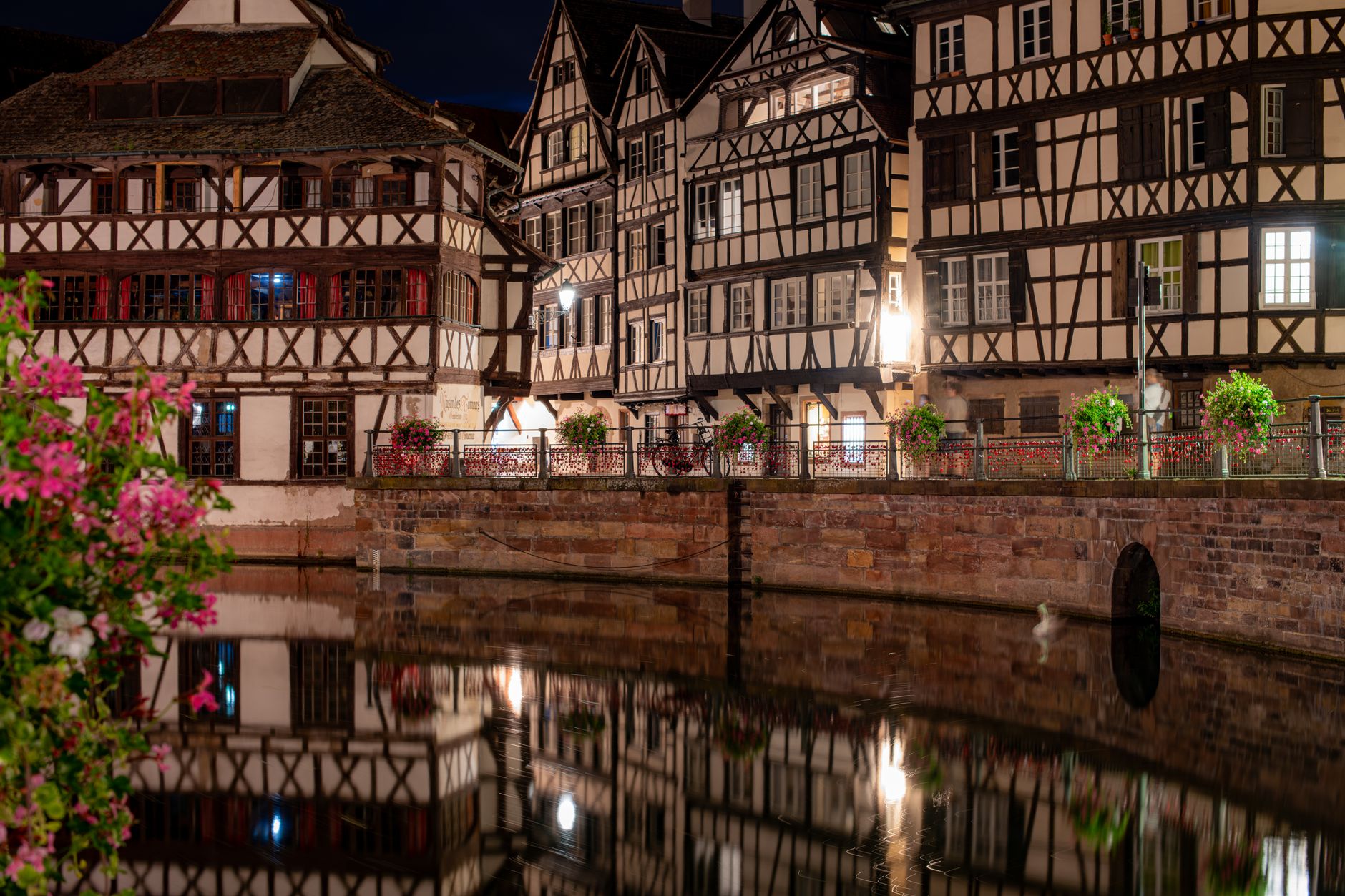
From 27 November to 24 December the priorities change completely. The city runs 8 Christmas markets, the island becomes a pedestrian zone from 11.30am to 9pm, and the crowds are on a different scale from anything on this page.
Everything above still applies, but slower: allow half again as long for every walk. The cathedral, the museums and the covered boats also become far more valuable, being the only warm, seated hours in a day spent outdoors in the cold.
If your trip falls in the 2026 season, start with our Christmas section rather than this page: the running order is not the same one.
The plan in one sentence
Cathedral before ten, Petite France and the Barrage Vauban straight afterwards, lunch in a winstub, a boat trip in the afternoon, the Neustadt at the end of the day.
Do that and you have seen the essentials in a day and, more usefully, you know what you are coming back for. Our attractions section covers the quieter half of the city.
Sources: field notes from our editorial team, UNESCO listings of 1988 for the Grande Ile and 2017 for the Neustadt, official city museum and cathedral information. Prices and times move with the season and are driven by our facts table, last reviewed in August 2026: check the day before you visit.
Frequently asked questions
What is the one thing you should not miss in Strasbourg?
How many days do you need in Strasbourg?
Can you visit Strasbourg as a day trip from Paris?
Is Strasbourg Cathedral free to enter?
Do you need a car in Strasbourg?
When is the best time of year to visit Strasbourg?
Théo Lindner
Théo grew up between Strasbourg and the Vosges. He walks every route before publishing it, times every leg, and would rather cut a stop than pretend a day is longer than it is.