La Petite France, Strasbourg: The Walk and the Hours
The prettiest quarter in Strasbourg, and the one that saturates fastest. Walk it east to west, in the right hour, and you get it almost to yourself.
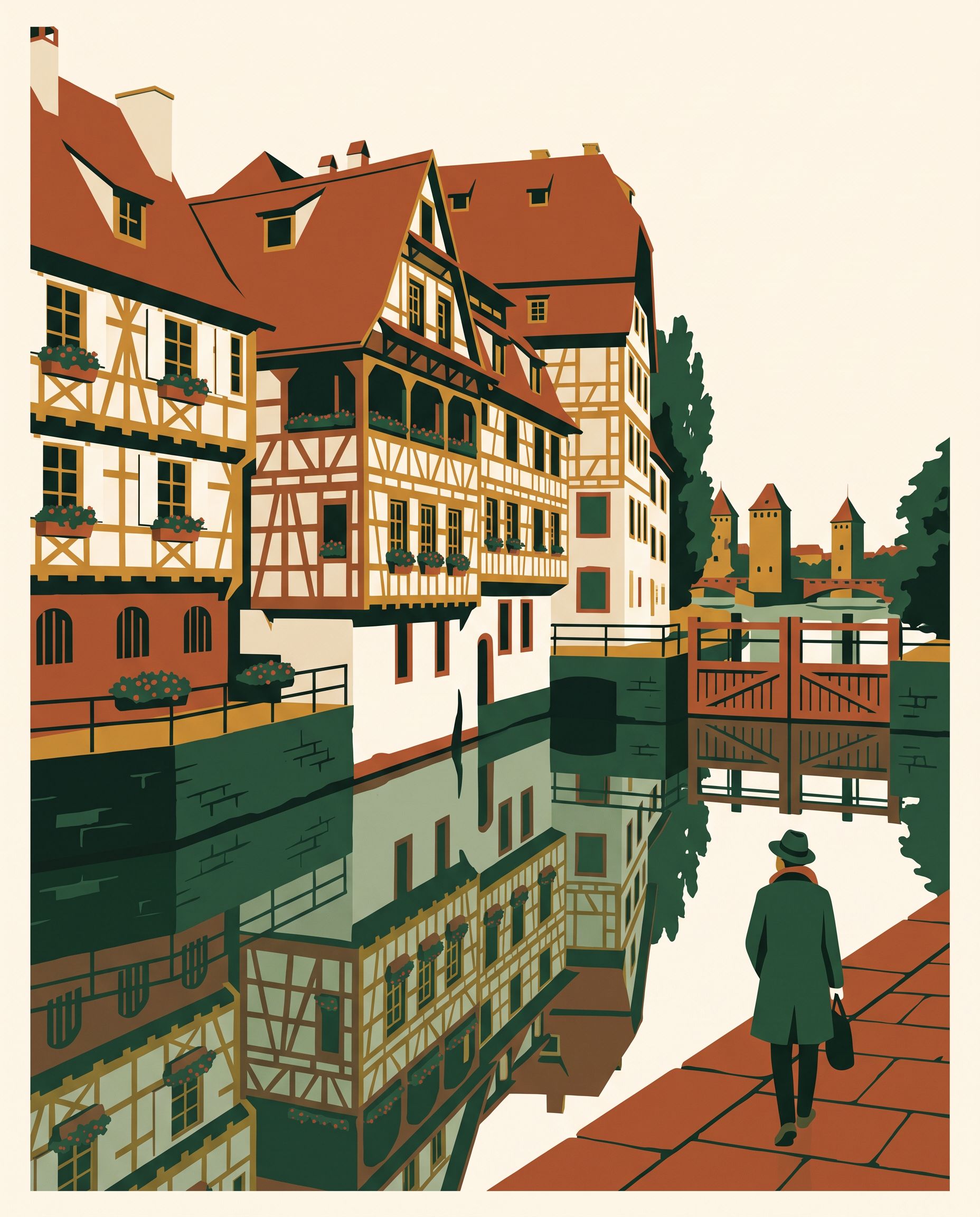
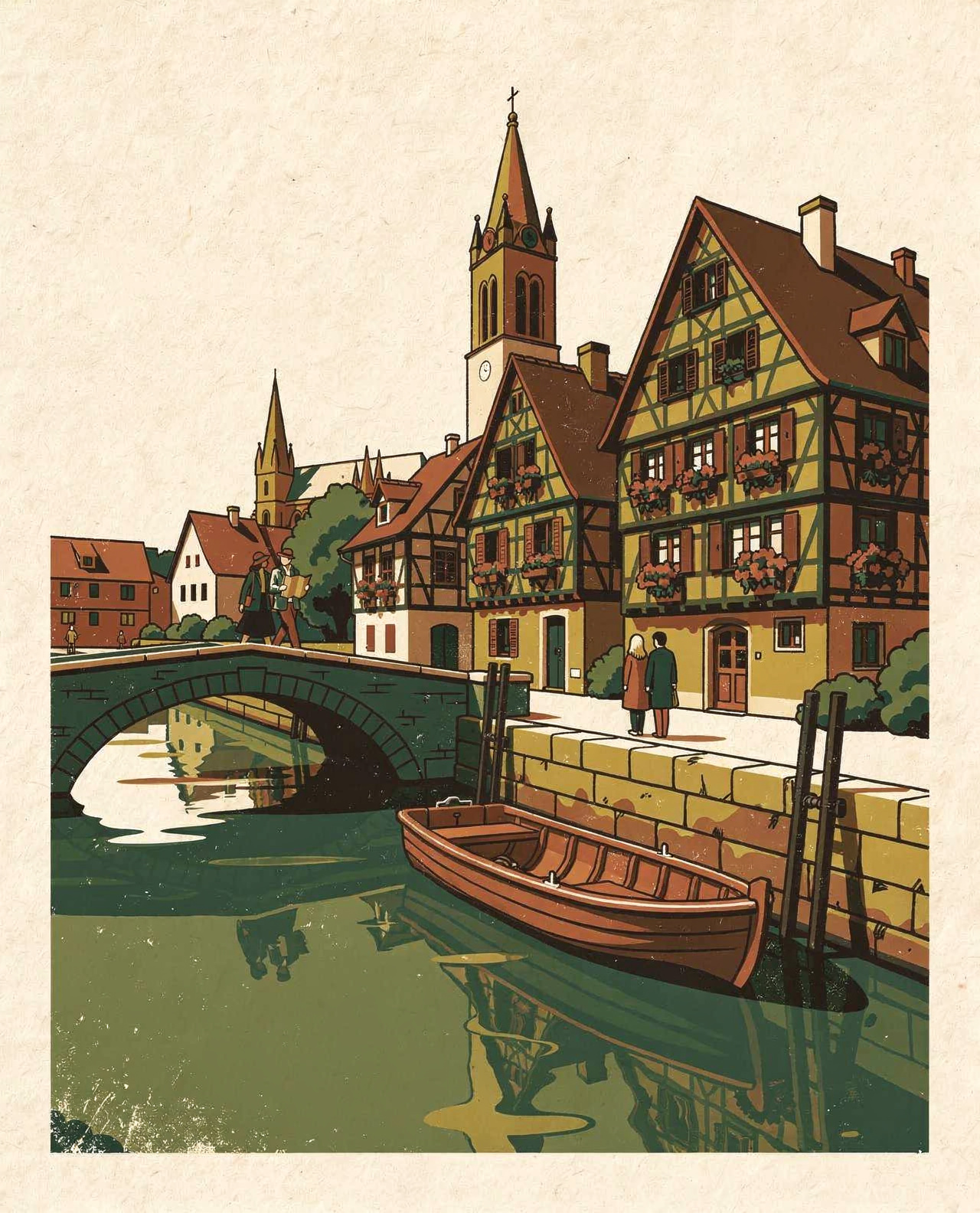
La Petite France is the south-western tip of the Grande Ile, on the UNESCO World Heritage list since 1988. Four arms of the river Ill, timber-framed houses leaning over the water, a working lock in the middle and three medieval towers at the end.
It is also the point in the city that saturates fastest. The quarter is barely 1.3 km end to end, about eight tenths of a mile, and on a summer Saturday afternoon you cross the rue du Bain-aux-Plantes at walking pace, in a crowd.
Everything therefore comes down to two things: the order you walk it in, and the hour you turn up.
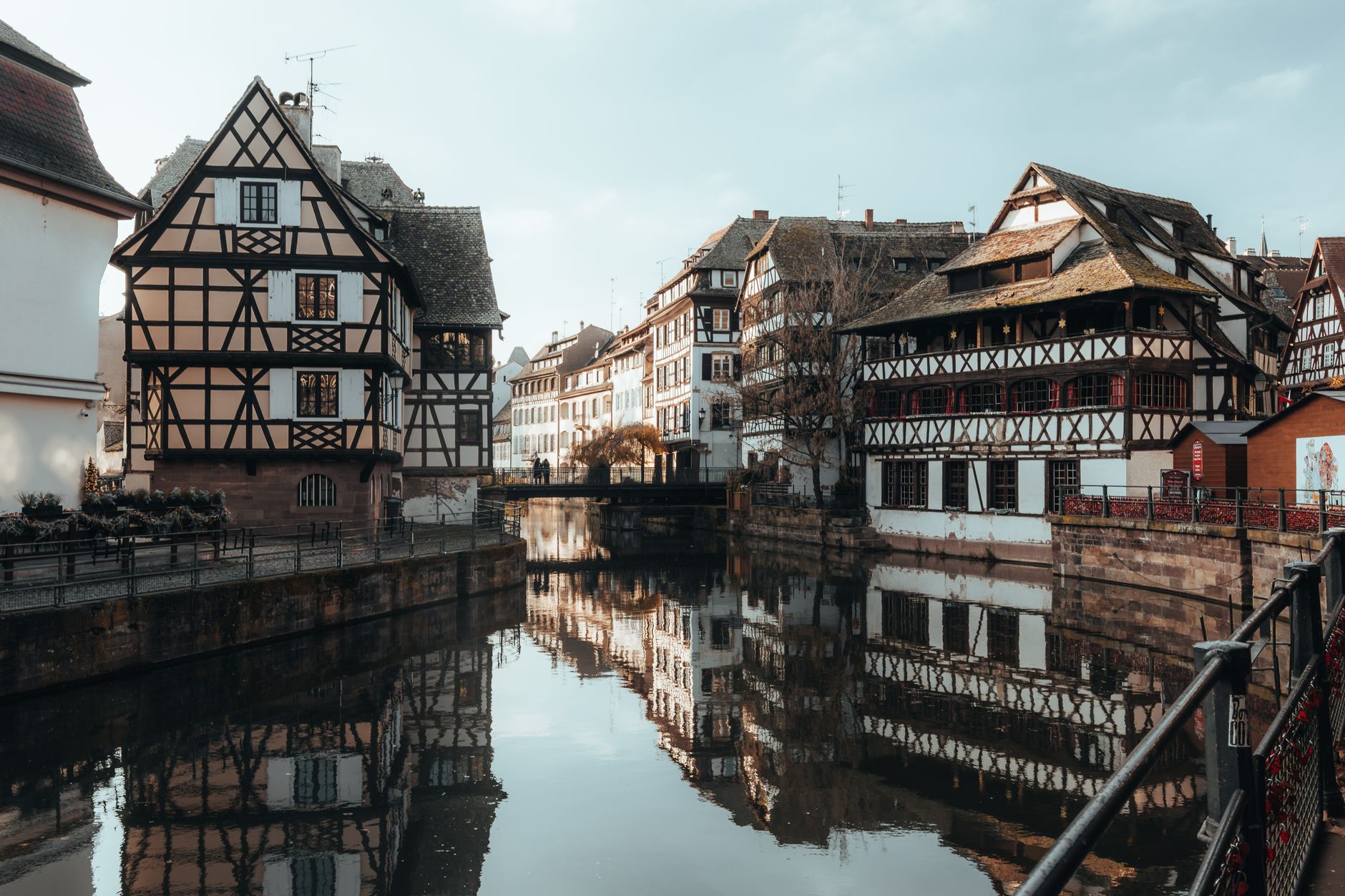
The walk: 1.3 km, east to west
Walking it in the right order is half the job. Knowing what you are looking at is the other half, and the quarter gives up very little on its own: a guided walk of the historic quarters covers Petite France, the Covered Bridges and the Grande Ile with someone who can answer a question, which the panels cannot.
Direction matters. Most visitors arrive from the west, take the Covered Bridges as their opening move, and end up worn out in the lanes without ever climbing to the viewpoint.
Do the opposite. Come in by the church of Saint-Thomas, follow the quays, and keep the Barrage Vauban for last: the panoramic terrace hands you the overview of everything you have just walked through. Late in the afternoon, the light is on the timber fronts the whole way.
Allow an hour and a quarter at an easy pace, two and a half if you sit down for a drink.
1. The church of Saint-Thomas
The eastern entrance to the quarter, and almost always empty. This is the great Protestant church of Strasbourg, with the Silbermann organ that Mozart played in 1778. Five naves of equal height, a bare and luminous interior, the exact opposite of the cathedral.
2. The Pont du Faisan
Locals call it the swing bridge. It pivots on itself to let the tour boats through, several times an hour in season. Time it right and the deck opens under your feet and all foot traffic stops dead.
3. Place Benjamin-Zix
The square with the terraces, wedged between the lock and the swing bridge. It is the postcard, with lime trees and facades closing in around it. It is also the densest spot in the quarter: at lunchtime every table is taken.
4. The Maison des Tanneurs
At 42 rue du Bain-aux-Plantes, a former tannery of 1572, listed as a historic monument since 1927 and a restaurant since 1949. Look at the roof: the open storeys underneath it are not decorative, that is where the tanners dried their hides.
5. Rue du Bain-aux-Plantes
The most continuous run of timber framing in the city, fully pedestrianised since 1978. Every facade is white, which throws the patterns of the beams forward, and no two houses carry the same design.
This is where the photographs happen. Get up early: first thing in the morning the street belongs to you.
6. The Petite France lock
The chamber where the boats rise and fall about two metres, in the middle of the quarter. You lean on the rail and watch. It is free, it takes ten minutes or so, and it is the best show in the quarter. Almost nobody stops.
7. The Covered Bridges
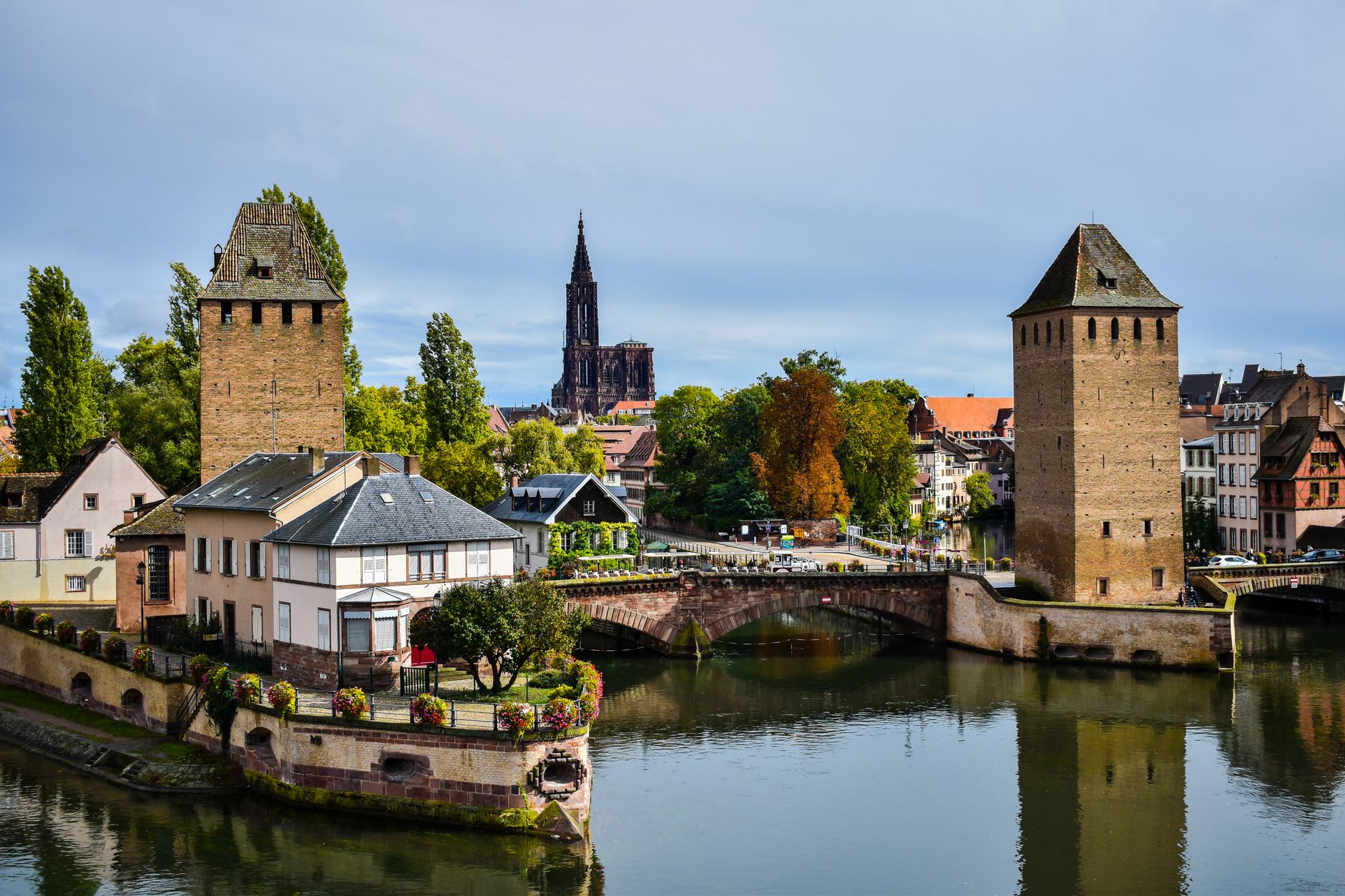
Four bridges in a row and three massive towers, what is left of a set of four thirteenth-century towers built between 1230 and 1250 as a defensive line on the Ill.
The name is a trap: they have not been covered since 1784, when the wooden roof came off during the rebuild in stone. Listed as a historic monument in 1928.
8. The Barrage Vauban and its terrace
Built in 1690 by Tarade to Vauban's plans, and originally a weapon: lowering the sluices flooded the whole south of the city to stop an attacker. Today you walk the covered gallery between casts of sculptures, and climb onto the roof.
The panoramic terrace is free, and it is the best view in Strasbourg after the cathedral platform: the three towers of the Covered Bridges in the foreground, the roofs of Petite France behind them, the cathedral spire at the back on a clear day.
Check before you climb. The terrace has been through a substantial renovation, with a new lift, reworked stair casings and a completely rebuilt green roof, and it was shut for months while that ran. The passage at water level stayed open throughout, from early morning to late evening, apart from occasional closure days.
Terrace hours also shorten sharply in winter and stretch in summer, so look them up on the day rather than turning up at dusk in January.
9. The Museum of Modern and Contemporary Art
The big glass hall directly opposite, across the basin. Even if you do not go in, the Art Cafe has a roof terrace looking straight at the barrage and the Covered Bridges. That is your fallback when the terrace on the barrage is packed.
When to come, really
The two usable slots on that table, first thing in the morning and after nightfall, are precisely the ones you miss if you are walking in from a hotel by the station. Sleeping inside the quarter is the only way to have it to yourself twice a day, and this is the address in the Tanners' quarter we send people to for it.
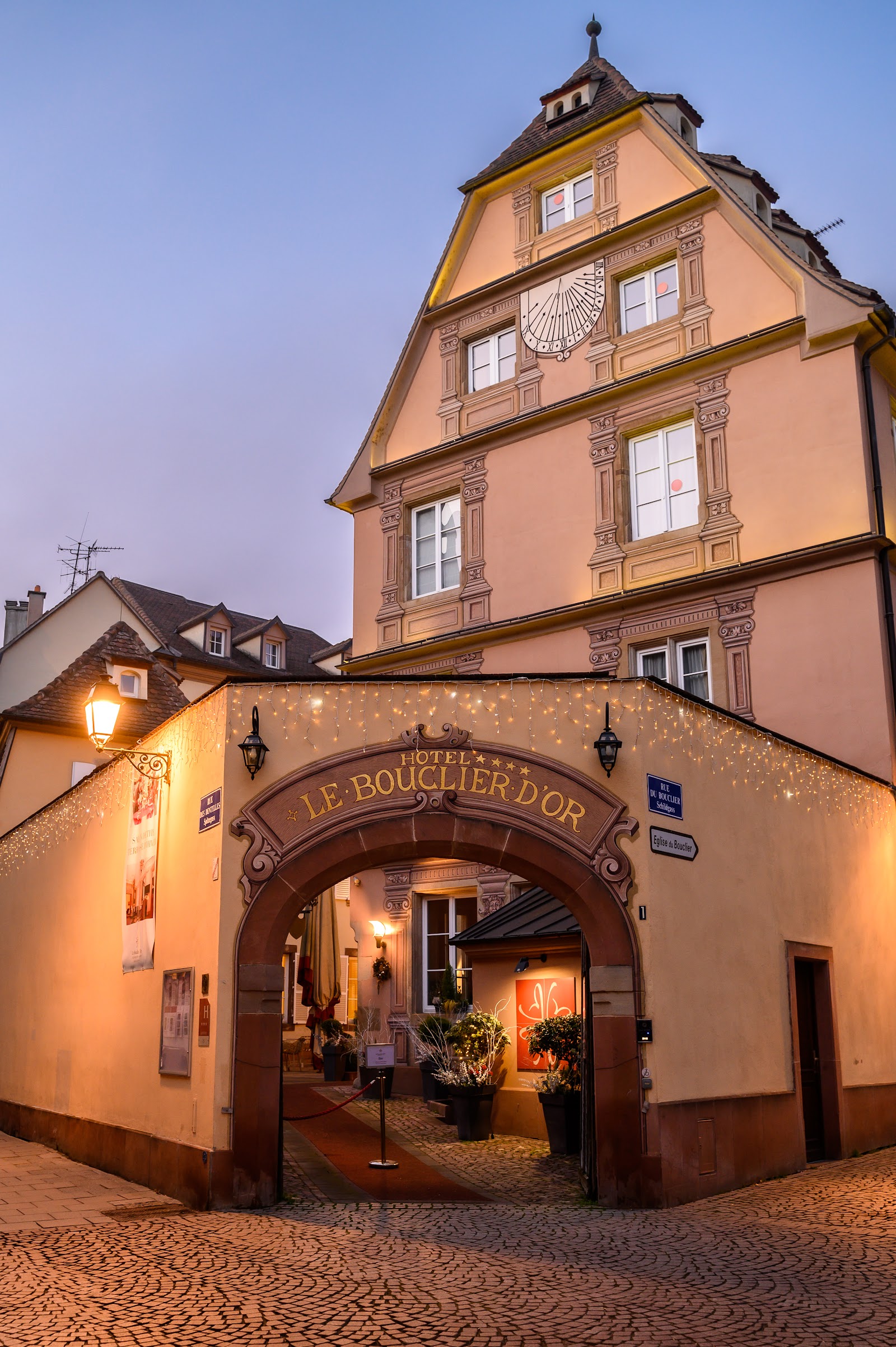
Le Bouclier d'Or★ 4,6 · 620 reviews
The quarter does not have opening hours. It has usable hours and wasted ones.
| Slot | What you get |
|---|---|
| Early morning until mid morning | The quarter empty, mist on the water, shopkeepers opening up. The best moment, no argument. |
| Late morning to late afternoon | The peak. Groups, the tourist train, queues at every terrace. Avoid in July, August and December. |
| Early evening to sunset | Raking light on the white timber fronts. Still busy, but the best photographs of the day. |
| After nightfall | Lit quays, reflections in the water, almost nobody. Worth doing at least once. |
On seasons, winter outside December is badly underrated. The quarter is stripped bare, the facades stand out, and you have it more or less to yourself.
In December, Petite France hosts two Christmas markets, on place Benjamin-Zix and place Saint-Thomas, and the pressure changes character completely. Our Christmas coverage sets out what that means in practice.
Where the name actually comes from
It is neither a tribute to France nor a story about charm. In the fifteenth century the city opened a hospice on this spot to isolate people with syphilis.
The first Strasbourg inmates were French and Swiss mercenaries in the service of Charles VIII, and the disease was known at the time as the French malady. The building was nicknamed in Alsatian zum kleinen Franzosen, the little Frenchman, which became Franzoesel and finally Petite France.
The hospice ran until the end of the seventeenth century and was then moved to Finkwiller. The nickname stayed, and ended up naming the whole quarter.
The real quarter, the one that shaped the houses you are looking at, belonged to the water guilds: tanners, millers, fishermen and boatmen, settled here since the Middle Ages to use the current of the Ill.
Eating and drinking in the quarter
If you would rather not gamble on a quayside terrace, the other route is to let someone else do the choosing. A guided food walk with tastings works best late in the morning, before lunch, and it doubles as a lesson in what the Alsatian menu actually contains.
The trap is well known: Petite France has the highest concentration of tourist tables in the city. The rule that works is simple. Anything with a laminated menu in six languages on the quay is calibrated for people passing through once, and the kitchens worth your lunch are one street back.
Two things are worth knowing before you sit down. A full sauerkraut plate at midday will cost you the rest of the afternoon, and a tarte flambee will not. And terraces here need booking at weekends and throughout December. Our guide to Alsatian food explains what is on the menu and what to order when.
Getting there
By tram. Two stops frame the quarter, both on lines B and F. Alt Winmaerik to the north-east, five minutes' walk from place Benjamin-Zix. Musee d'Art Moderne to the south-west, which puts you straight at the foot of the Barrage Vauban and the Covered Bridges.
For the east-to-west walk recommended here, get off at Alt Winmaerik.
By car. The quarter is pedestrian, do not try to drive in. Better still, leave the car at a park and ride on the edge of the city, €4.20 for the day including tram and bus for everyone in the vehicle, and finish by tram. Our practical section covers the network.
Accessibility. The quays are flat but paved, and several lanes in the quarter have uneven cobbles. The Barrage Vauban has a lift up to the terrace, replaced during the recent works.
What to pair it with
Petite France combines naturally with the rest of the Grande Ile. Ten minutes' walk east, the cathedral and its platform give you the other great viewpoint over the city, and the two of them make one full day.
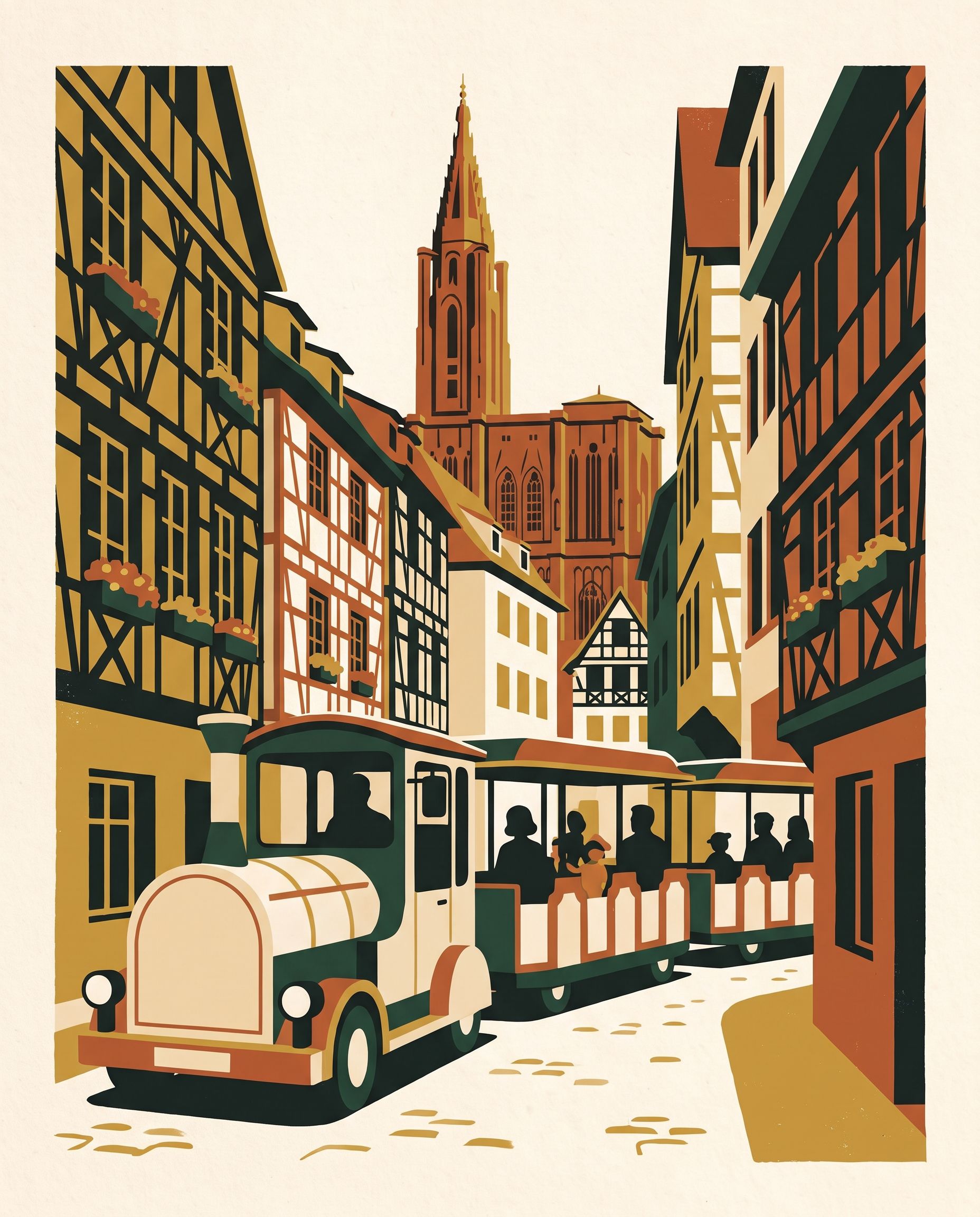
The quarter also reads completely differently from the water: a boat trip on the Ill passes through the lock at walking pace. If your legs have had enough, the tourist train crosses the quarter too, and our what to see in Strasbourg guide places all of it in order.
Sources: City of Strasbourg (Barrage Vauban factsheet and works notices), Pokaa and Le Journal des Entreprises on the terrace renovation, Strasbourg tourist office, Rue89 Strasbourg on the history of the Covered Bridges and the origin of the quarter's name, Archi-Wiki on the rue du Bain-aux-Plantes, CTS for the tram lines. Hours and works dates move: check before you climb.
Frequently asked questions
Is La Petite France worth visiting?
How long do you need in La Petite France?
Are the Covered Bridges actually covered?
Is the Barrage Vauban terrace free?
Why is it called La Petite France?

Théo Lindner
Théo grew up between Strasbourg and the Vosges. He walks every route before publishing it, times every leg, and would rather cut a stop than pretend a day is longer than it is.