Strasbourg Cathedral: The Climb, the Clock, the Timings
Three visits in one building, three sets of hours, three tickets. When to climb, when the clock runs, and when the queue is not worth joining.
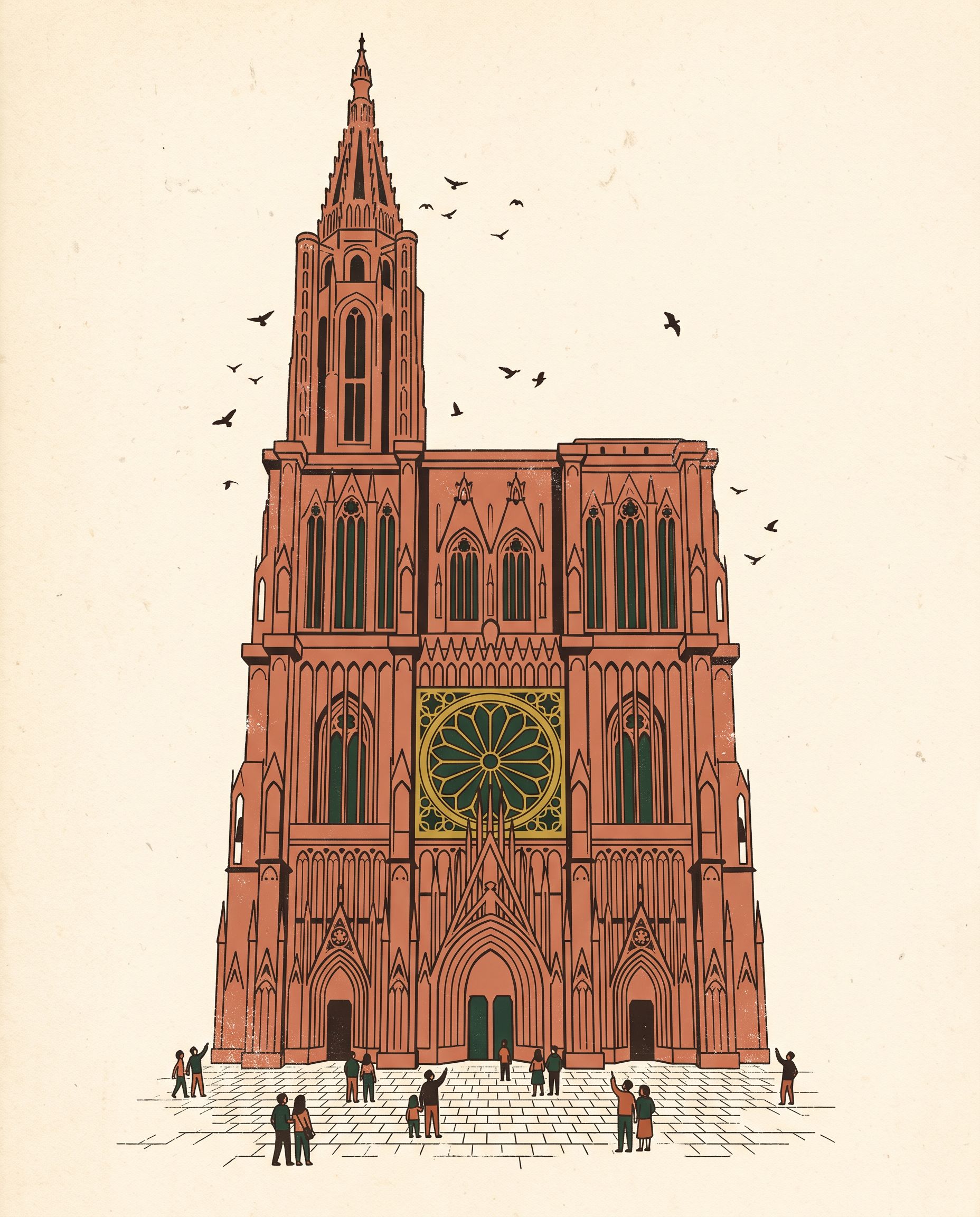
Victor Hugo called it a prodigy of the gigantic and the delicate, and the phrase has not aged. The single spire of Notre-Dame de Strasbourg, 142 metres finished in 1439, made it the tallest building in the world for more than two centuries, and it remains one of the great achievements of Gothic architecture.
It is also a building that punishes improvisation. The wrong hour, a queue that eats your morning, the astronomical clock missed by ten minutes. Here is the working manual, written from years of walking visitors round it.
Three visits in one building
The first thing to understand is that the cathedral is not one visit. It is three, and nothing joins them up: different entrances, different hours, different tickets.
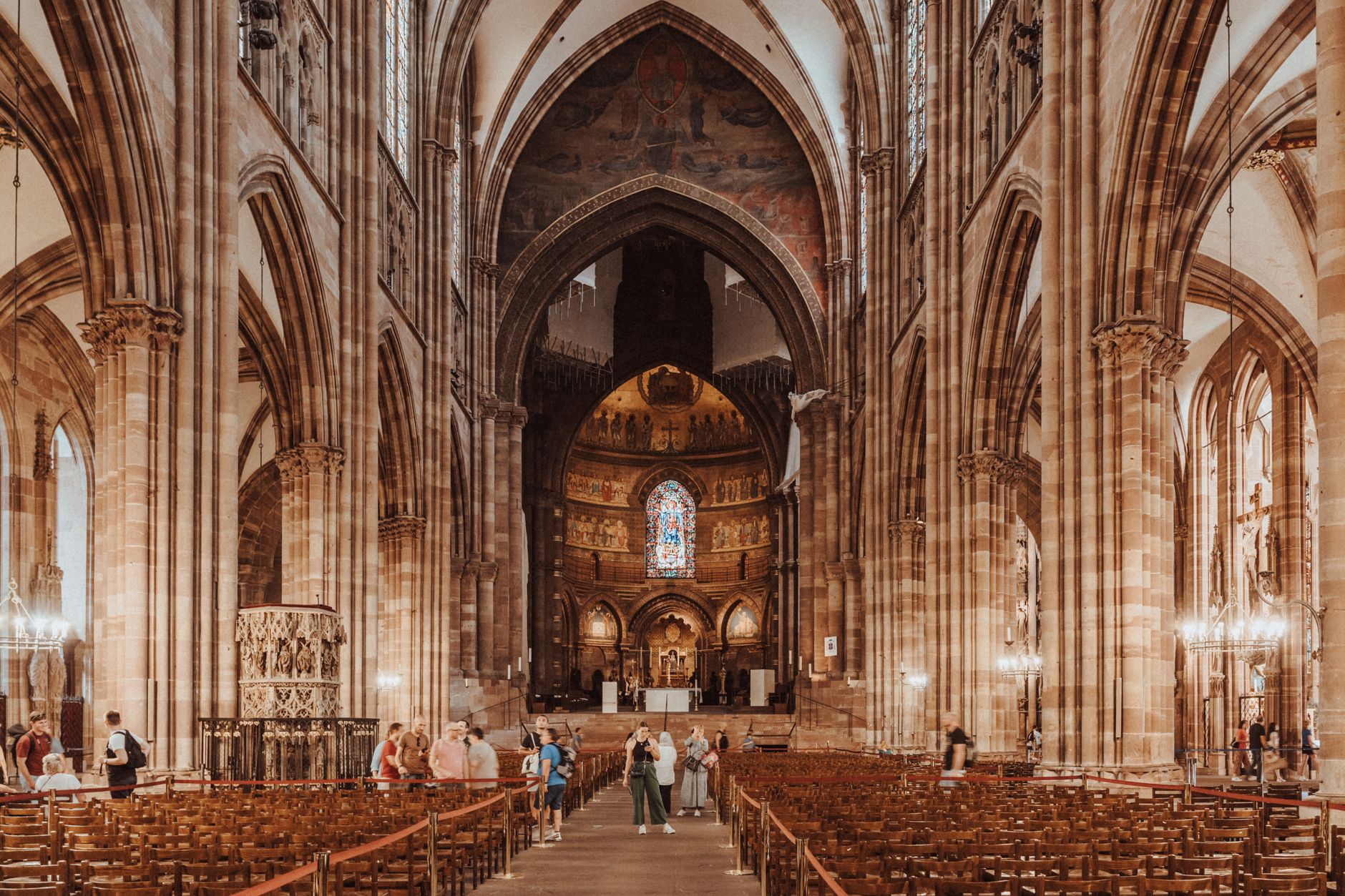
- The nave, free. Stained glass from the twelfth to the fourteenth century, the great rose window, the Pillar of the Angels, a flamboyant pulpit and the organ hanging off the wall like a swallow's nest.
- The astronomical clock, ticketed for the full show. A Renaissance masterpiece whose automata parade once a day, and once only.
- The platform, ticketed. 332 steps to stand 66 metres up at the foot of the spire.
Do all three and you are looking at most of a morning plus the middle of the day. Do one, and it should be the nave, which costs nothing.
Ten minutes outside before you go in
Reading a facade like this one is a skill, and most visitors photograph it without seeing half of what is carved into it. A guided walk through the historic quarters takes in the portals and the sculpture before carrying on into the old town, which is the version to choose if you want the building explained rather than admired.
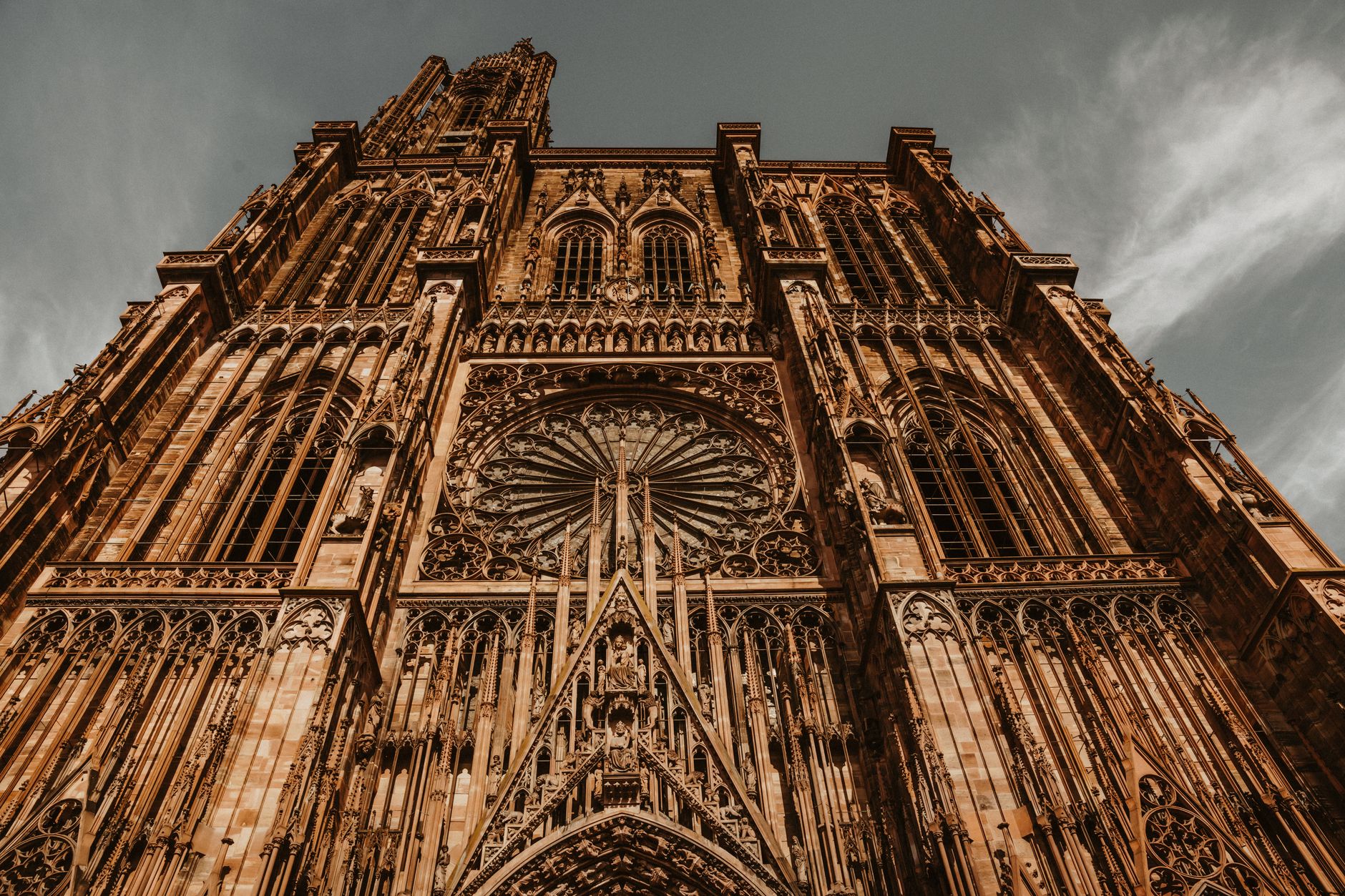
Walk back to the far end of the square first. The facade of pink Vosges sandstone is a book written in stone: hundreds of statues, three carved portals, and a rose window more than 13 metres across.
Look for the details rather than the whole. On the south side of the front, the Wise and the Foolish Virgins, and the Tempter with his back crawling with toads and snakes. Then follow the tower up: the stone lacework of the spire was a technical feat of the fifteenth century that nobody matched at the time.
Getting in at the right hour
The nave is open every day and free, but it shuts for a stretch in the middle of the day, and again on Sunday mornings for services, which catches out a great many visitors. Check the day's hours rather than assuming, and note that the building closes altogether on a handful of public holidays.
Two slots are worth aiming for. The morning opening, when the light crosses the glass in an almost empty nave, and the end of the day. Between late morning and mid afternoon in season you will visit inside a continuous stream of tour groups. Visitors go in through the main portal, facing the Kammerzell house.
The astronomical clock, and the time everyone misses
The great parade of automata runs once a day, at 12.30pm. The apostles file past Christ, who blesses them, the cock crows three times, and Death strikes the hour. It lasts a few minutes, and it is what most people come for.
Access to the full show, with the explanatory film that runs shortly before it, is by the south portal, and the doors open around three quarters of an hour ahead. Tickets are inexpensive and sold on the day only: first at the kiosks in the south gallery during the morning, then at the place Saint-Michel entrance from late morning.
Plenty of visitors discover the clock at one in the afternoon. That is half an hour too late, and the only answer is to come back tomorrow. If it matters to you, build the day around it: the show, then lunch in a winstub a quarter of an hour later, since the good tables are five minutes' walk away.
On Sundays there is no film, but access to the clock is free after the late morning mass, and the parade still runs at the usual time.
Standing still, the clock is arguably more interesting than in motion. Perpetual calendar, astronomical readings, the equation of time. The scholars and clockmakers who built it in the sixteenth century, and Jean-Baptiste Schwilgue who rebuilt the mechanism in the nineteenth, produced a mechanical computer two hundred years early.
The platform: 332 steps, and no lift
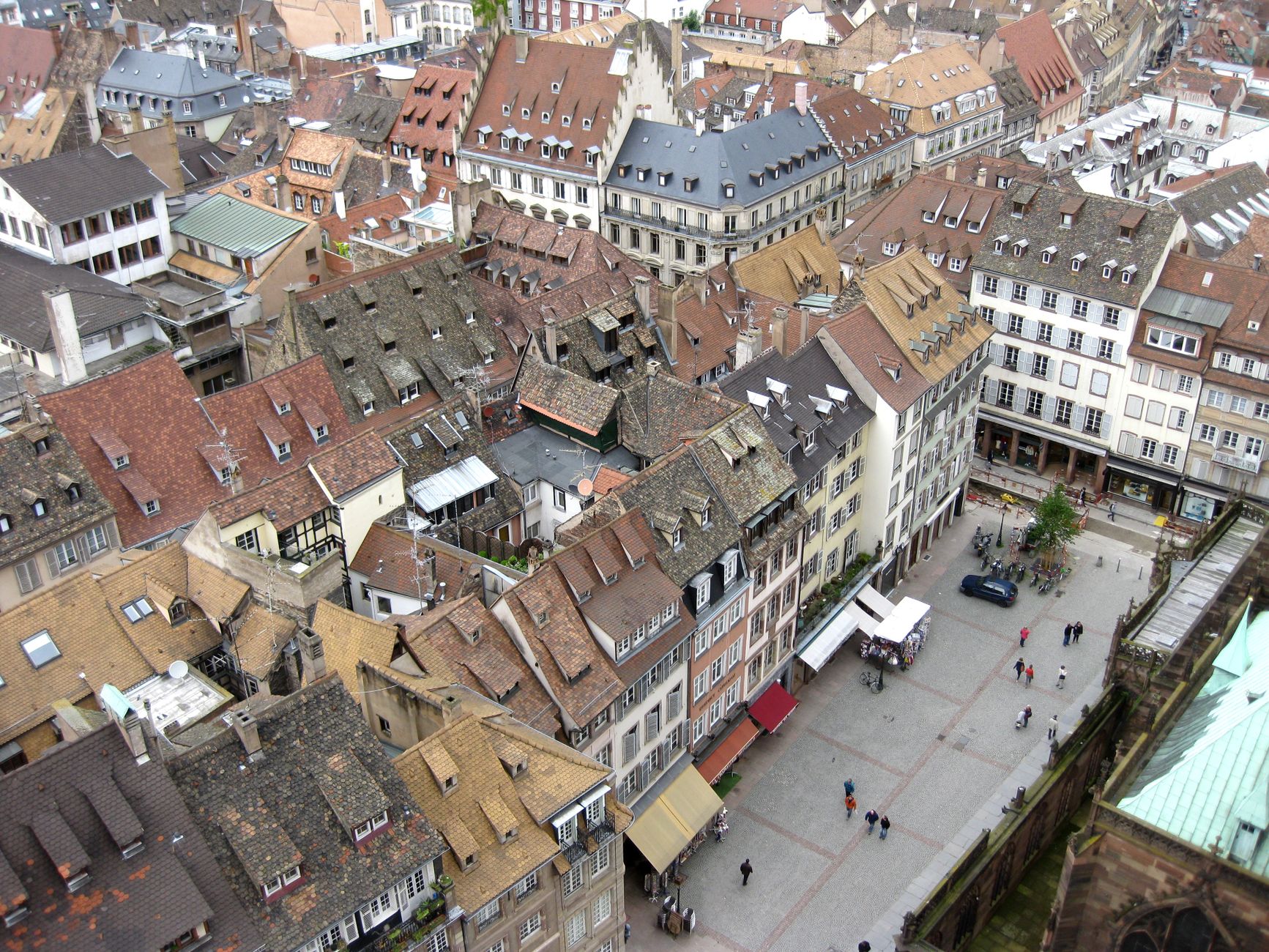
The way up is outside the building, on the place du Chateau side. It is a spiral staircase cut into the tower, narrow, but broken by spectacular views through the tracery windows on the way up. At the top, 66 metres up, you get the roofs of the Grande Ile, the Alsace plain, and on a clear day the blue line of the Vosges on one side and the Black Forest on the other.
Tickets are €8 full price and €5 concession, which covers six to eighteen year olds, students and Strasbourg City Card holders. Under-sixes climb free, as do visitors with a disability and one companion.
They are sold on site only, at the desk on the place du Chateau, on the day. There is no online booking, no skip-the-queue ticket and no way round the queue. Opening is later and closing earlier in winter than in summer, and the last climb is set well before closing time, so a late afternoon arrival in December will not get you up.
Climb in the morning. The haze over the plain usually lifts before midday, so an early climb buys you both the view and a cool staircase. In summer the shaft becomes an oven by the early afternoon. Allow 45 minutes for the round trip with time to stand and look.
There is no lift. The climb asks for ordinary legs, but it genuinely asks.
When the queue is not worth joining
Coming back at the end of the afternoon only works if you are staying close enough for a second trip to cost you nothing. This one is a few minutes from the portal, which turns the advice above into something you will actually do rather than something you read and ignore.
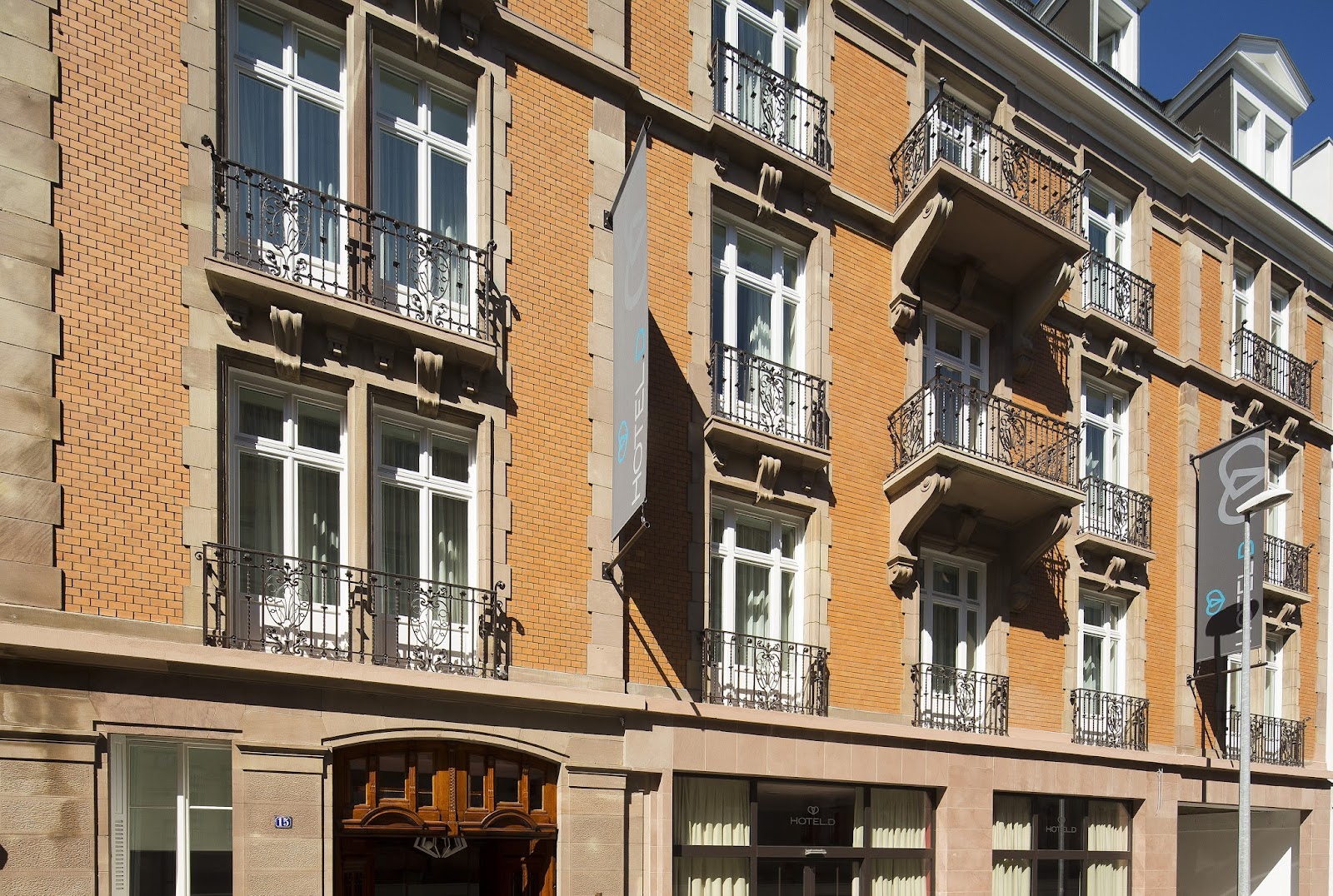
Hôtel D★ 4,5 · 848 reviews
Two moments are honestly bad. From June to August, and every day of the Christmas market, the platform queue between late morning and mid afternoon can cost you the best part of an hour on an unshaded pavement. The clock adds a second surge, because everyone converges on the south portal at once before the parade.
If you arrive in that window, do the facade and the free nave, eat, and come back at the end of the afternoon. Nothing about the view improves by queueing for it at one o'clock in July.
Three things almost nobody notices
- The Pillar of the Angels, thirteenth century, in the south transept, one of the wonders of Gothic sculpture. Facing it, the carved staircase rail: look for the sculptor's little dog, the most endearing legend in the building.
- The rose window from outside at sunset, seen from rue Merciere. That is when the sandstone genuinely turns pink, and it lasts a few minutes a day.
- The green ray. At the equinoxes a shaft of light crosses a window and strikes the canopy of the pulpit around solar noon. Very few cathedrals offer an appointment like that.
How long to allow, honestly
- The nave alone: 45 minutes.
- Nave and platform: 1 hr 45, queue included on a normal day.
- The full round with the clock: 2 hr 30, built around the middle of the day.
To go further, the Musee de l'Oeuvre Notre-Dame stands thirty metres from the south portal and holds the original facade sculptures and the medieval building plans drawn on parchment. It is the perfect companion to the visit, in one of the finest secular buildings in the city, and like the other city museums it closes on Tuesdays.
Ten minutes' walk west, La Petite France is the natural second half of the day, and our guide to what to see in Strasbourg puts both in a running order that avoids crossing the same bridge three times.
Sources: Fondation de l'Oeuvre Notre-Dame and the cathedral parish for hours and admission, Strasbourg tourist office. Prices and times shift with the season and are driven by our facts table, last reviewed in August 2026. Check the day before you visit, particularly for the platform and the clock.
Frequently asked questions
How much does it cost to go up Strasbourg Cathedral?
Can you book Strasbourg Cathedral tickets in advance?
What time does the astronomical clock work?
Is Strasbourg Cathedral free to enter?
How many steps are there to the platform?
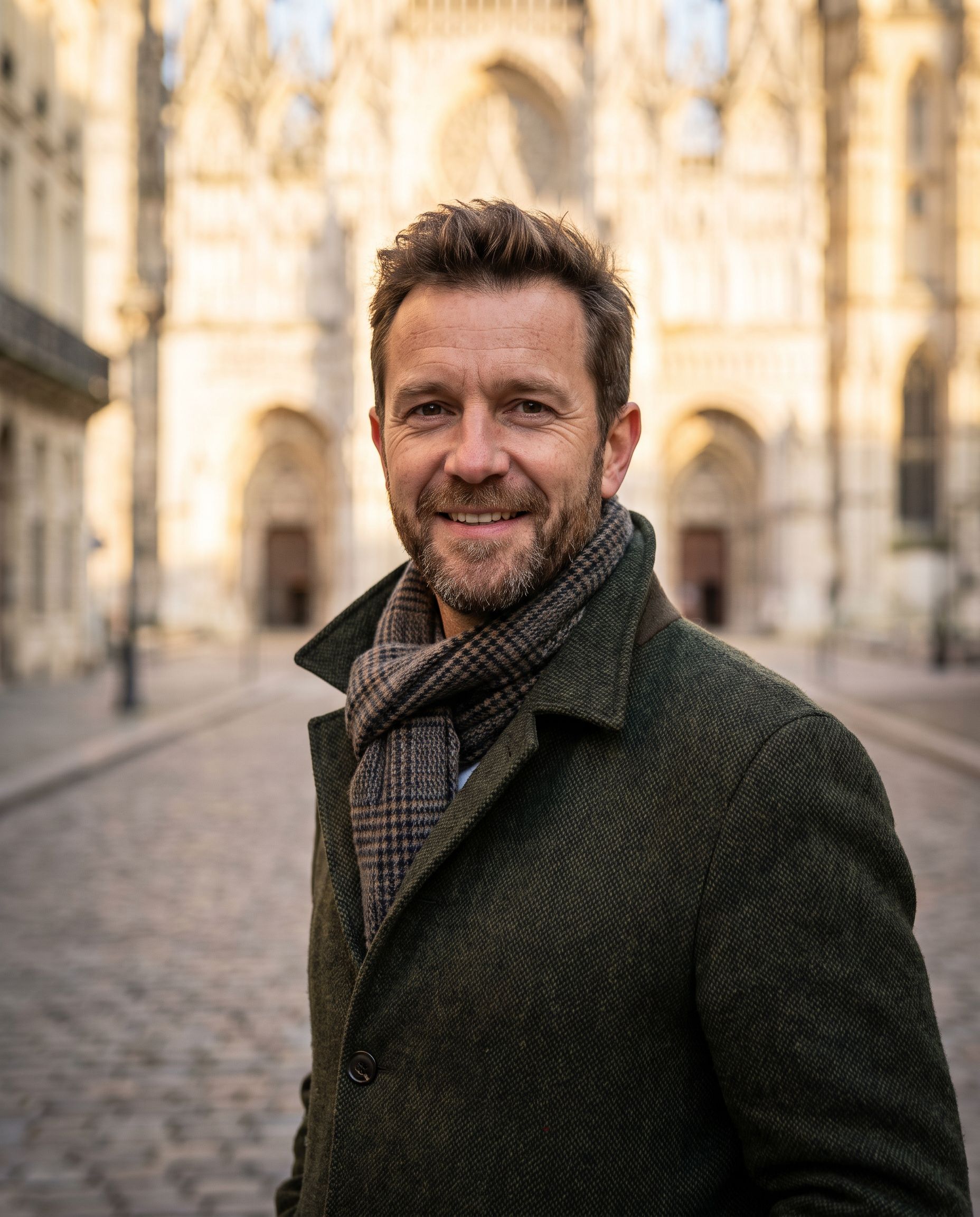
Théo Lindner
Théo grew up between Strasbourg and the Vosges. He walks every route before publishing it, times every leg, and would rather cut a stop than pretend a day is longer than it is.