Strasbourg in Winter: What Is Worth It After the Market
Everyone knows December. Almost nobody writes about 27 December to March, when the lights stay on, prices halve and the old town belongs to residents.
Strasbourg has two winters, and almost every visitor only knows one.
The first is December: 8 Christmas markets, millions of visitors, hotel prices at double, and an island of old streets where a Saturday afternoon is spent walking at somebody else's pace.
The second begins on 27 December and runs to the end of March. The city empties, the prices fall, and the old town goes back to the people who live in it. Practically nobody writes about those three months, and that is a mistake.
What the weather actually does
No point dressing this up. The official 1991 to 2020 normals for the Strasbourg-Entzheim weather station are unambiguous, and this city sits on the Rhine plain, closer in climate to south-west Germany than to anywhere in the south of France.
| Day | Night | Also | |
|---|---|---|---|
| Late November | 9 °C | 3 °C | 7 days of frost in the month |
| December | 6 °C | 0 °C | 14 frost days, an average of 6 days with snow, the snowiest month |
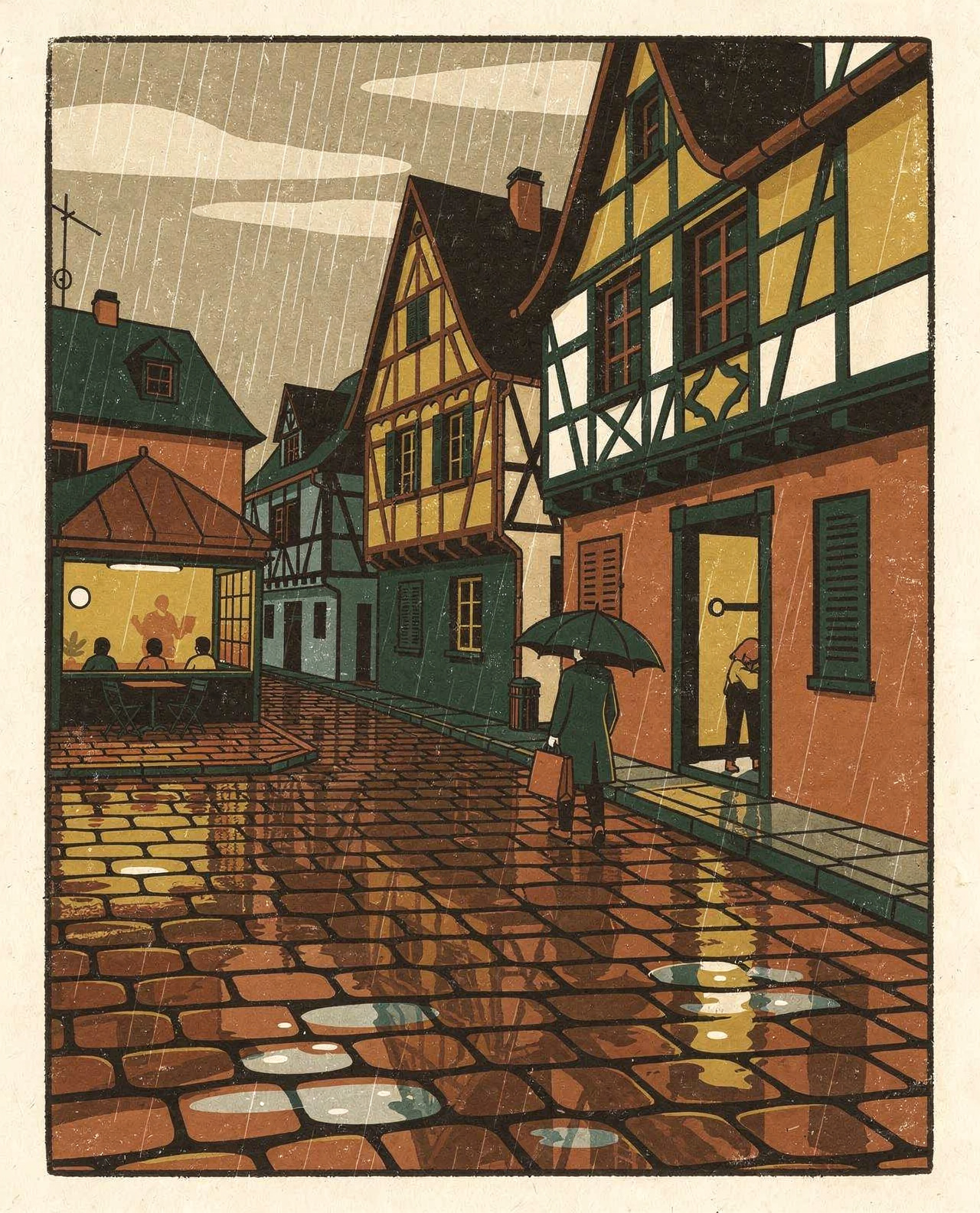
Add roughly ten days of rain a month. A compact umbrella is not an optional extra here, it is equipment.
Then there is the light. In December the sun sets around 4.35pm, which sounds like a drawback and is in fact the whole point. The illuminations come on early, and the best hour of the day falls in the middle of the afternoon.
What to pack, from an editorial team that works here: layers, because the gap between a freezing lane and an overheated shop is brutal. Proper warm shoes, because you will spend hours on cold stone. Gloves and a hat. Mulled wine warms your hands, not your feet.
The real secret: the week between Christmas and New Year
If your dates fall earlier, while the chalets are still standing, the villages are the part of Alsace you cannot reach on your own in winter.
A day out to the Christmas markets of Colmar and the villages covers them in one run, which is the only realistic version of it without a car.
The Christmas market itself runs from 27 November to 24 December. What almost no guide tells you is what happens immediately afterwards.
From 27 December into early January the Christmas illuminations stay on, while the market itself has been dismantled or survives only in fragments. The great tree on Place Kléber also stays up and is still there in the first days of January.
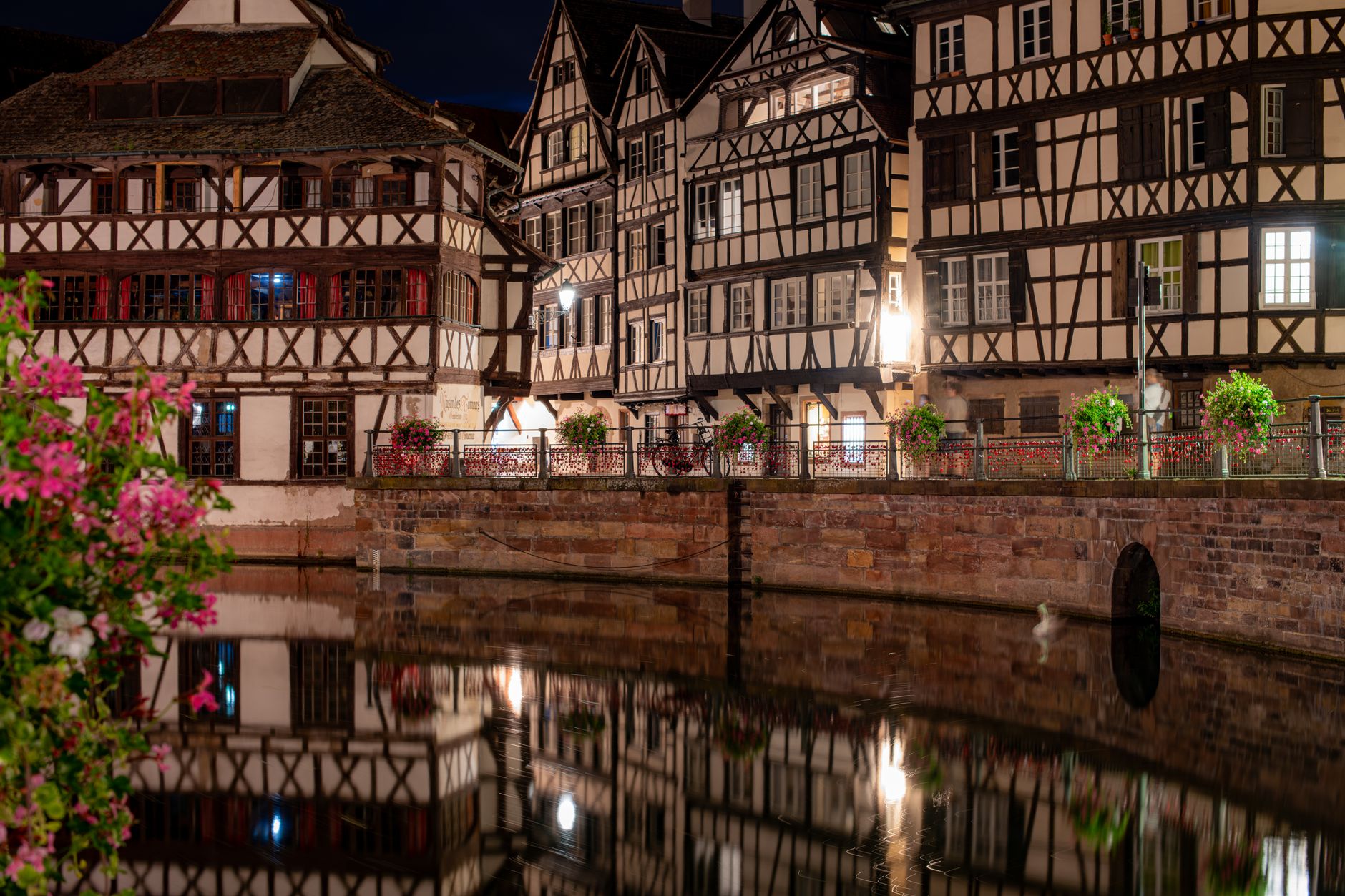
The result is the best version of the city: the same lit lanes, the same reflections in the Ill, and a fraction of the people. If you want the photographs Strasbourg is famous for without the crowd, that is your week.
It is also the cheapest good week of the winter, because the December surcharge has gone and the January quiet has not yet emptied the restaurants.
The old town, finally walkable
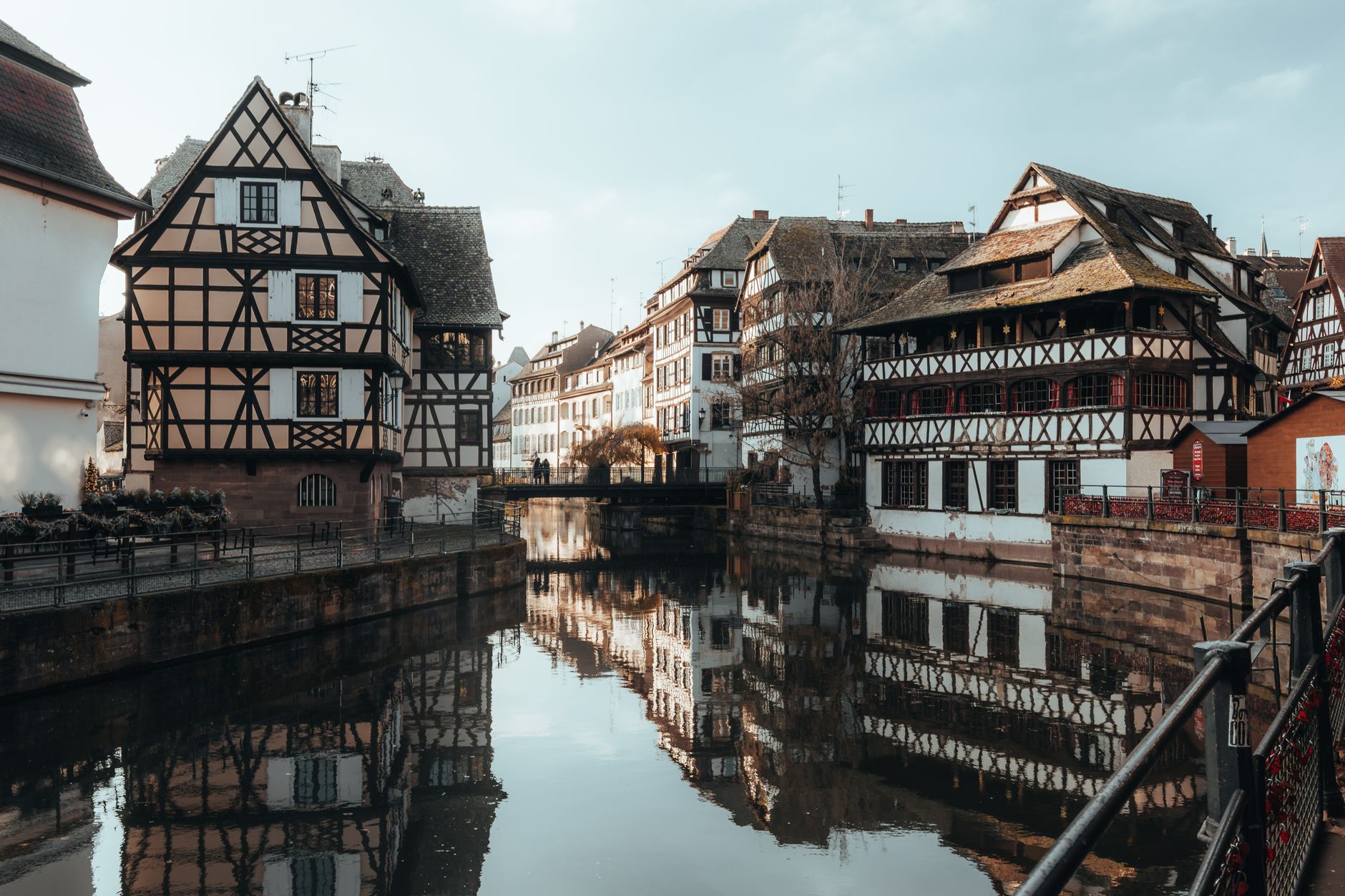
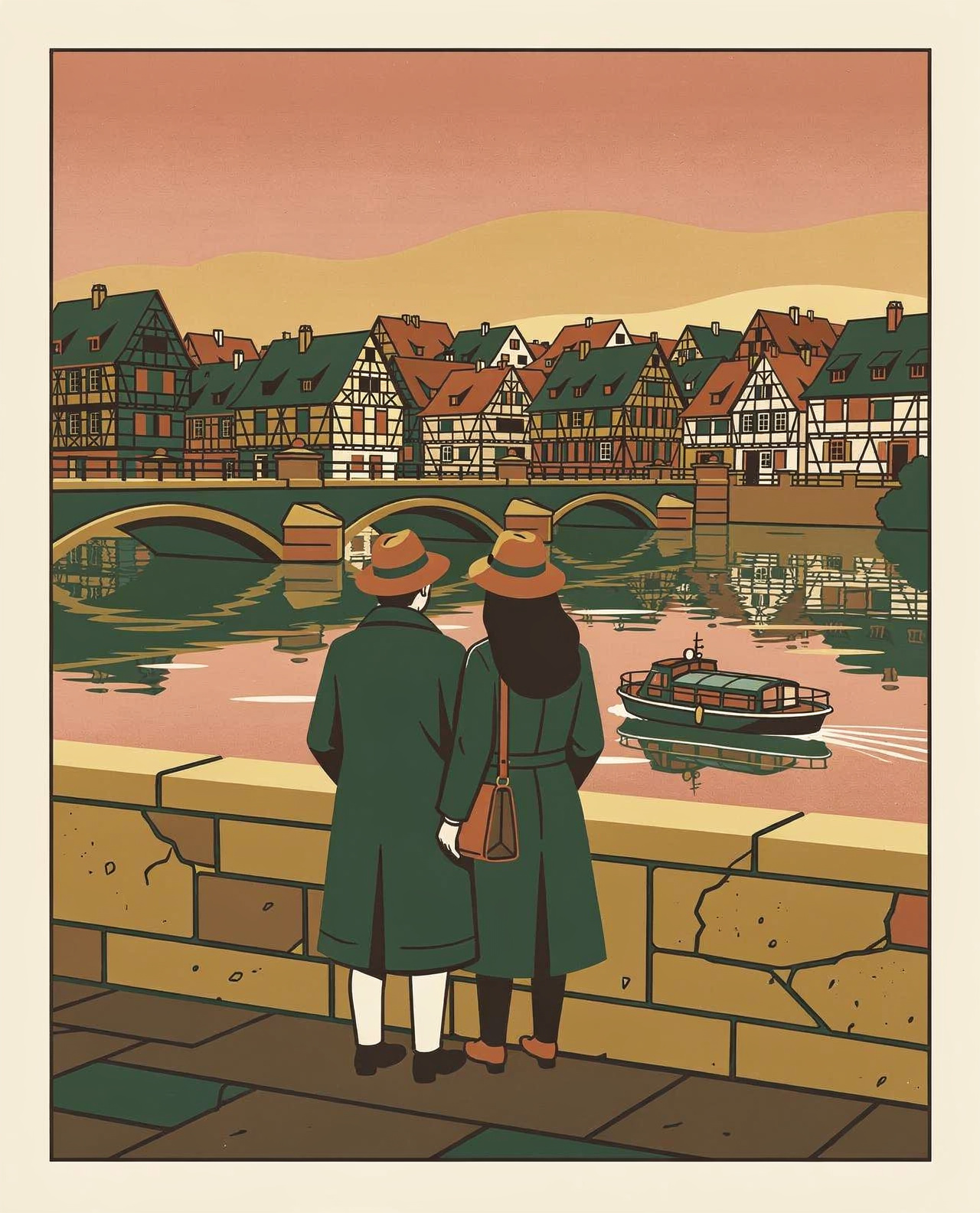
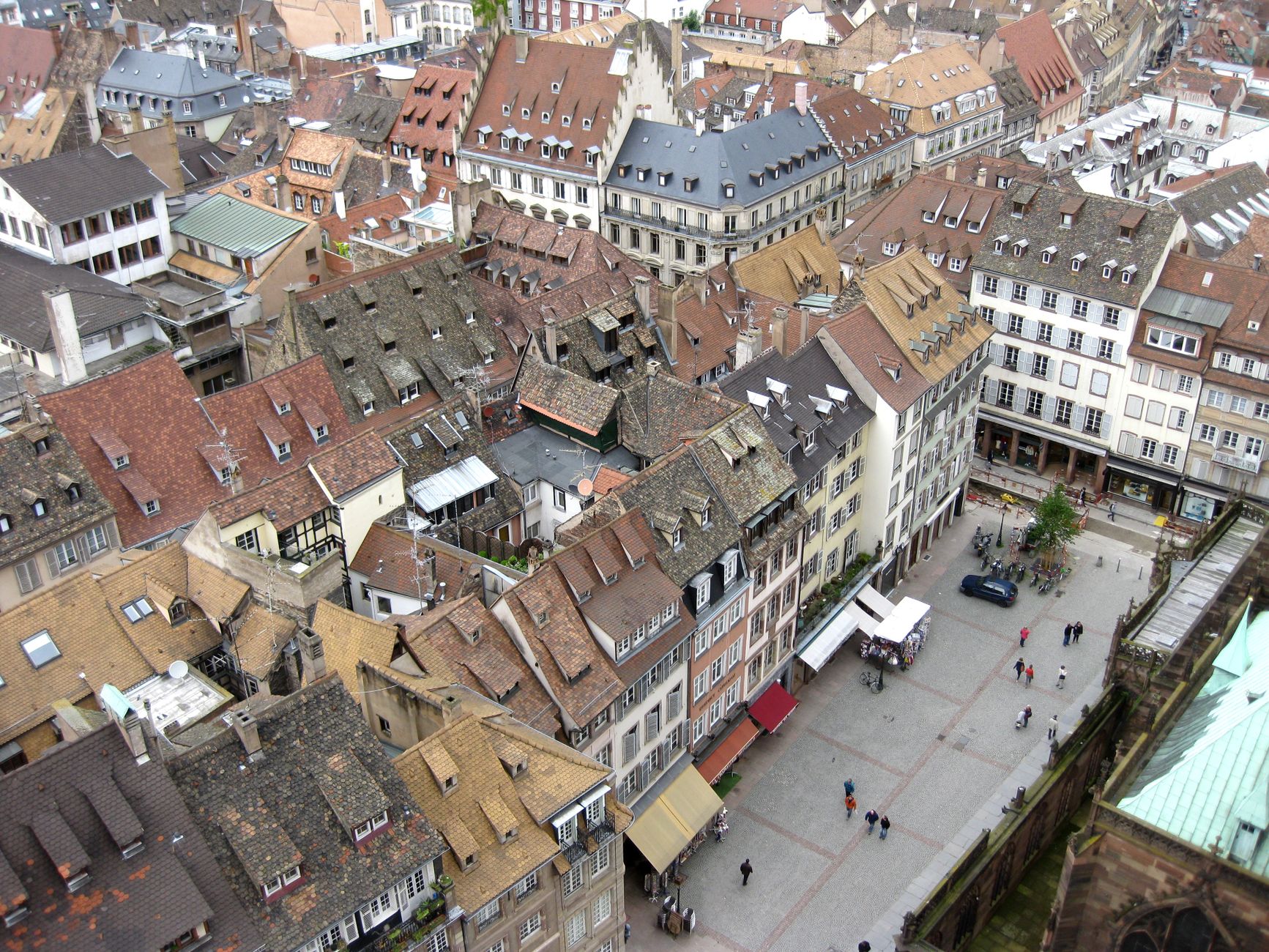
La Petite France in February is a different place from La Petite France in December. The quarter is bare, the timbered facades stand out properly, and on a weekday morning you are often the only person in the Rue du Bain-aux-Plantes.
The same is true of the cathedral square, of the lanes behind the Palais Rohan, and of the covered bridges. In December these are places you shuffle through. In February they are places you stand still in.
If you want to understand how the quarters fit together before you walk them, our maps page lays them out, and the nine-stage walking route in things to do in Strasbourg works unchanged in winter. It simply needs fewer nerves and better gloves.
Hotel prices, which is the strongest argument
This is the section that decides winter trips, and the gap it describes is real rather than a marketing line.
The clearest illustration is a central address whose rate falls hard in the quiet months while its location does not move an inch.
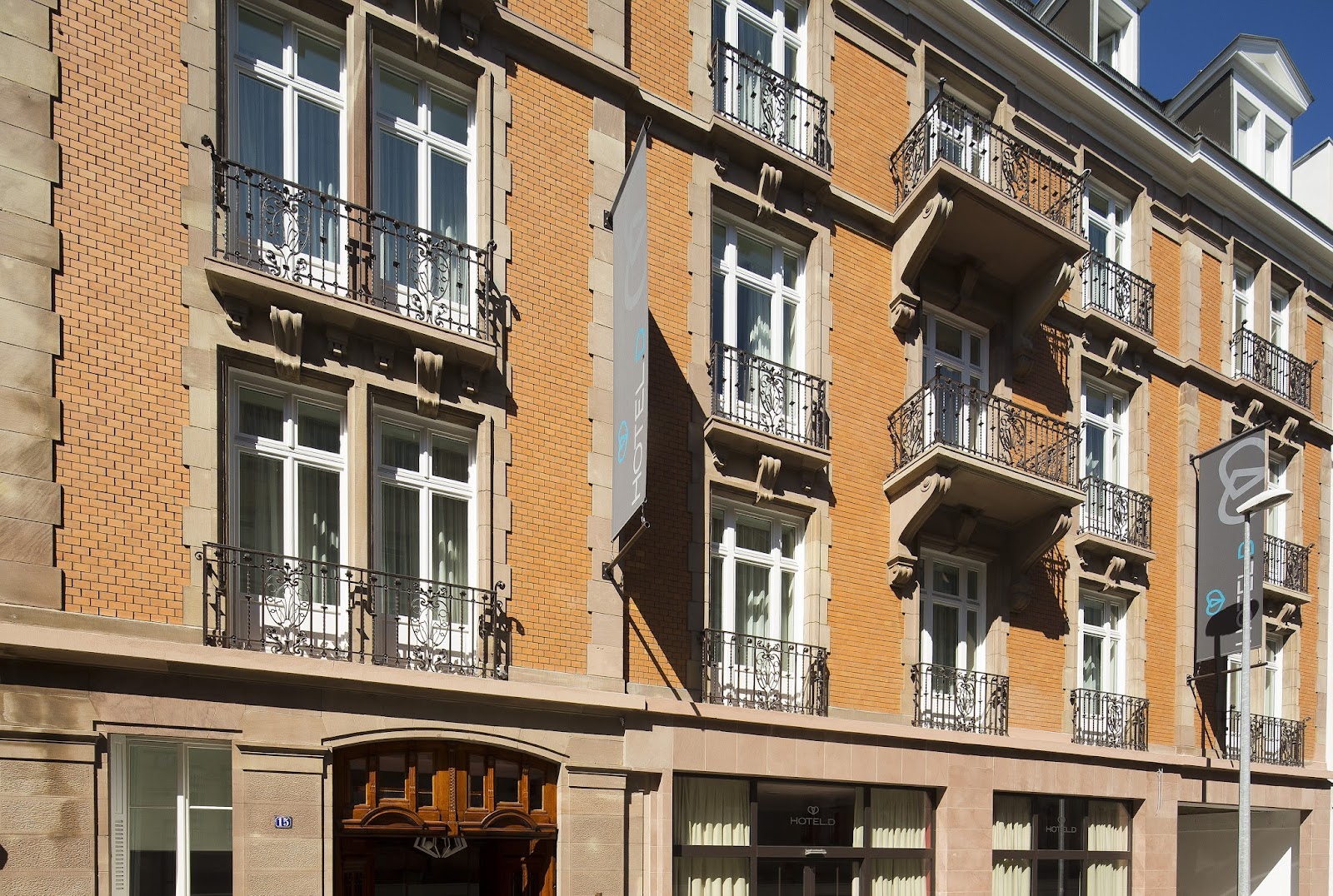
Hôtel D★ 4,5 · 848 reviews
This is the part that decides trips. A room that costs a fortune in the second week of December costs something entirely ordinary in February. Same room, same location, same city.
As a rough guide from our own price surveys, a three-star in the low season, meaning January, February and November, sits at €90 to €130, and a four-star in the shoulder season at €170 to €230. Those are the numbers December visitors do not believe when you tell them.
Winter is also the season that makes a spa hotel make sense, which is exactly the category where the December to February gap is widest. Booking two months out matters far less than it does in Advent, and cancellation terms are usually kinder.
Indoors: the warm addresses
The warmest places in a Strasbourg winter tend to be underground, and one or two of them you can sleep above.
A sauna under stone vaults, in a Renaissance courtyard house a few minutes from the cathedral, is the most seasonal thing the city has to offer.
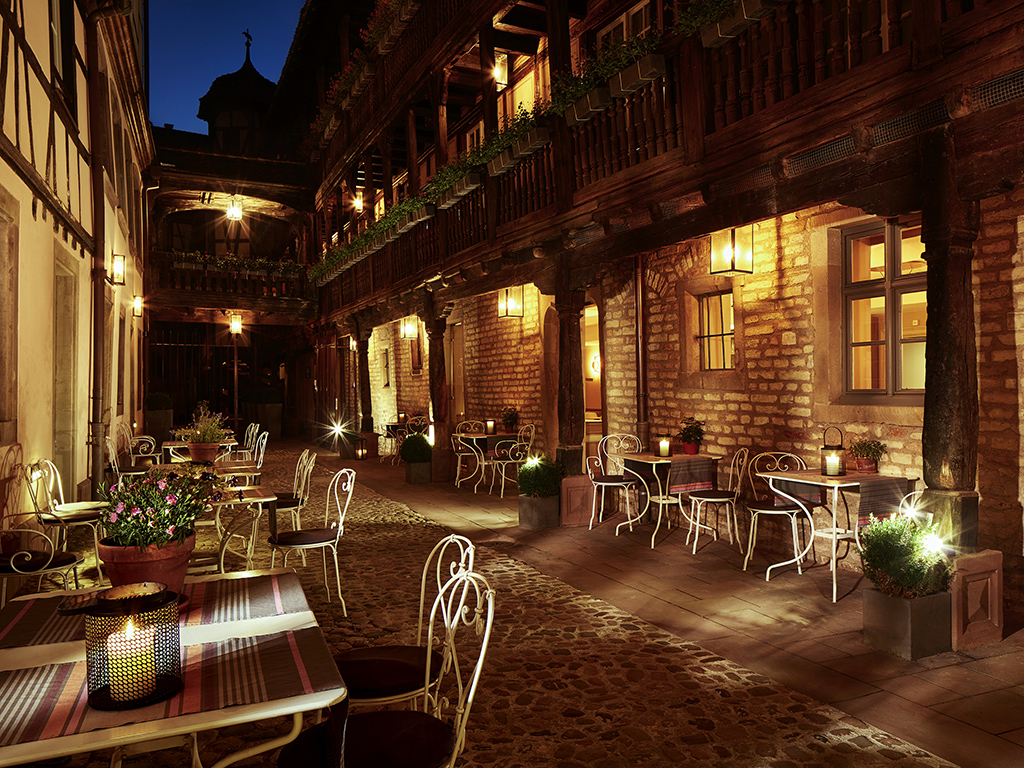
Cour du Corbeau★ 4,8 · 1,311 reviews
Winter is the season in which Strasbourg's interiors finally make sense.
- The cathedral. The nave is free, enormous and nearly empty in winter. The astronomical clock still performs daily at 12.30pm, and the queue for it in February bears no relation to the queue in August.
- The Palais Rohan museums. Three collections under one roof in the middle of the old town: fine arts, decorative arts and archaeology.
- The Musée d'Art moderne et contemporain, the glass hall across from the Vauban dam, with a roof terrace and a café that is a good place to wait out a shower.
- The winstubs. Small, panelled, overheated wine rooms. This is exactly the weather they were built for.
The city museums cost €9 full price, with a day pass for all of them at €20. They close on Tuesdays, and entry is free on the first Sunday of every month, which in winter is a genuinely good day to be in Strasbourg rather than a crush.
The boat trip, underrated in winter
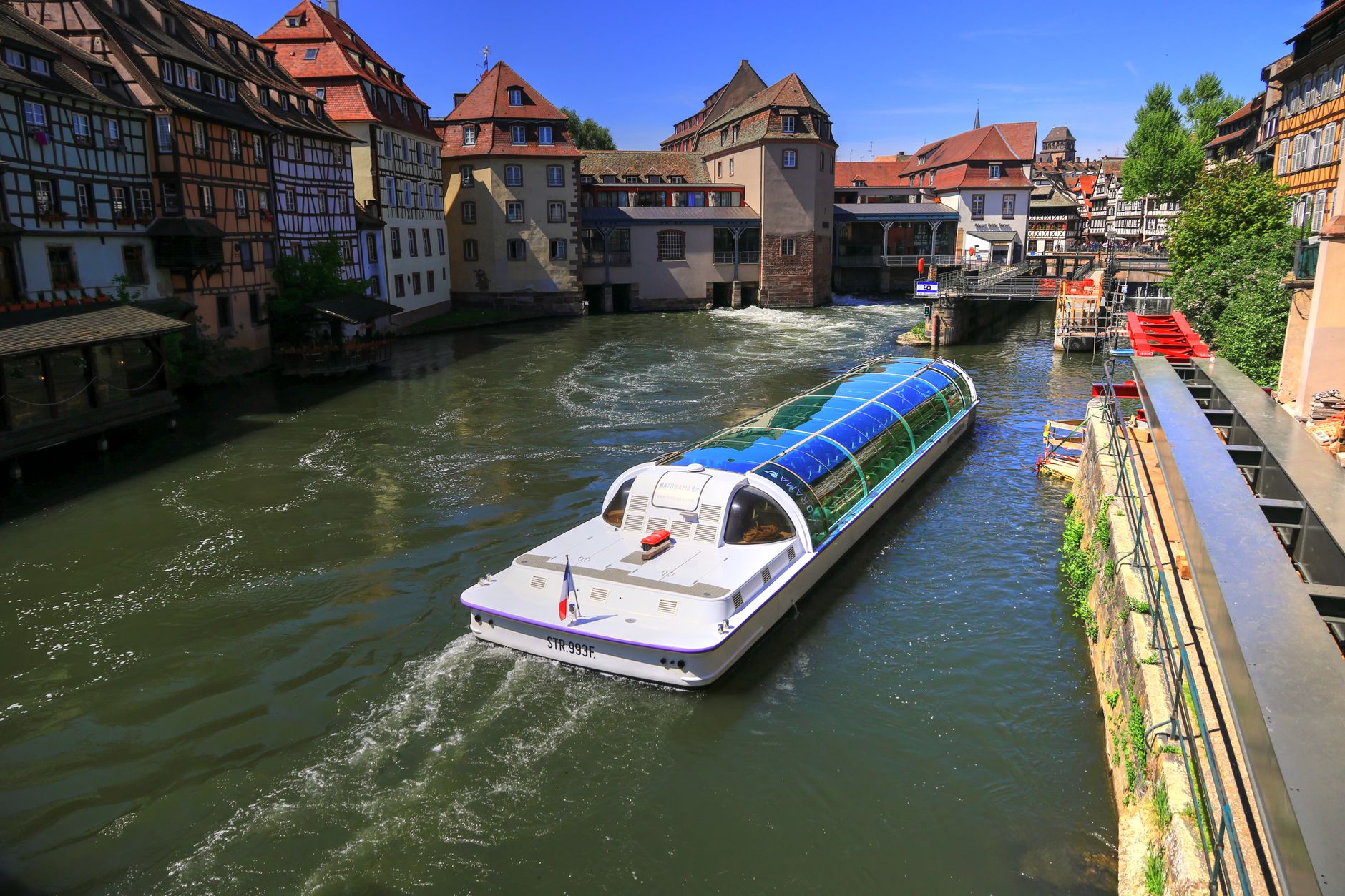
The boats run all year, and the covered ones are heated. Sitting for an hour and ten minutes while the city goes past outside is considerably more attractive in January than it is in August, and there is generally no queue.
It is also the single best way to see the city if the weather has genuinely turned. You get the Grande Île, the covered bridges, the Vauban dam and the European quarter from the water, with a roof over you.
Food that fits the season
Alsatian cooking is winter cooking, and in February it tastes more correct than it ever does in July.
Baeckeoffe is the three-meat pot baked for hours with potatoes in a sealed earthenware dish. Choucroute garnie is fermented cabbage cooked in dry white wine with juniper, milder in acidity than German sauerkraut and buried under smoked pork. Tarte flambée comes straight out of a wood-fired oven, thin, blistered and shared.
Drink dry white wine with all of it: riesling or pinot blanc, or a crémant d'Alsace, which in Strasbourg is an everyday drink rather than an occasion. What each dish actually contains, and the traps on the menu, are set out in Alsatian food.
One practical warning that ruins more winter evenings than the cold does. Traditional winstubs work in two services, lunch and dinner, with the kitchen genuinely shut in between, and many of them close on Sunday evening and on Monday. Book, or eat early.
What does not work in winter
In fairness, the other side of the ledger.
- The wine route in January. A lot of growers and village restaurants close for weeks after New Year. Check before you go, or you will be standing in a very pretty and very shut Riquewihr. The seasonal shuttle that makes a multi-village day possible does not run in winter at all: see the Alsace Wine Route guide.
- Long evenings on a terrace. Obvious, but it shapes the rhythm of a trip: winter evenings in Strasbourg happen indoors, and the city goes quiet earlier than you expect.
- The storks in the Parc de l'Orangerie. Part of the population now stays all year, but the park in February is mostly wet.
- Any guarantee of sun. Winter on the Rhine plain is grey and often foggy. If you are travelling for light, come in May.
Getting here, and getting around
Colmar is the winter day out that needs no shuttle and no car, with trains running through the day. If you want the villages around it as well, the day trip to Colmar, Riquewihr and Eguisheim is the only way to string them together once the seasonal buses have stopped.
Winter strengthens the case for the train, which was already strong. 1 hr 45 min from Paris Est, and the main station is a ten-minute walk from the island of the old town. No fog on the drive home, no car park to find, no snow clearance to worry about.
If you do arrive by car, the rule is the same as in December: do not take it into the centre. A park and ride ticket costs €4.20 for the day and covers the tram into town for up to seven people, which makes it cheaper than almost any central car park for a single person.
Trams and buses are the other winter ally: the network is dense, it runs late, and never waiting long is worth more in February than any sightseeing pass. One detail that surprises visitors: tram line D crosses the Rhine into Germany, reaching Kehl in 24 minutes from Homme de Fer, every 13 to 16 minutes during the day. It is a city tram that ends in another country, and in winter it is a pleasant twenty minutes of doing nothing.
Colmar is 26 to 35 minutes away with departures every 30 minutes, and it works well as a winter day out once its own market has closed. Our guide to Colmar covers which days to avoid, because a Tuesday there costs you the best museum in the region.
A tested day-by-day plan is set out in how many days you need in Strasbourg, and it works unchanged in winter with an earlier sunset. If you are coming in December after all, the Christmas market comparison is the place to start.
And if you are still deciding whether the trip is worth making at all, we answer that plainly in is Strasbourg worth visiting.
Sources
Météo-France, climate normals 1991 to 2020 for the Strasbourg-Entzheim station; the City of Strasbourg for the illuminations and the tree; the Fondation de l'Œuvre Notre-Dame for the cathedral; Batorama for year-round boat operation; CTS for tram and park and ride. Updated September 2026.
Frequently asked questions
Is Strasbourg worth visiting in winter outside the Christmas market?
How cold does Strasbourg get in winter?
When do the Christmas lights come down in Strasbourg?
How much cheaper are Strasbourg hotels in winter?
Can you visit the Alsace wine villages in winter?
Margot Keller
A Strasbourgeoise by choice for fifteen years, Margot looks after the practical pages and the Christmas market file. Every year she walks the markets from opening day, to tell the honest mulled wine from the tourist trap.