One Day in Strasbourg: The Itinerary That Fits
A day trip from Paris, or a single day on the ground. What actually fits inside the Grande Île, hour by hour, and the four things we cut to make it work.
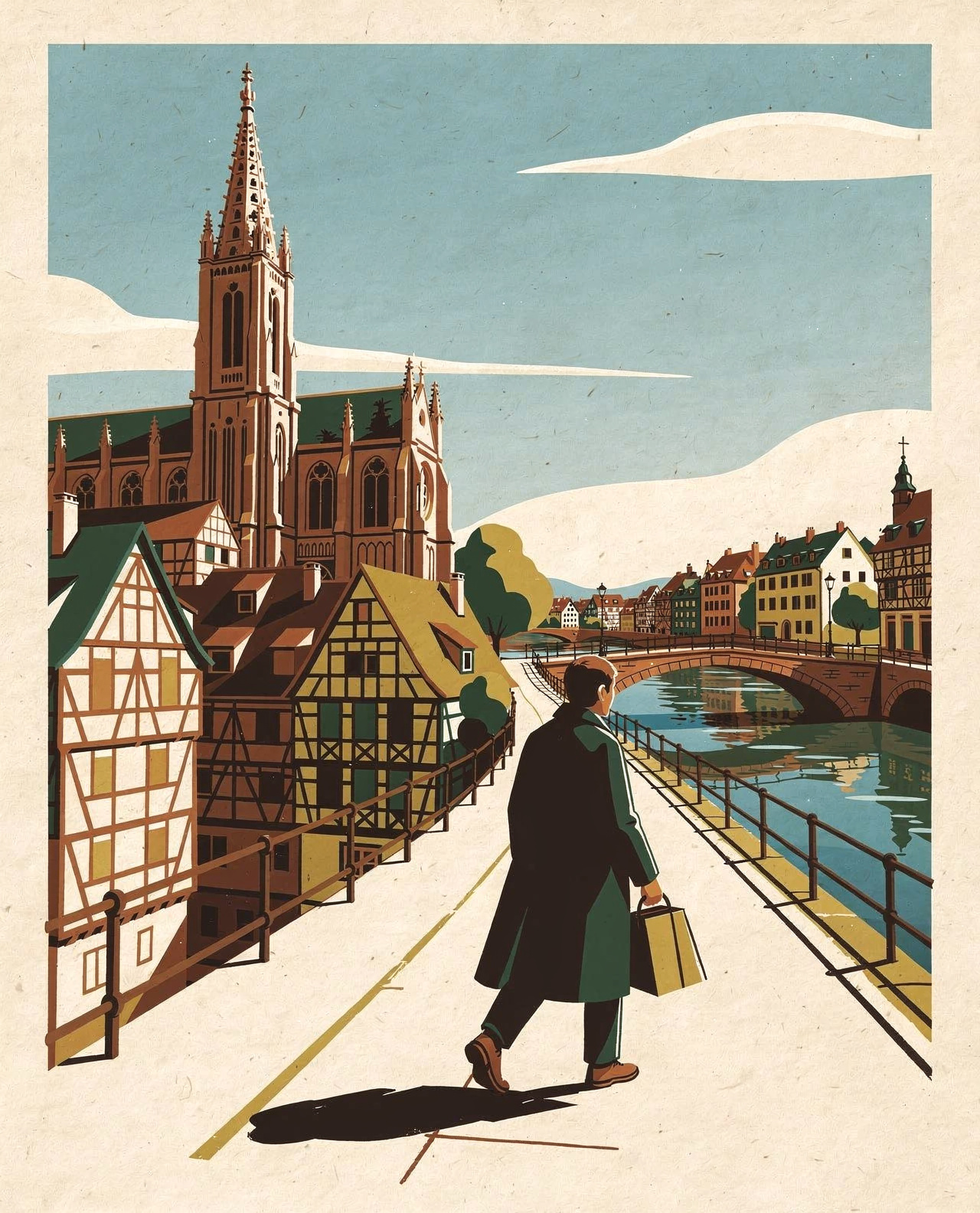
One day in Strasbourg works, and better than most people expect. Everything essential sits inside one square kilometre of pedestrian streets, which is roughly half a mile across.
There is one condition, and it is not negotiable: give up half your list before you arrive. The visitors who leave disappointed are the ones who tried to compress a two day trip into eight hours.
This is the route we give someone who arrives in the morning and leaves in the evening, with the timings that dodge the queues and the three traps that cost an hour.
Coming from Paris for the day
Coming from Paris and going home the same evening does work, but the last direct train quietly governs everything you do after five in the afternoon.
If your dates allow one night, the station district removes that pressure for very little money, and this is the address we send people to when the sums are tight.
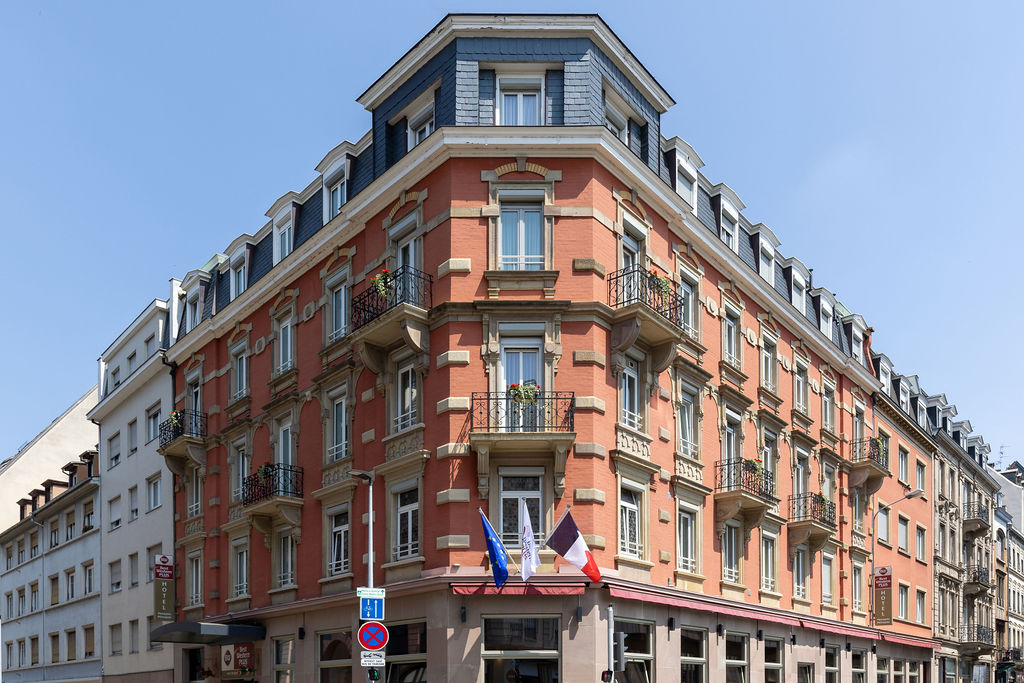
Monopole Métropole★ 4,5 · 1,317 reviews
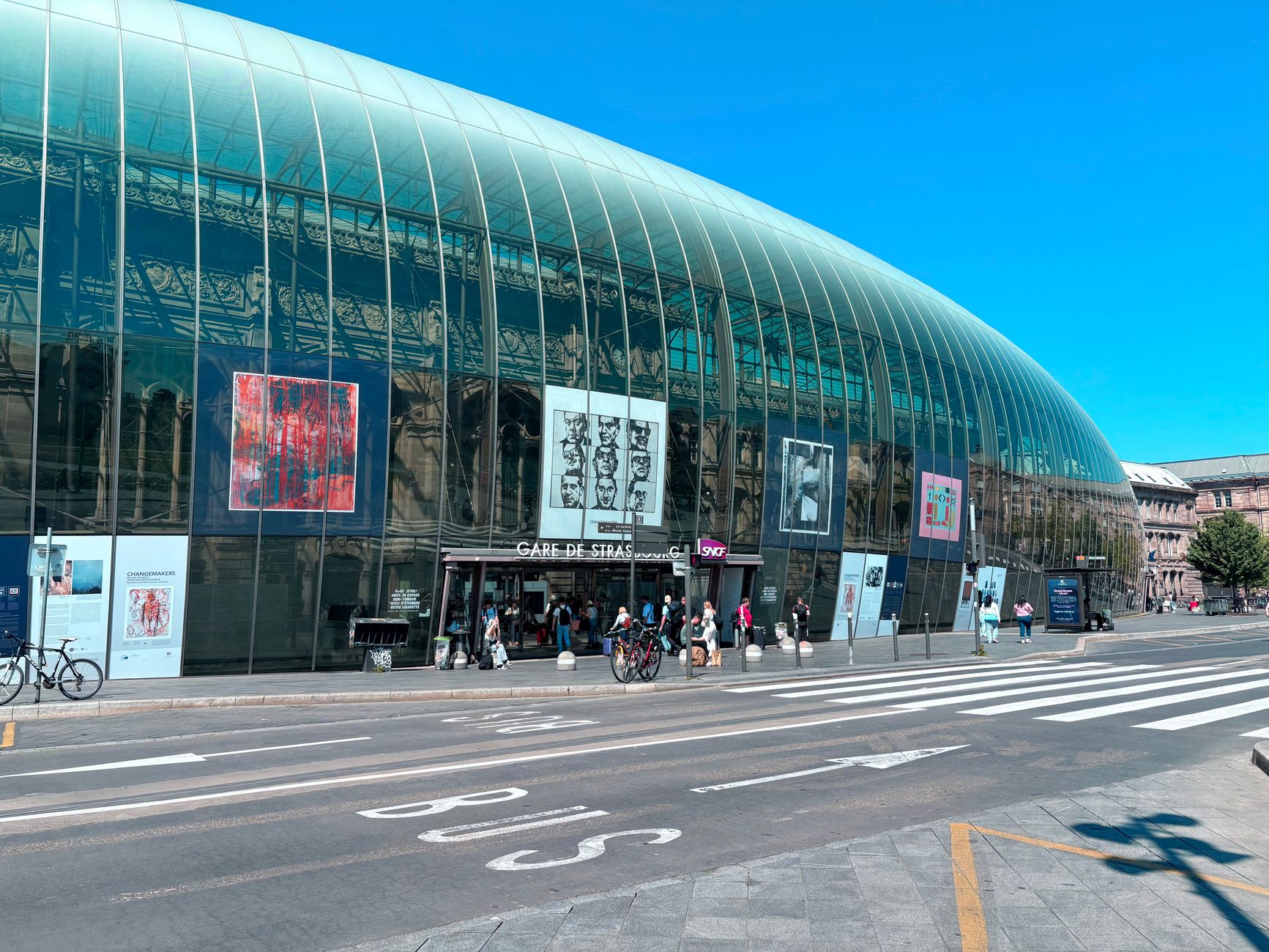
This is the most common version of a single day here, and it genuinely works. Paris Gare de l'Est to Strasbourg is 1 hr 45 min on the fastest direct TGV inOui services, which run through the day.
The arithmetic is kind. Three and a half hours of travelling still leaves eight or nine hours on the ground if you take an early train out and a late one back, which covers everything below except the museum.
Two decisions make or break it. Book the earliest direct service you can face, because the cathedral before 10am is a different building from the cathedral at midday. And check the last direct train back when you book, not on the day.
OUIGO also serves Strasbourg, from €16, with journey times that vary with the stops. One catch the comparison sites hide badly: not every OUIGO leaves from the same Paris station, some go from Marne-la-Vallée Chessy. Check your departure station at the moment you pay.
Is a day trip worth it? Yes, for the Grande Île, which is the part everyone comes for. No, if you were hoping to add Colmar or the wine route on the same day. That is a separate trip, and we set out what is actually reachable in three days in Strasbourg.
Three decisions before you start
Get rid of your bags
It is the first thing to sort out and the one most often forgotten. Dragging a suitcase over cobbles for eight hours ruins a whole day.
There are self service left luggage lockers inside the station, on platform 1, and a private locker room on boulevard du Président-Wilson a minute away that keeps longer hours. Both charge by locker size for 24 hours, and both change their prices, so check on the day rather than budgeting from an old blog.
Choose your day, if you can
Two calendar traps are worth knowing before you book anything.
The city museums close on Tuesdays. If your one day falls then, drop the museum without a second thought. The route below works perfectly well without one.
They are free the first Sunday of every month. If your day lands there, that is the moment to slip one in.
The city card, only if you tick two boxes
The tourist office on place de la Cathédrale sells the Strasbourg City Card at €5 for an adult and €3.50 for a child. It is valid 7 days and carries around fifteen discounts of 20 to 50%: the boat trip, the city museums, the cathedral platform, the tourist train, bike hire.
It is not a pass that gets you in, it is a discount card. It pays for itself the moment you do the boat trip and the platform on the same day. If you plan a single paid activity, skip it.
The route, hour by hour
Everything below is walkable and self guided, and most visitors do it exactly that way. If you would rather not navigate, a guided walk through the historic quarters covers the same ground in a morning, and the boat trip on the Ill can be booked ahead so the mid afternoon slot is not a gamble.
9am: the cathedral, before everyone else
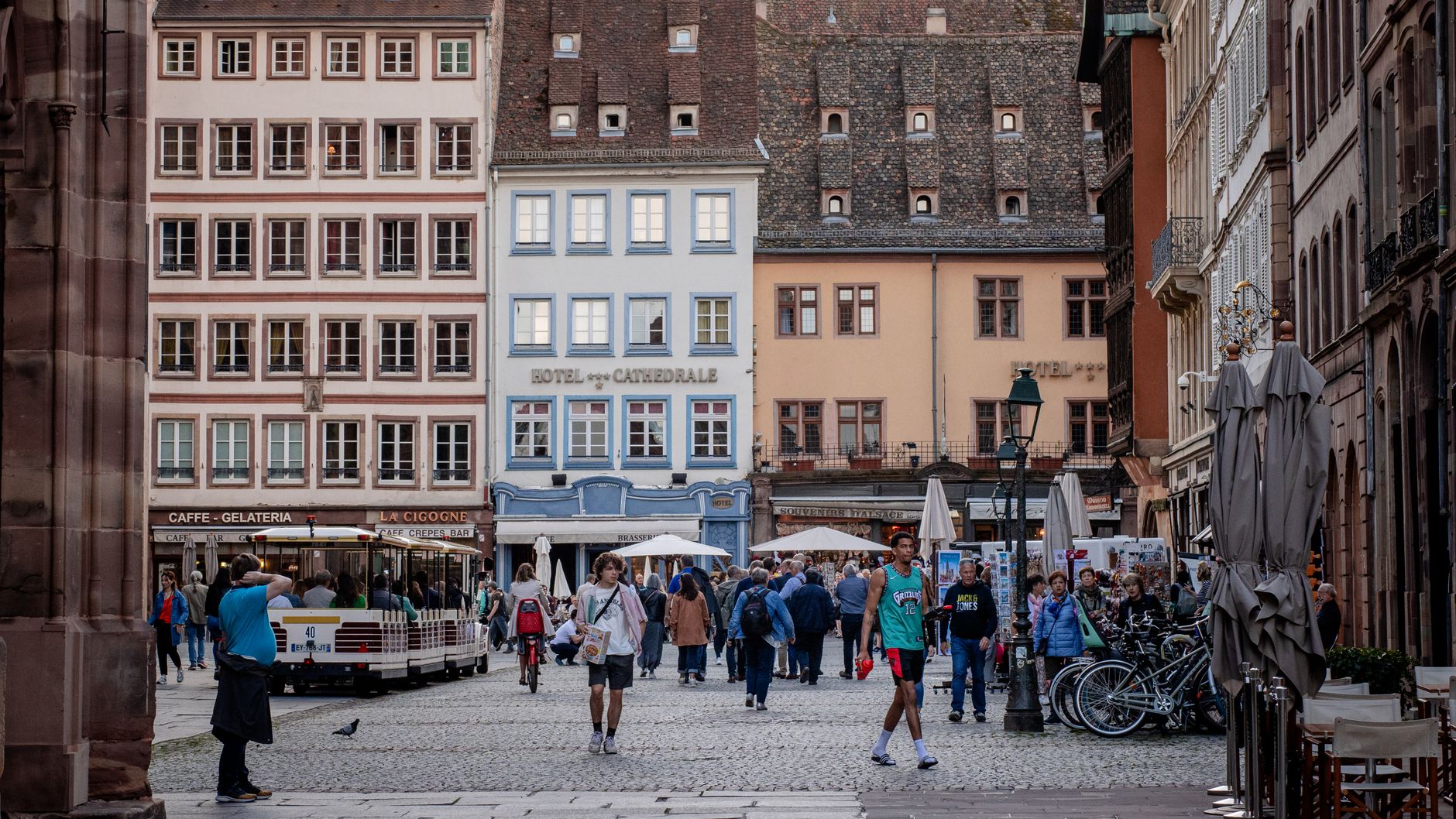
This is the only genuinely fixed time in the day. At 9am the nave is almost empty, the morning light comes through the medieval glass, and you walk out with the west front to yourself. By 11am it is a different place.
Entry to the nave is free. It does close for a break in the late morning, which catches a lot of visitors out, so look up the day's hours before you plan lunch around it.
9.30am: the platform, if you are climbing
332 steps, and a view that reaches from the Vosges to the Black Forest on a clear day. It costs €8 full price, €5 reduced.
Three things are not written on any brochure. Tickets are sold on site only, at the ticket lodge on the south side, place du Château: no booking, no online sales. Numbers on the circuit are capped. And access closes temporarily when it is busy or the weather turns.
The practical consequence is blunt. Climb now, or give it up. There is no way around the 11am summer queue.
10.30am: the cathedral quarter
Place du Château, the Maison Kammerzell and its façade carved from top to bottom, then the lanes towards place du Marché-aux-Cochons-de-Lait. Look up: the wrought iron shop signs tell you more about the city than an audio guide does.
The detail that decides your morning: the parade of figures on the astronomical clock happens once a day, at 12.30pm. Once. If you want it, put lunch after it. If you do not, do not block your morning for it.
12.30pm: lunch, booked the day before
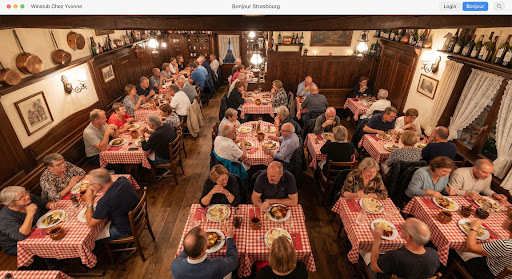
Booked, yes. A table in a winstub at half past twelve without a reservation, in season, does not exist. A winstub is the Alsatian version of a bistro, wood panelled and regional, and the good ones fill early.
Two options, depending on appetite and time. A tarte flambée, the thin Alsatian tart with cream, onions and bacon, if you want to stay light, because the day continues and a plate of choucroute at midday will cost you your afternoon. Or the full works, in which case push La Petite France back an hour.
What the dishes actually are, and which ones are worth ordering, is in Alsatian food, what to eat.
2pm: La Petite France
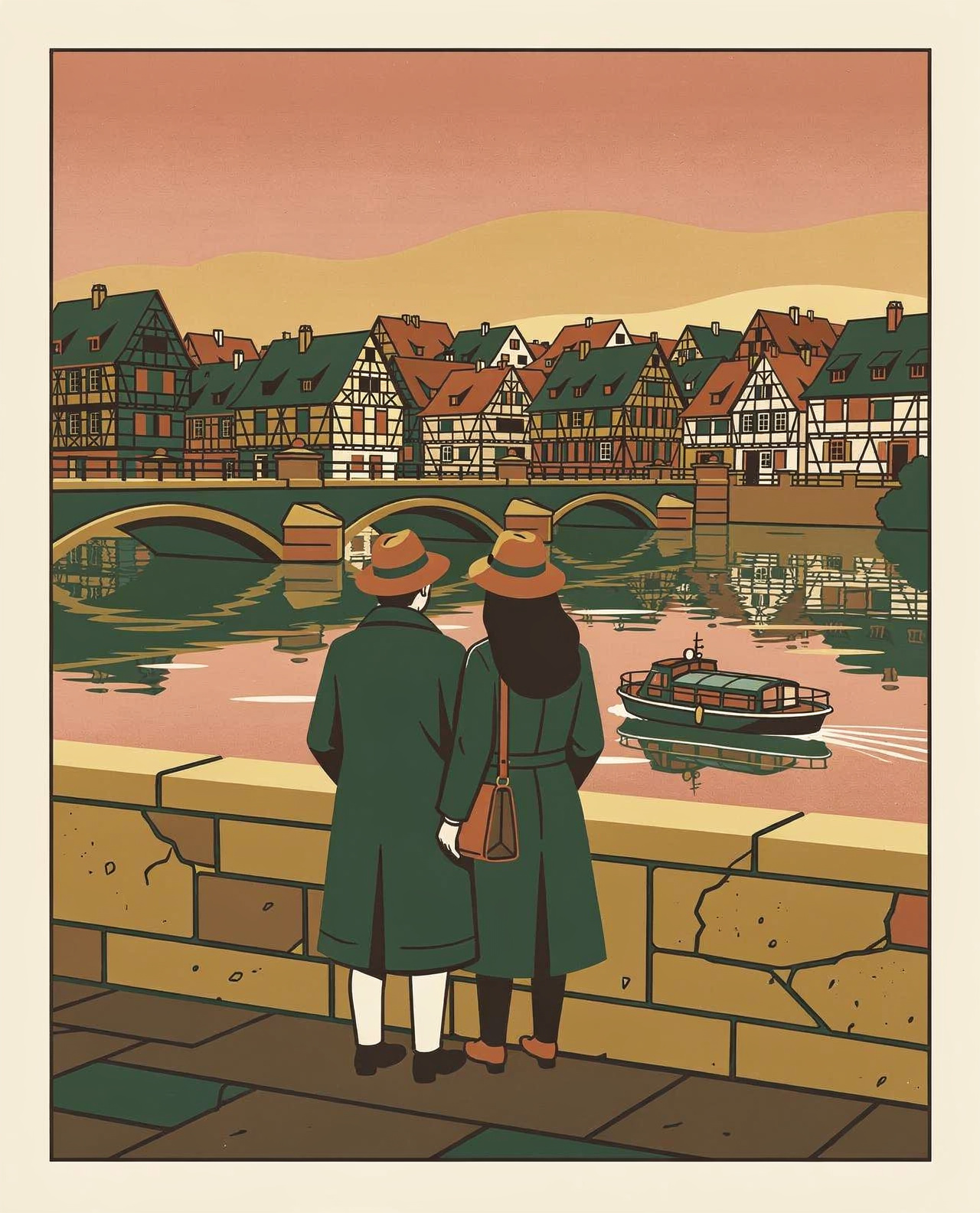
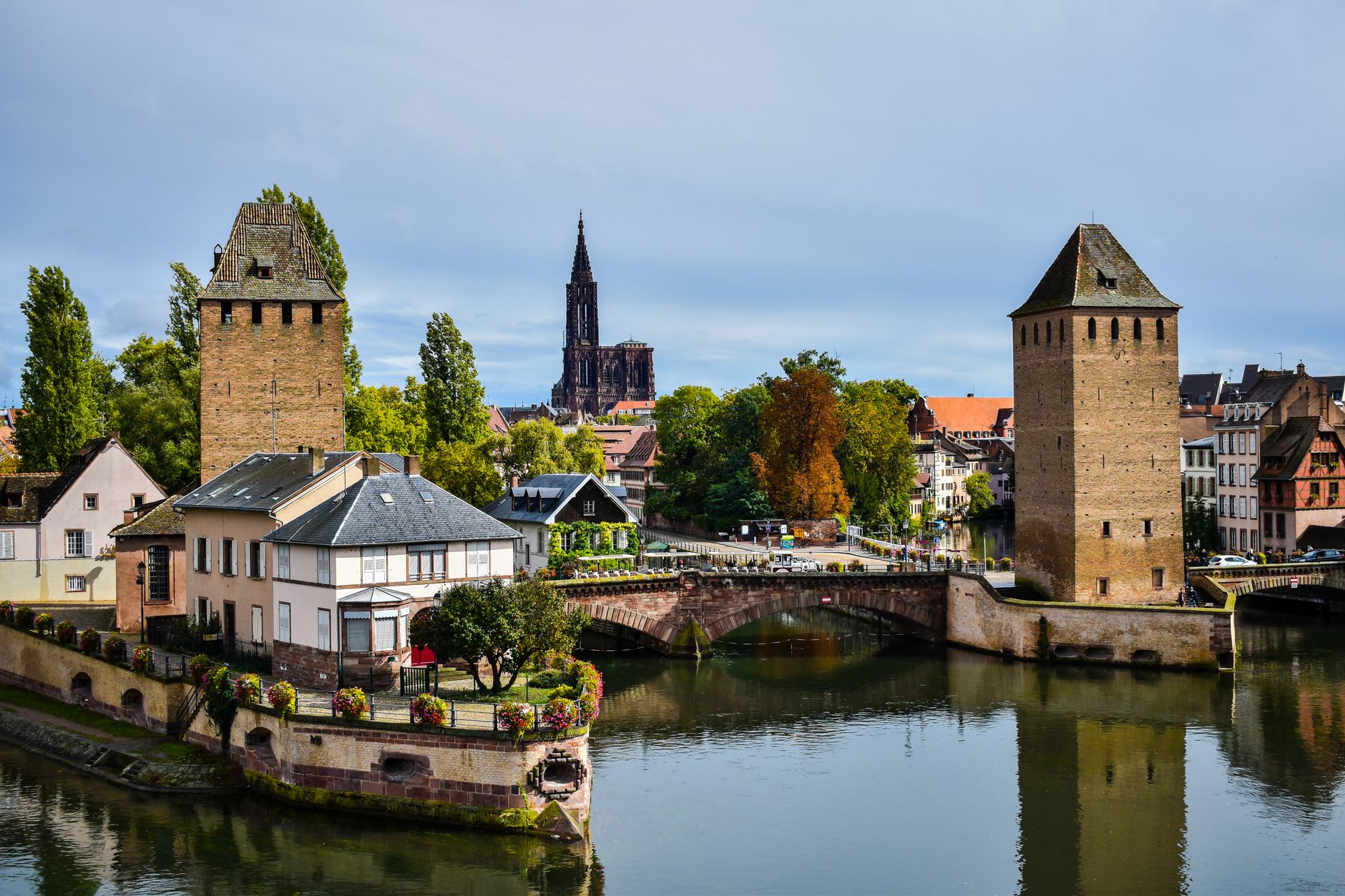
The quarter is better in the afternoon: the morning coach groups have gone and the light is kinder on the canals. Cross the Ponts Couverts, climb the panoramic terrace on the Vauban dam for the overview, then get deliberately lost between place Benjamin-Zix and the quays.
The dam terrace is free and it is the best single view of the city. Plenty of visitors walk straight past without going up.
4pm: the boat trip on the Ill
Yes, it is touristy. It is also, objectively, the best way to understand the shape of the city in a little over an hour, sitting down, with commentary.
More to the point, it is the only way to see the contrast between the medieval Grande Île, the German imperial quarter and the European institutions in a single day without spending half of it walking.
5.30pm: place Kléber and the shopping streets
Back towards the heart of the Grande Île by rue des Orfèvres and rue Mercière. This is the slot for gingerbread, for whatever you are taking home, and for the last photographs, as the light drops down the façades.
If you still have energy and you want the museum, this is when to do it. Most close around six. One, not two.
7pm: a drink, then the train
La Krutenau, between place d'Austerlitz and quai des Pêcheurs, is the quarter that comes alive in the evening: natural wine bars, craft beer, a newer generation of winstubs. Ten minutes on foot from the centre and a world away from the tourist terraces.
If you only do one museum
A ticket is €9 full price and €5 reduced, and the pass that opens every city museum for a day costs €20. That pass only pays off from three museums, which makes no sense in one day.
Our choice, depending on who you are:
- If you like the old masters: the Musée des Beaux-Arts, inside the Palais Rohan on place du Château. You are already there in the morning.
- If you prefer contemporary work: the Musée d'Art moderne et contemporain, facing the Vauban dam. It slots naturally into the Petite France leg.
- If you want to understand the city: the Musée historique, rue du Vieux-Marché-aux-Poissons, a minute from the cathedral.
- If you want to understand the cathedral: the Musée de l'Œuvre Notre-Dame, place du Château, which holds the original sculptures and the medieval working drawings.
One museum you can cross off whatever anyone tells you: the Musée alsacien is closed for works and is not due to reopen until 2028.
The variations
You arrive at midday
Invert the day. Lunch first, La Petite France at 2pm, the boat trip at 4pm, the cathedral at 5.30pm when the low light comes through the rose window. You lose the platform and the quiet of the morning, you gain a better end to the day.
You arrive by train
The station is a kilometre from place Kléber, about twelve minutes on foot along rue du Maire-Kuss. By tram, line A or D from Gare Centrale to Homme-de-Fer, four minutes.
You have a car
Do not try to get near the centre. The system here is the park and ride at €4.20 for the day, with unlimited tram and bus included for everyone in the vehicle. Our parking page has the sites.
It rains
The route survives it. The Grande Île is compact and the boats are covered. If the day is genuinely bad, Strasbourg in the rain has the fallback programme, with the places that close exactly when you need them.
You have children with you
Cut the museum, keep the boat trip, add the tourist train and the Orangerie park if the weather allows. The detail is in Strasbourg with kids.
What we cut, and why
This is the part that makes the day possible. Four things we deliberately leave out:
- The Neustadt, the German imperial quarter listed by UNESCO. Magnificent, free, uncrowded, and it needs a good two hours. It is the first thing to add if you stay a night.
- The European quarter and the Parliament. Far from the centre, and interesting mainly if the institutions themselves interest you. The boat trip gives you enough of a look.
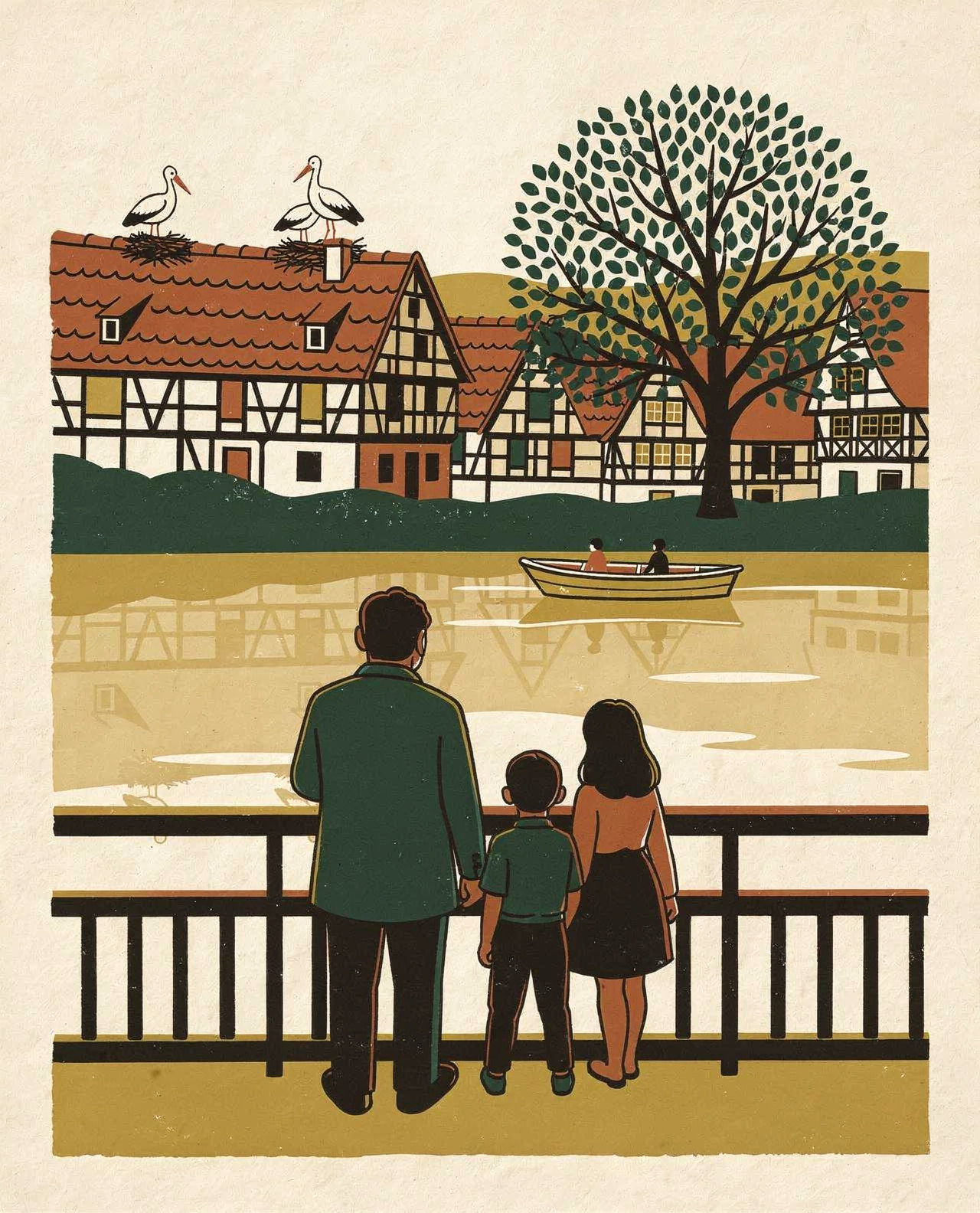
- The Orangerie park, its storks and its lake. Charming, but it is twenty minutes of tram each way that you do not have.
- The second museum. Two museums inside a day of walking guarantees you enjoy neither.
What a day costs
| Item | Per person |
|---|---|
| The cathedral nave | Free |
| The cathedral platform | €8, €5 reduced |
| One city museum | €9, €5 reduced |
| Day pass, all city museums | €20 |
| Strasbourg City Card | €5 |
| Park and ride, tram included | €4.20 per vehicle |
| Left luggage, boat trip, lunch | Priced on the day, check before you go |
Strip out the platform and the museum, eat on the move, and the same day costs very little. The walking, the quays, the Vauban dam terrace and the Neustadt are all free, and they are most of what you will remember.
If you stay longer
One extra night is the cheapest upgrade available to this trip, and what it buys is the morning rather than a few more hours.
Staying inside the centre is the whole point: the cathedral is yours before the coaches arrive, and this address sits a few minutes from it without the old town rate in the quiet months.
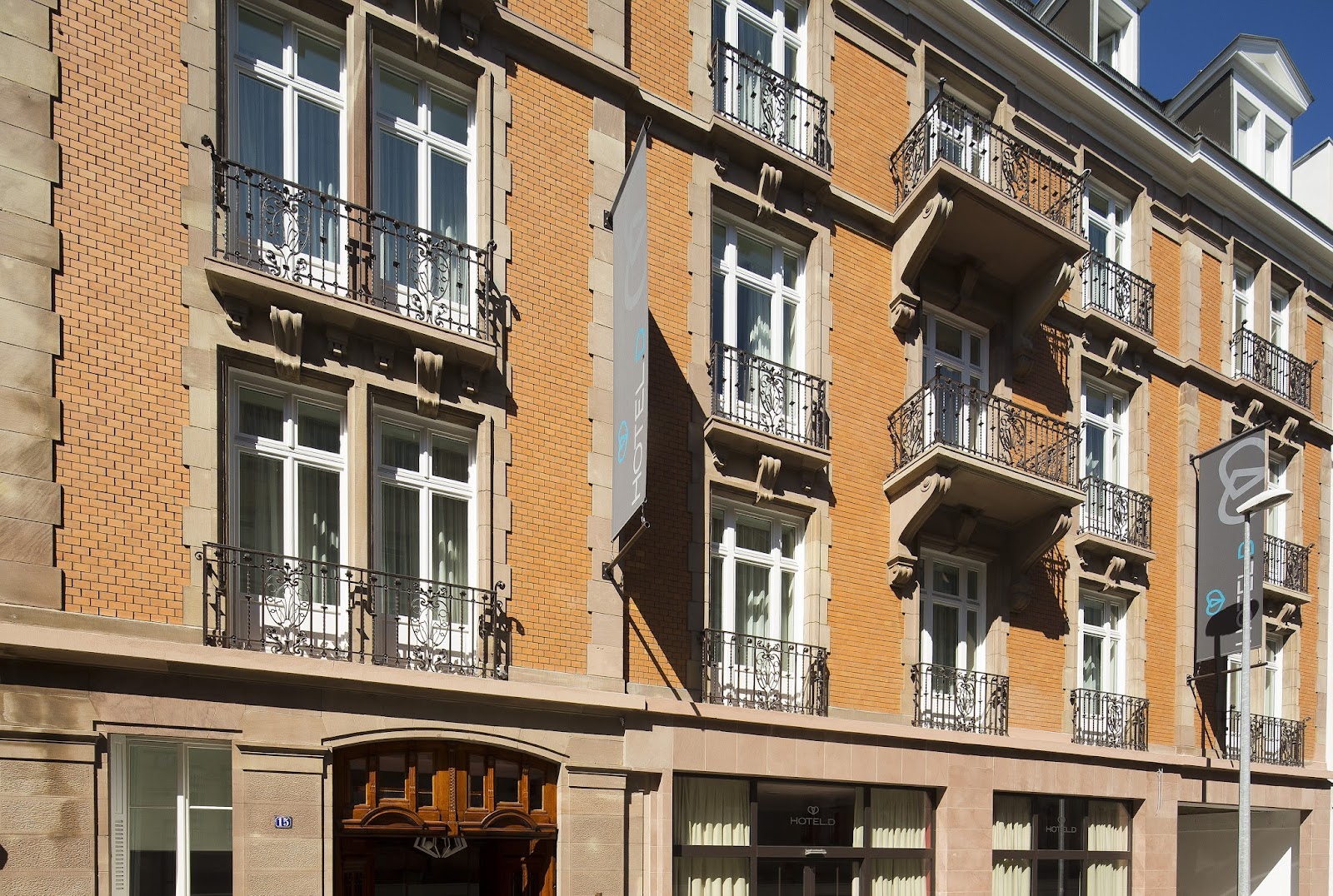
Hôtel D★ 4,5 · 848 reviews
One extra night changes everything: the Neustadt, a museum done properly, dinner without watching the clock. That is the point of our two day itinerary.
Three days open up Alsace, and we checked destination by destination what is genuinely reachable without a car in three days in Strasbourg. If you are still deciding, how many days in Strasbourg answers it plainly.
For the full inventory of what there is to see, start with things to do in Strasbourg.
Sources: Fondation de l'Œuvre Notre-Dame and strasbourg.eu for the nave, the platform and the astronomical clock; musees.strasbourg.eu, price list checked in August 2026; Strasbourg tourist office for the City Card; SNCF Connect and TER Grand Est for train times; CTS for park and ride fares. Prices and opening hours change: the dated figures on this page are driven by our facts table and reviewed each season.
Frequently asked questions
Can you visit Strasbourg in one day?
Is Strasbourg a good day trip from Paris?
What should you start with on one day in Strasbourg?
Is the Strasbourg City Card worth it for one day?
Which day of the week should you avoid?
Théo Lindner
Théo grew up between Strasbourg and the Vosges. He walks every route before publishing it, times every leg, and would rather cut a stop than pretend a day is longer than it is.