What to Buy at Strasbourg Christmas Market
Soufflenheim pottery, a Meisenthal glass bauble, kelsch cloth, protected fir honey: what is genuinely made in Alsace, what it costs, and where to find it.
Across nearly 300 chalets, not everything comes from Alsace. The city admits it. It rewrote the market rules after the recommendations of a citizens' jury, requiring stallholders to display the origin of their products, while pointing out that it cannot legally require the goods to be made in the region.
Which means the vigilance falls to the buyer. Here are the objects and products genuinely made in Alsace, what they cost, the verified shops that stock them in Strasbourg, and the questions that let you sort a stall out in thirty seconds.
The objects: what is really Alsatian
The Soufflenheim kougelhopf mould, the great classic
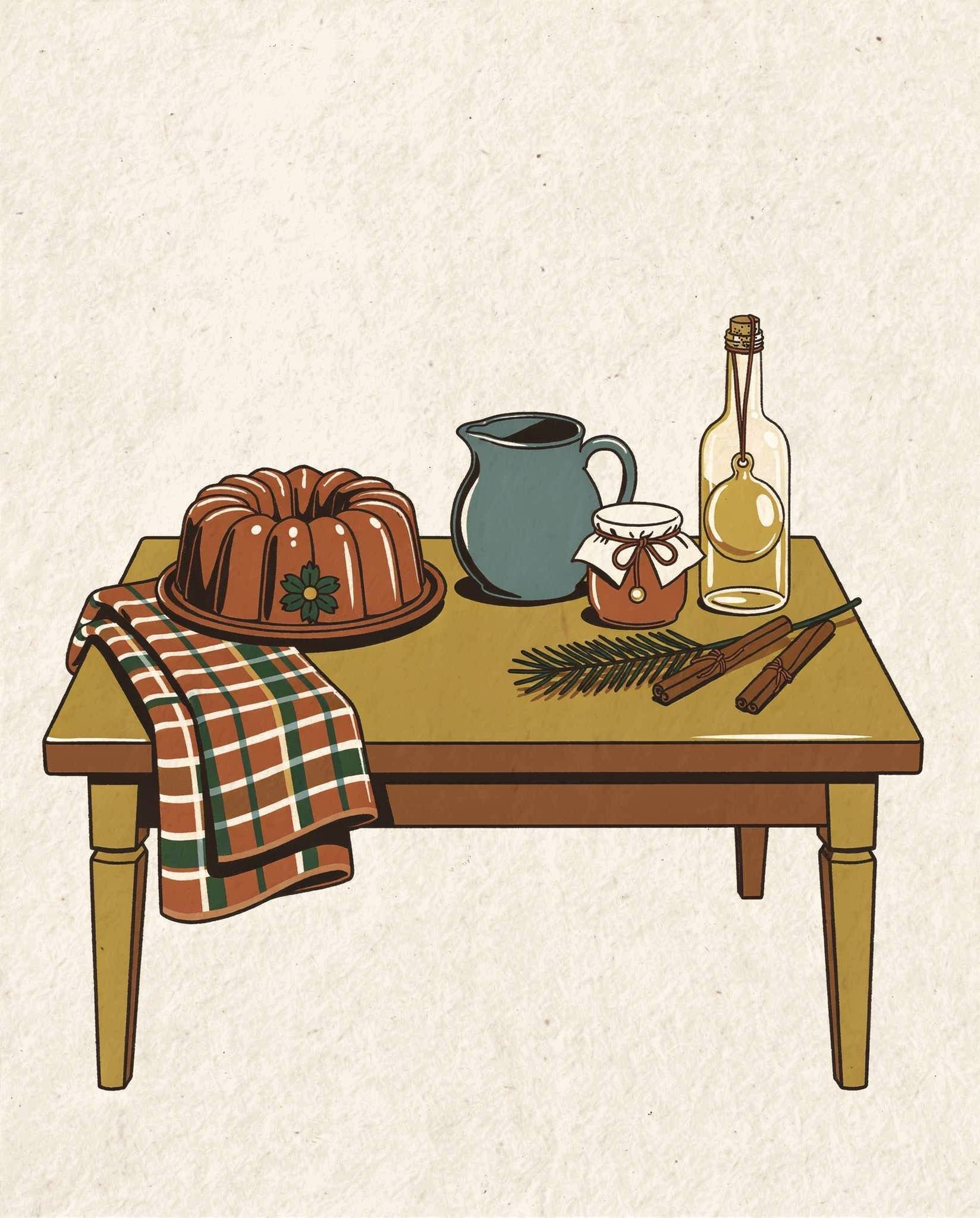
If you carry one thing home, make it this. A kougelhopf is the tall fluted Alsatian yeast cake studded with raisins and almonds, and it is baked in a glazed earthenware mould with a chimney in the middle. Soufflenheim, about thirty minutes north of Strasbourg, is the village that makes them.
The same potters turn out terrines for baeckeoffe, the slow-baked meat and potato casserole, and dishes for choucroute, decorated with storks and hearts. Around ten workshops are still in business.
Prices direct from the maker, for genuine Soufflenheim:
| Model | Size | Price |
|---|---|---|
| Small mould, heart decoration | 14cm | €16 |
| Plain mould | 18cm | €22.50 |
| Stork or flower decoration | 18cm | €27 |
| Plain mould | 24cm | €27 |
| Stork or flower decoration | 24cm | €33 |
These were Poterie Lehmann's prices in 2024 and 2025. Heavily decorated models sold through specialist shops run to €39 or even €76. A mould priced well below €16 is probably not from Soufflenheim.
Betschdorf salt-glazed stoneware
Less known, rarer. Betschdorf, 40 to 50 minutes from Strasbourg, produces the grey-blue salt-fired stoneware decorated with cobalt patterns: jugs, pots, storage jars. Expect €40 to €120 a piece depending on size, above Soufflenheim for an equivalent format.
Kelsch, the cloth that nearly disappeared
Kelsch is the linen or linen-cotton cloth woven in red and blue checks on a natural ground, traditionally used for Alsatian bedding. It came close to dying out around 2015 before several workshops revived it, among them Kelsch d'Alsace at Seebach.
By the metre, expect around €23 at Kelsch d'Alsace, €22 to €44 at BleuKelsch, and up to €93 to €113 a metre for high-end handweaving. As a finished object, a 35 by 35cm napkin runs around €11.80, a table runner €30 to €60, a tablecloth €80 to €100.
It is the most practical souvenir of the lot: light, unbreakable, flat in a suitcase.
The Meisenthal bauble, the cult object
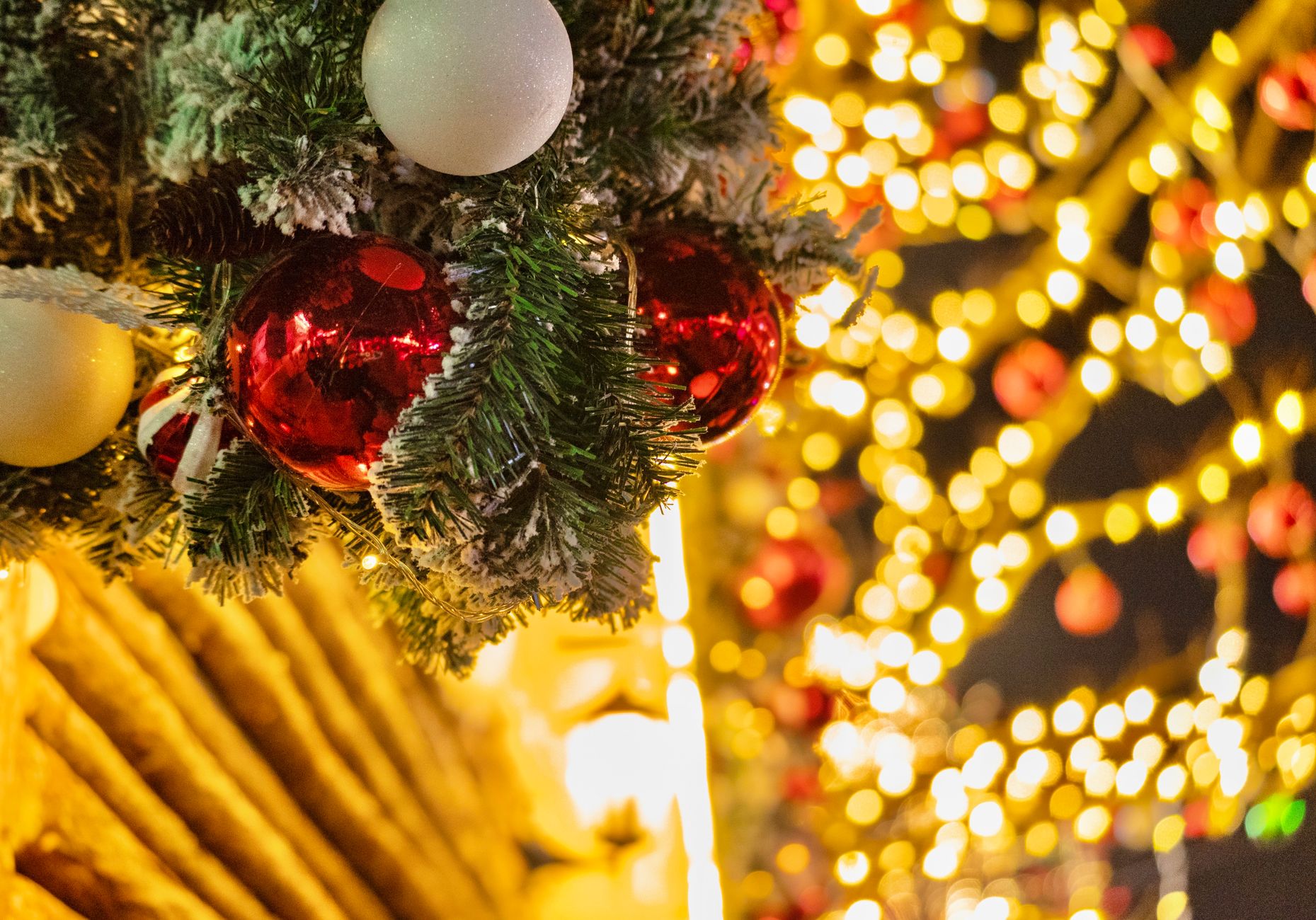
If you have not come across it, this is a regional institution. The International Glass Art Centre at Meisenthal revived the tradition of the mouth-blown Christmas bauble in 1999, and issues one vintage bauble a year, designed by a different designer. Thirty-six models between 1999 and 2025, several of which have become collectors' items: Arti, Magma, Piaf, Stella, Kaktus.
The 2025 bauble, "Grip", is 85mm across and plays on a textured surface that sits better in the hand. Base price €28 in the standard version and €32 in red, plus €5 at the outside sales points, so €33 and €37 in Strasbourg.
Where to buy it in Strasbourg
At the official CIAV chalet on Place Benjamin-Zix, in the middle of La Petite France, during market hours. In 2025 sales there ran from 26 November to 24 December, with a limit of five baubles per person and only one "Grip".
Two things to know before making the trip. The centre produces between 90,000 and 95,000 baubles a year, but the outside sales points receive only a small share, and there are only four of them: Meisenthal, Strasbourg, Metz and Sélestat.
Staying near La Petite France helps if you want a second attempt: from the voco The Garden, in the Halles quarter, the Benjamin-Zix chalet is a short walk, which makes going back early in the season easy rather than a special trip.
As a result stocks go in a matter of days, after which the bauble resells second hand at €38 to €120. If it is on your list, go in the first week, not on 20 December.
Things to eat and drink
Pain d'épices
Pain d'épices is Alsatian gingerbread: a dense honey and rye loaf, spiced with cinnamon, anise and cloves, sold in slabs or shaped and iced. Two reference houses, two registers.
Fortwenger, from Gertwiller, at the accessible end: 200g loaves at around €4.20 to €4.80, so €21 to €24 a kilo, and assortment boxes at €3.20. Mireille Oster, in Strasbourg itself, in the craft and creative register, with recipes using figs, amaretto or chocolate, between €4 and €9 a piece.
Alsatian fir honey, protected by a PGI
This is one of the few products on the list with a protected geographical indication, and therefore a verifiable origin. It is dark, resinous and much less sweet than flower honey. Producers near Strasbourg charge around €5 to €6 for a 250g jar and €9 to €11 for 500g.
Unbeatable on quality, authenticity and price at once, and exactly the kind of thing Square Louise-Weiss sells, the market of the small Alsatian producers.
Jams, spirits, the rest
- Christine Ferber jams, made at Niedermorschwihr: €8 to €9 a jar. The absolute benchmark in the field.
- Eaux-de-vie, the clear fruit brandies distilled from local plums, pears and cherries: Nusbaumer at Steige, certified as a living heritage business, €25 to €40 for a 70cl bottle. Massenez at Lapoutroie, €25 to €50. Windholtz at Ribeauvillé, €30 to €60.
- Crémant d'Alsace, the region's traditional-method sparkling wine: €8 to €12 a bottle from a wine merchant, up to €14 for a special cuvée.
- Vendanges tardives, late-harvest sweet wines: €25 to €40 for a good gewurztraminer, considerably more for a grand cru.
- Alsatian Christmas beers, spicier and stronger than the everyday brews: €3 to €8 a bottle.
- Strasbourg foie gras, from a house such as Georges Bruck: around €39 for 135g.
For bredele, the price per kilo is the best authenticity indicator there is. It is all set out in our guide to mulled wine and bredele prices.
Where to buy in Strasbourg
On the market: the squares that concentrate the craftwork
- Square Louise-Weiss, the small producers of Alsace: honey, apple juice, jams, farm produce. No resale at all.
- Place Benjamin-Zix: the official Meisenthal chalet, plus craftwork.
- Place Saint-Thomas: Alsatian specialities, including Fortwenger gingerbread.
- Quai des Délices, terrace of the Palais Rohan: bredele from the Bas-Rhin bakers' federation, so guaranteed craft baking.
- OFF market, Place Grimmeissen: makers, social enterprise, art crafts.
The detail of these squares, and why they are also the quietest, is in our guide to the smaller markets.
In the shops, minutes from the chalets
When a chalet does not inspire confidence, these three addresses settle the question. Google ratings checked in August 2026.
- Poterie d'Alsace, 3 rue des Frères (4.8 from 86 reviews). The Strasbourg shop of Poterie Lehmann of Soufflenheim: kougelhopf moulds, terrines, choucroute dishes, straight from the maker. Open seven days a week through Advent.
- Pain d'épices Mireille Oster, 14 rue des Dentelles (4.5 from 630 reviews), with a second shop at 31 rue du Vieux-Marché-aux-Poissons beside the cathedral.
- Plaisirs d'Alsace, 13 rue des Dentelles (4.5 from 34 reviews): pottery, decorations, textiles and Alsatian food in one place.
Fortwenger also has a shop at 31 place de la Cathédrale, inside the market perimeter.
At the maker, under an hour away
These need a car and half a day, which rules them out for most visitors flying in. If you have both, prices are often lower at source. A night at Le Moulin de la Wantzenau, out in the countryside north of Strasbourg, makes a convenient base for the potters and the distillery.
- Soufflenheim, 30 minutes away: Poterie Philippe Lehmann (7 route de Haguenau), Ernewein-Haas (55 Grand Rue), Hausswirth (1 rue de la Montée), Friedmann (3 rue de Haguenau). Several allow free access to the workshop on weekdays, and guided visits by arrangement, free or at €2.
- Betschdorf, 40 to 50 minutes: Poterie Fortuné Schmitter (47 rue des Potiers) and the Pottery Museum (2 rue de Kuhlendorf, €3.50 adult entry).
- Distillerie Nusbaumer, 23 Grand Rue at Steige: guided tour of the stills with a tasting at €9 per adult, free for under-18s.
Spotting the imported in thirty seconds
The city publishes no figure on the share of imported goods, but the press regularly documents products from China, Portugal or eastern Europe on some stalls. The Capitale de Noël rulebook now allows the city to refuse an item that would damage the image of the event, and insists on transparency of origin.
In practice four questions are enough, and a genuine local craftsperson answers all of them without hesitating:
- Where exactly is this made? Expect a town, not a country. "In Alsace" is a vague answer. "In Soufflenheim" is not.
- By whom? The name of a workshop or a house, one you can check.
- How long have you worked with this material? A maker carries on talking about their trade. A reseller changes the subject.
- Does the product carry a label? Entreprise du Patrimoine Vivant, a protected geographical indication, Alsace Terroir, or a detailed statement of origin.
Price is the last clue, and the most reliable. A handmade object selling at a third of the maker's price is not a bargain, it is a different object.
Three sample baskets
- The €10 present: a 250g jar of PGI fir honey (€5 to €6), a jar of Ferber jam (€8 to €9), a small 14cm kougelhopf mould (€16) or a bag of craft bredele.
- The €20 to €30 present: a decorated kougelhopf mould, 18 to 24cm (€22.50 to €33), a Meisenthal bauble (€33), a 400 to 500g bredele assortment.
- The full food hamper, €90 to €100: a crémant (€10), a bottle of late-harvest wine (€30), an eau-de-vie (€30), a Ferber jam (€9), a 500g fir honey (€9 to €11).
Getting it all home
Pottery and glass are the only real problem. Wrap each piece individually, put moulds and terrines in the middle of the case surrounded by clothes, and keep Meisenthal baubles in your hand luggage if you are flying. Bottles, of course, have to go in the hold.
On customs, two cases cover most visitors to the market, and the rules that matter are the ones for the country you are going home to.
- Travelling on to Switzerland: 5 litres of alcohol under 18% and 1 litre above, per person per day, plus a value allowance of 150 Swiss francs above which VAT applies to the whole amount. Meat and meat products, foie gras included, are limited to 1kg per person per day.
- Travelling outside the European Union: the French exit rules allow 1 litre of spirits above 22% or 2 litres below, plus 4 litres of wine and 16 litres of beer, with a value allowance of €430 by air and €300 overland. A VAT refund is possible on purchases above €100 on a single receipt.
Your own country's arrival allowances may be tighter than these, so check them before you buy the case of crémant. And keep your receipts: that is what settles a conversation at the border in thirty seconds.
The short version
- The five safe bets: a Soufflenheim mould, a Meisenthal bauble, kelsch cloth, PGI fir honey, pain d'épices.
- The Meisenthal bauble sells out in days at Place Benjamin-Zix. Come early in the season.
- For local food, aim for Square Louise-Weiss and the Quai des Délices.
- One question settles almost everything: which town is this made in?
- Too low a price is never a bargain on craftwork.
To plan the rest: the price of mulled wine and bredele, the smaller markets, and our guide to Alsatian food.
Sources: Poterie Lehmann and specialist shops (kougelhopf mould prices, 2024 and 2025); Kelsch d'Alsace, BleuKelsch and L'Alsace (kelsch prices per metre); International Glass Art Centre at Meisenthal, JDS and the regional press ("Grip" 2025 bauble, prices, quotas, sales points and production volumes); Fortwenger and Maison Ferber catalogues; Le Rucher de l'Ill, Ferme Apicole du Neuhof and Miel Durner (PGI fir honey); Nusbaumer, Massenez and Windholtz distilleries; City of Strasbourg (Capitale de Noël rulebook, citizens' jury report); French and Swiss customs administrations for the allowances. Addresses and Google ratings of the Strasbourg shops checked in August 2026. Prices and vintage models change every season.
Frequently asked questions
What should I buy at Strasbourg Christmas market that is genuinely Alsatian?
Where can I buy the Meisenthal Christmas bauble in Strasbourg?
How much does a Soufflenheim kougelhopf mould cost?
How can I tell whether a Christmas market product is made in Alsace?
Which market squares sell real craftwork?
What are the customs limits for taking Alsatian alcohol home?
Camille Roth
Born in Schiltigheim, Camille spent ten years working in Strasbourg kitchens before swapping the apron for a notebook. She writes about winstubs, the city's newer tables and Alsatian produce. Her rule: never recommend an address she would not send her own parents to.