Where to Stay in Strasbourg: The Best Areas
The seven Strasbourg areas worth booking, what each one costs, how loud it gets after dark, and an honest verdict on the station quarter.
The question we are asked most often is the wrong one. It is not "which hotel", it is "which area", and in Strasbourg the answer barely depends on how far you are from the cathedral.
The historic centre fits inside one kilometre, about half a mile. From any area on this list you are under twenty minutes' walk or ten minutes by tram from the cathedral doors.
The criteria that actually matter are elsewhere: evening noise, car access, and what the streets feel like when you walk back at 11pm.
Most English-speaking visitors arrive by train from Paris, in 1 hr 45 min, or fly into the small airport south of the city. That removes the factor that dominates French guides to Strasbourg, which is where to put the car, and it changes the ranking below.
First, three numbers that frame the budget
The ranges that follow are orders of magnitude outside December, reconstructed from prices observed in 2024 and 2025. They are not official 2026 rates: no hotel here publishes an annual tariff, and prices move week by week with congresses and parliamentary sessions.
Roughly, for one weeknight:
- Low season, January, February and November: a three-star around €90 to €130.
- Shoulder season, March, April, October: €110 to €160 in a three-star, €170 to €230 in a four-star.
- High season outside December, May to September: four-stars climb towards €230 to €280.
December is another planet entirely and has its own guides in our Christmas section.
The factor nobody anticipates is not the tourist season but the institutional calendar. European Parliament sessions and trade congresses strip the city of rooms on dates that have nothing to do with school holidays. If your dates are flexible, check before you commit.
La Grande Ile, the historic centre
On the island you pay for the address, so it is worth paying for one that gives something back. This timbered Renaissance courtyard on the quai des Bateliers has the cathedral on one side and the Krutenau on the other, both a few minutes on foot, and people book it for the building rather than the room.
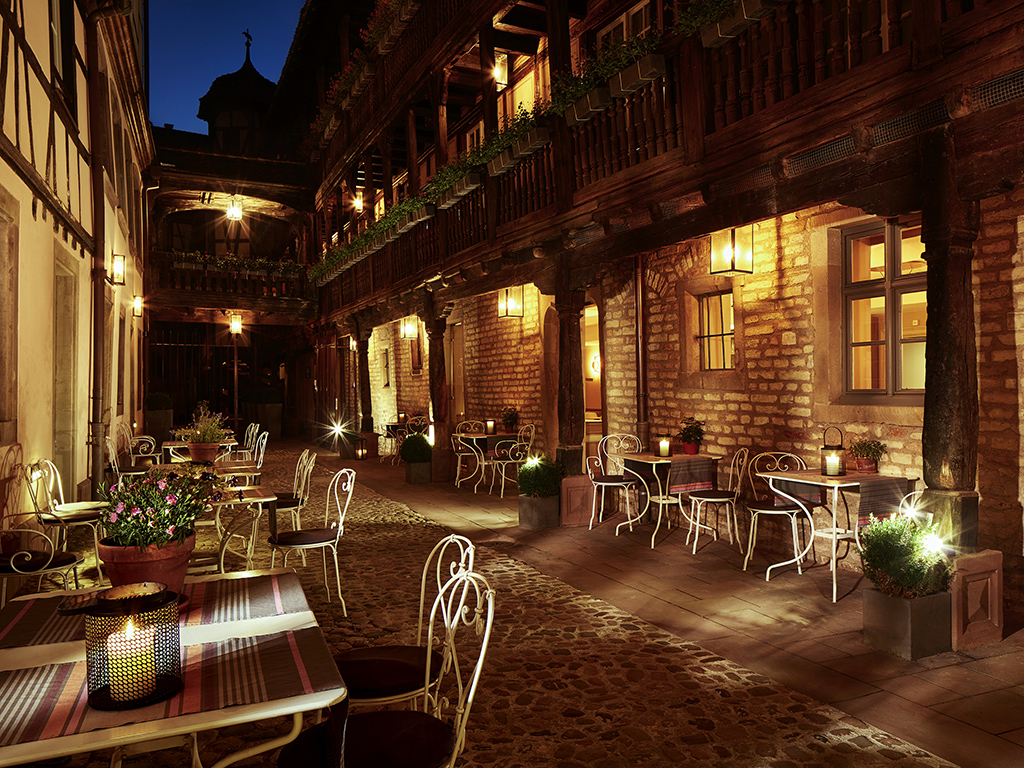
Cour du Corbeau★ 4,8 · 1,311 reviews
Who it suits: a first visit, a weekend for two, a short business trip where you want to do everything on foot.
Zero to five minutes from the cathedral, every tram line meeting at Homme de Fer, and the UNESCO-listed island under your windows. It is the default choice, and it is a good one.
What nobody tells you: it is expensive, it is dense, and arriving by car is a headache. Filtered traffic, restricted zones, paid car parks rarely at the hotel door. The noise around the shopping streets and the terraces is real, and it drops away sharply the moment you take a side street.
Two names that come up constantly here: the Cour du Corbeau, a timbered Renaissance inn on the quai des Bateliers, and the Sofitel Strasbourg Grande Ile, the only five-star in the centre, near Place Kleber.
La Petite France
If the setting is the point of the trip, this is the address the quarter is built around: a converted mill sitting on the water, windows facing the Ponts Couverts. It carries the highest room rate on this page, and the view is the only reason it does.
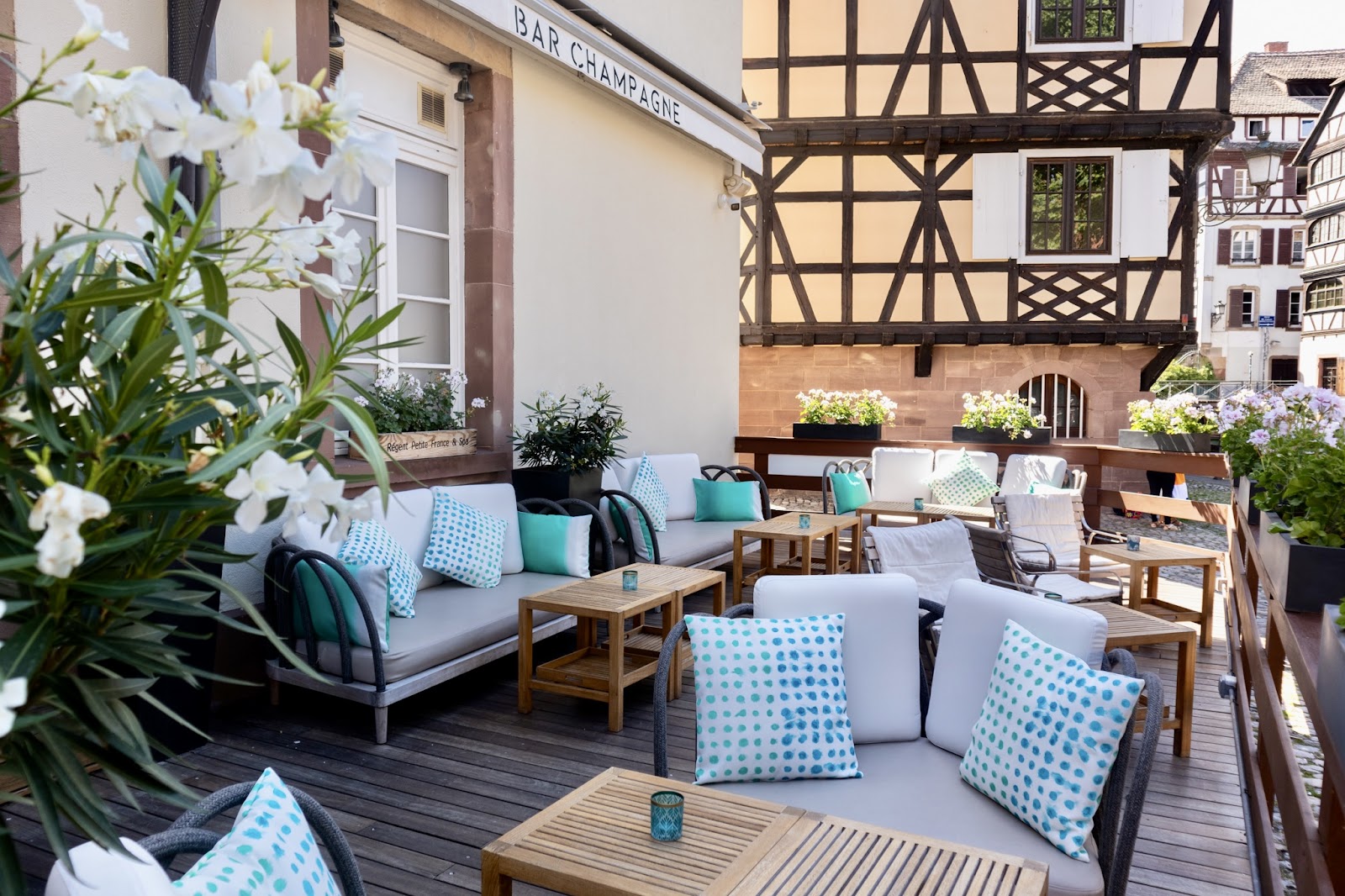
Regent Petite France★ 4,4 · 1,584 reviews
Who it suits: a romantic stay, a short trip where the setting counts as much as the itinerary.
Ten to fifteen minutes' walk from the cathedral, tram at Alt Winmarik or Faubourg National. The most photogenic quarter in the city, and the price follows: expect €120 to €180 in a three-star, €180 to €280 in a four-star. The Regent Petite France, a converted mill on the water facing the Ponts Couverts, and Le Bouclier d'Or, in the old tanners' streets, are the two best-known addresses.
What nobody tells you: it is heavily touristed and the restaurants are openly aimed at visitors, at above-average prices. The lanes set back from the water are quiet, the quaysides much less so until late at weekends. And you are beside a river, so the damp is real.
The station quarter: let us be blunt
If our reading above still points you here, take the address that gives you something back for the compromise. This Art Deco house faces the forecourt and keeps a genuine sauna and hammam behind the front, which is rare at three-star level, and the Grande Ile is a ten-minute walk away.
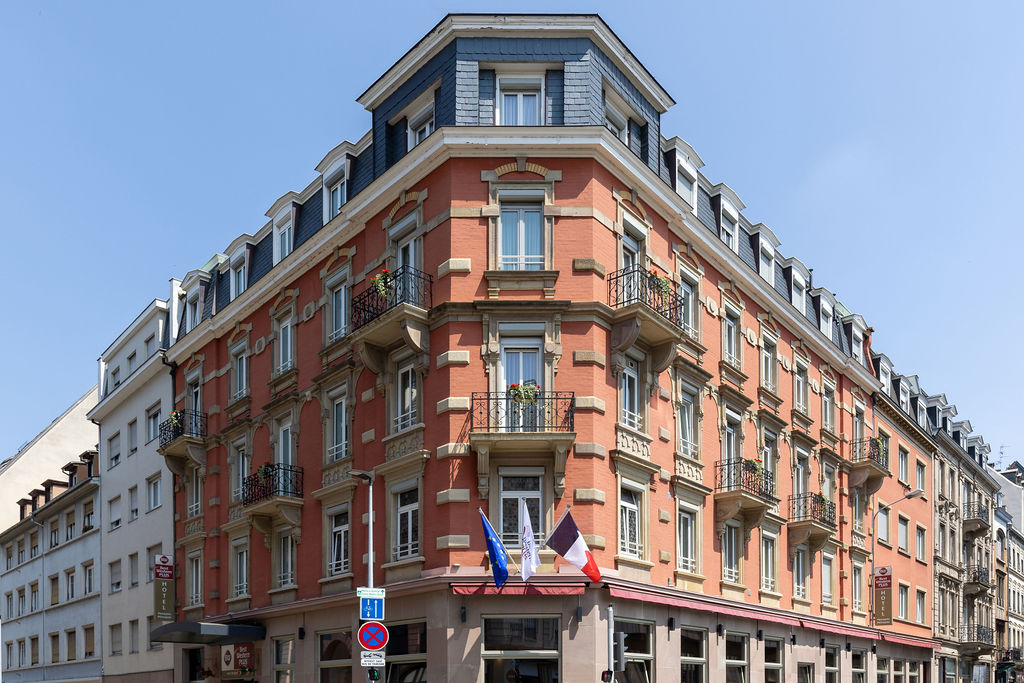
Monopole Métropole★ 4,5 · 1,317 reviews
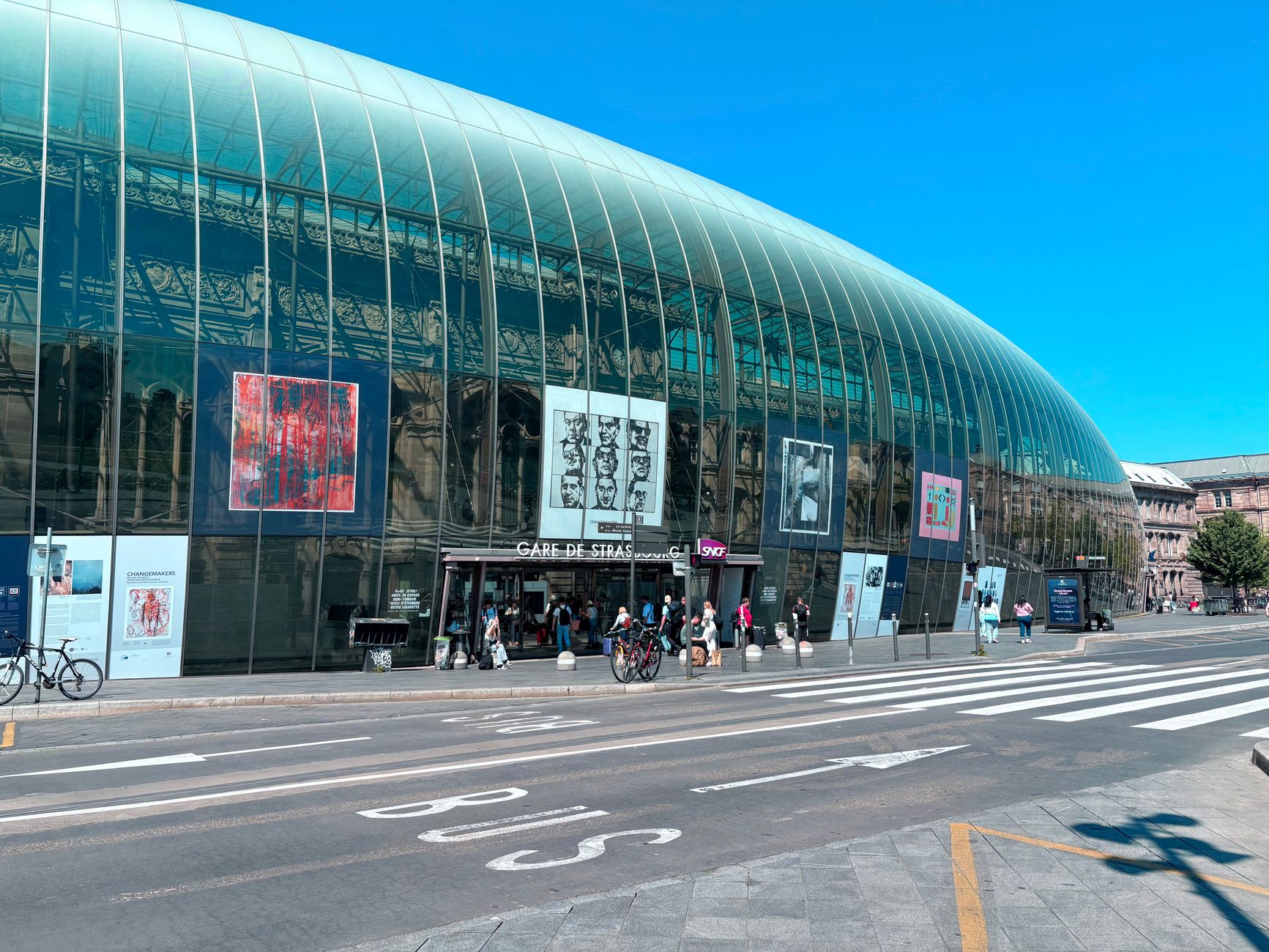
This is the area guidebooks stay vague about, even though it concerns a great many travellers. We are going to be direct, because the question deserves better than polite silence.
What is true and documented: since 2023 the local press and residents' associations have described a quarter marked by night-time disturbance, groups gathering, street harassment and drug problems, with regular police operations. Neighbourhood review platforms give it a safety score of around 2.6 out of 5.
What is also true: recorded offences fell between 2023 and 2024, from 2,488 to 2,301, with violent thefts down 21% and pickpocketing down 41%, and the police presence has been reinforced since 2022.
Our reading, without dramatising it and without dressing it up:
- Business trip, early departure: perfectly workable. You are at the station, you go out little in the evening, and prices are gentler, €80 to €130 in a three-star in low season.
- Weekend for two, family, evening strolling: we do not recommend it. It is not a question of objective danger, it is that the evening atmosphere is not what you came here for.
- Tight budget: a genuine saving, provided you accept the constant traffic noise and a less pleasant setting.
If you do book here, the Best Western Plus Monopole Metropole faces the station and keeps a real sauna and hammam behind an Art Deco front, which is unusual at that level.
Useful reminder: the station is a twelve-minute walk from Place Kleber. Sleeping elsewhere and arriving by train costs you nothing in time.
The Neustadt
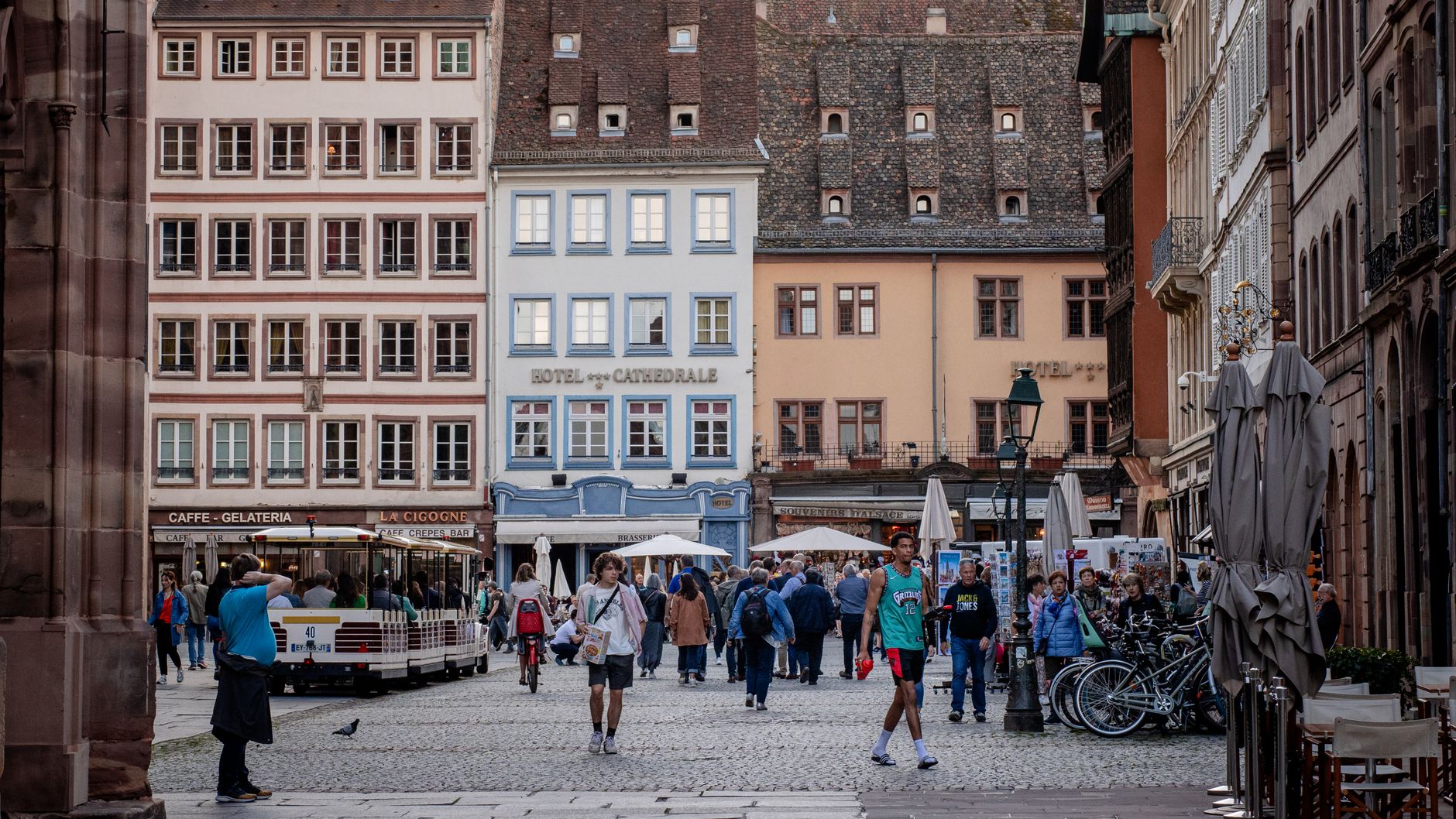
Who it suits: anyone who likes architecture, business stays, and travellers who want a compromise between the centre and a residential street.
Ten to twenty minutes on foot depending on the street, tram at Gallia, Universite or Parc du Contades. This is the German imperial quarter, UNESCO-listed since 2017, with wide avenues and monumental buildings. Expect €100 to €150 in a three-star, €160 to €230 in a four-star. The Regent Contades, beside the Orangerie park, sits at the top of that band.
Evenings are calm, apart from the main avenues and the student bars near the university faculties.
What nobody tells you: the charm here is architectural, not atmospheric. Some visitors find it staid. And if you plan to walk back and forth to the Grande Ile several times a day, the distance starts to tell.
La Krutenau
Who it suits: anyone who wants to go out in the evening, and stays of more than two nights.
This is the student quarter and the lively one, between Place d'Austerlitz and the quai des Pecheurs, ten minutes' walk from the centre. Wine bars, craft beer bars, a new generation of winstubs: this is where the city lives after 9pm, and the only area where you will meet more locals than visitors.
What nobody tells you: there are very few hotels. Plenty of flat rentals, almost no proper hotels. And if you sleep above a bar, you will hear it.
Orangerie and the European quarter
This is the quarter where you trade a tram ride for a quiet night and a proper swimming pool, which the old town simply does not have. It is the one address on this page we would send a family to, and out of season it regularly undercuts the centre.
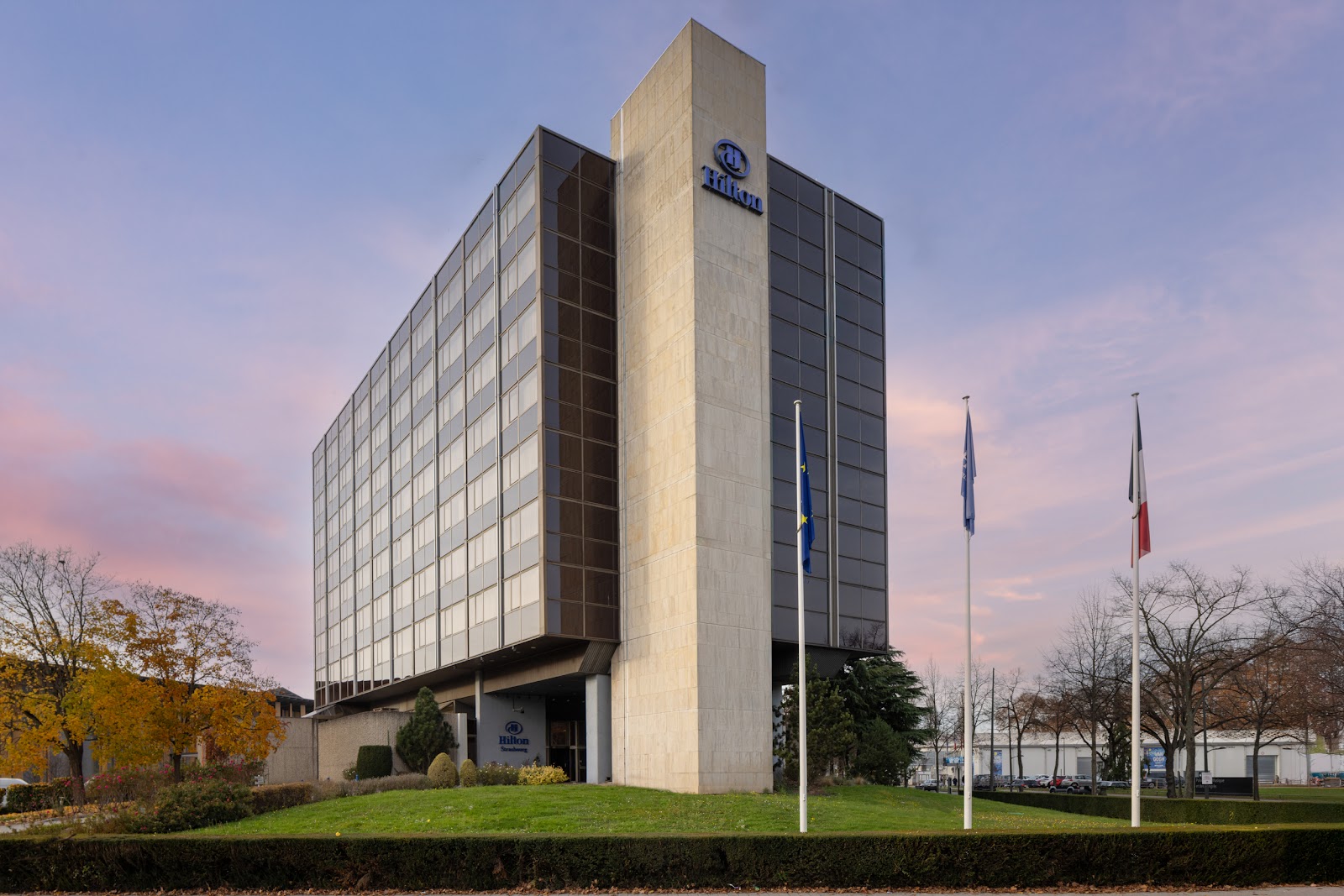
Hilton Strasbourg★ 3,8 · 3,560 reviews
Who it suits: breathing space, travelling with children, or working with the institutions.
This is the comfortable residential quarter, with the largest park in the city and the storks. Tram E, fifteen minutes from the centre, and guaranteed quiet at night. The Hilton, opposite the Parliament, has the large indoor pool the old centre does not.
What nobody tells you: you depend on the tram for everything, and the last one needs planning. In exchange, it is the only area where you genuinely sleep well with children.
Kehl, and the outskirts
On the French side the same arithmetic works without crossing a border. Illkirch is a tram ride from the centre and noticeably cheaper, and this one earns the ride on its own: a wellness floor laid out like a small thermal centre, with family sessions and adults-only sessions kept separate.
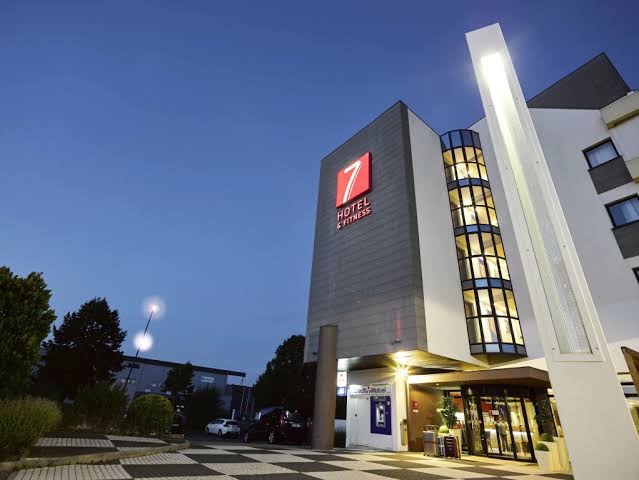
7Hotel&Spa★ 4 · 1,829 reviews
Schiltigheim and Illkirch, on the French side, are noticeably cheaper, and the tram reaches the centre in fifteen to twenty minutes. For a long stay or a squeezed budget that is a reasonable trade.
Kehl is the strange one, and it is worth saying why it is strange. It is not a suburb of Strasbourg. It is a different town, in a different country: you would be sleeping in Germany and crossing an international border for breakfast.
It works because the tram crosses the Rhine. Line D runs from Kehl Rathaus to Homme de Fer, the central interchange, in 24 minutes, and to the main station in 28 minutes, every 13 to 16 minutes during the day. German room rates are lower, and if you have arrived by car you park it once on the German side and never touch it again.
Three catches. The last tram of the night shapes your evenings, and the best hour in Strasbourg starts after 9pm. You need a CTS ticket to cross the Rhine, because a German Deutschlandticket only covers you as far as Kehl Rathaus. And not every line D tram crosses the border, so read the destination on the front.
For a single night, or with a car, the arithmetic works. For a weekend for two it is a false economy, because you lose precisely the part of the day that makes this city worth the trip.
If you do have a car
And once the car stops being a liability, the countryside north of the city is where the money goes furthest. An old mill on the water, a complete spa, and the lowest starting rate of everything we have checked around Strasbourg. In December it is the sensible alternative to a central hotel.
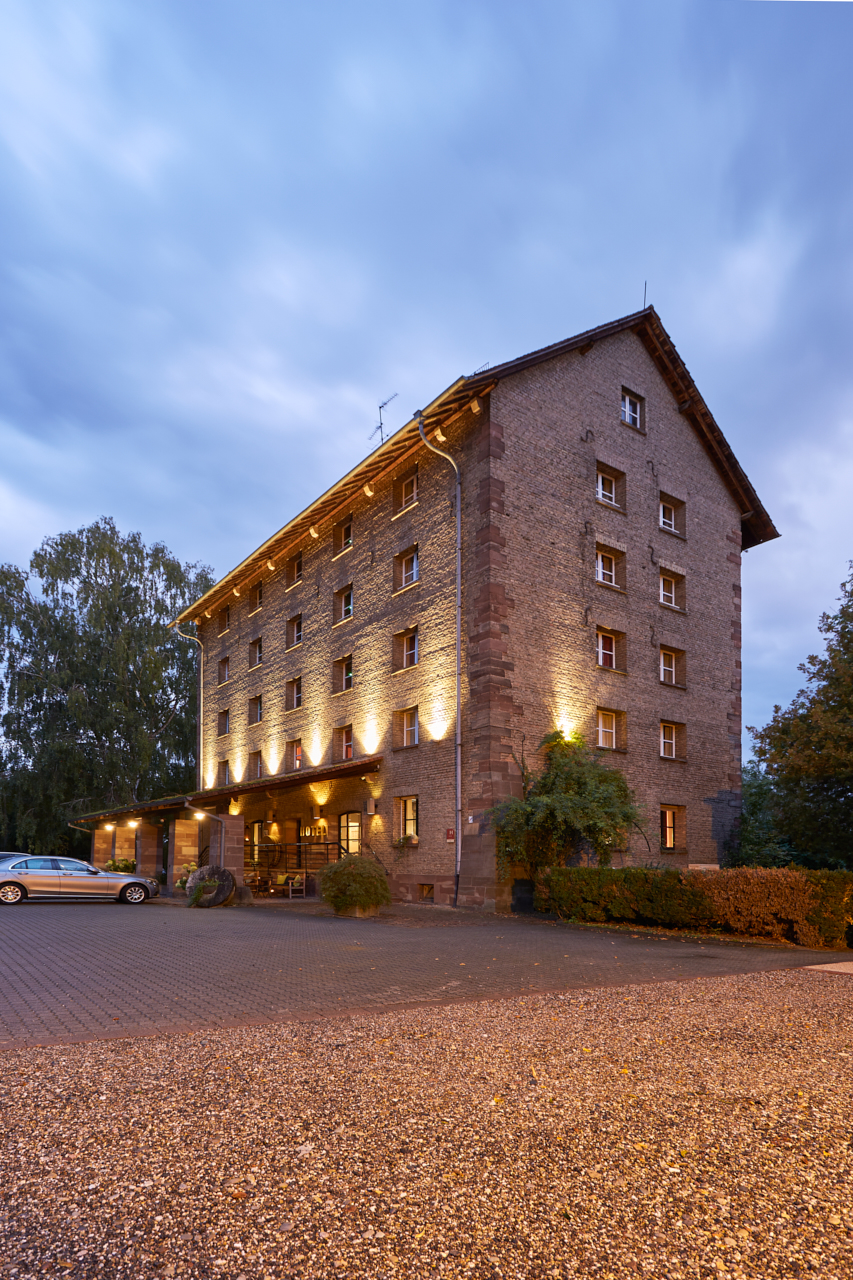
Le Moulin de La Wantzenau★ 4,7 · 607 reviews
This is the detail that ruins the most stays. The rule is simple: do not try to park a car in the centre.
If your hotel has private parking, take it, even at the going nightly rate: it costs less than the time you will otherwise lose. Otherwise the system to aim for is the park and ride, a flat €4.20 a day with unlimited tram and bus included for everyone in the car, set out on our parking page.
The alternatives to a hotel
Aparthotels are well represented in Strasbourg and start to make sense from three nights, or with four people. Furnished rentals cluster in the Krutenau and the Neustadt. There is a youth hostel, outside the centre.
One thing to know about rentals: availability collapses during parliamentary sessions exactly as it does in hotels, and late cancellations are more common there.
So, which area?
| Your trip | Our choice |
|---|---|
| A single night | Grande Ile, or the station quarter if you leave early |
| Weekend for two | Petite France, or Grande Ile on a side street |
| With children | Orangerie, for the park and the quiet |
| To go out in the evening | Krutenau |
| Business trip | Station quarter or Neustadt |
| Arriving by car | Kehl, and the car stays parked |
| Tight budget | Schiltigheim, Illkirch or Kehl |
| Three nights or more | Neustadt or Krutenau, in an aparthotel |
When to book
Outside December, two to four weeks is enough for a good choice. There are three exceptions where you should aim for two to three months: European Parliament sessions, trade congresses, and the long May weekends.
And one rule that holds all year: free cancellation costs a few euros more and is worth every cent in a city whose prices move this much.
Where to go from here
If a spa is part of the plan, our comparison of Strasbourg hotels with a spa goes through the addresses in detail. To see how the areas sit relative to one another before you choose, use our maps of Strasbourg.
And to work out how long to stay in the first place, how many days you need in Strasbourg answers the question honestly, including the case for one night.
Sources: booking engine price surveys from 2024 and 2025, presented here as orders of magnitude and not as an official 2026 tariff, since no hotel publishes annual rates; Dernieres Nouvelles d'Alsace and the local press for the crime statistics in the station quarter (2,488 recorded offences in 2023, 2,301 in 2024); residents' associations and neighbourhood review platforms for the perception of safety; CTS for park and ride rates and the cross-border ticket rule. Strasbourg hotel prices swing hard with the institutional calendar: check your dates before you book.
Frequently asked questions
Which area of Strasbourg should I stay in?
Is the station area in Strasbourg safe to stay in?
How much does a hotel night cost in Strasbourg?
Is it worth staying in Kehl, in Germany, to visit Strasbourg?
How far in advance should I book a hotel in Strasbourg?
Margot Keller
A Strasbourgeoise by choice for fifteen years, Margot looks after the practical pages and the Christmas market file. Every year she walks the markets from opening day, to tell the honest mulled wine from the tourist trap.