Where to Drink in Strasbourg: Wine, Beer, Coffee
Eleven verified bars in Strasbourg, plus how to pick by mood: Alsatian wine, craft beer, speciality coffee, winter tea rooms and summer terraces.
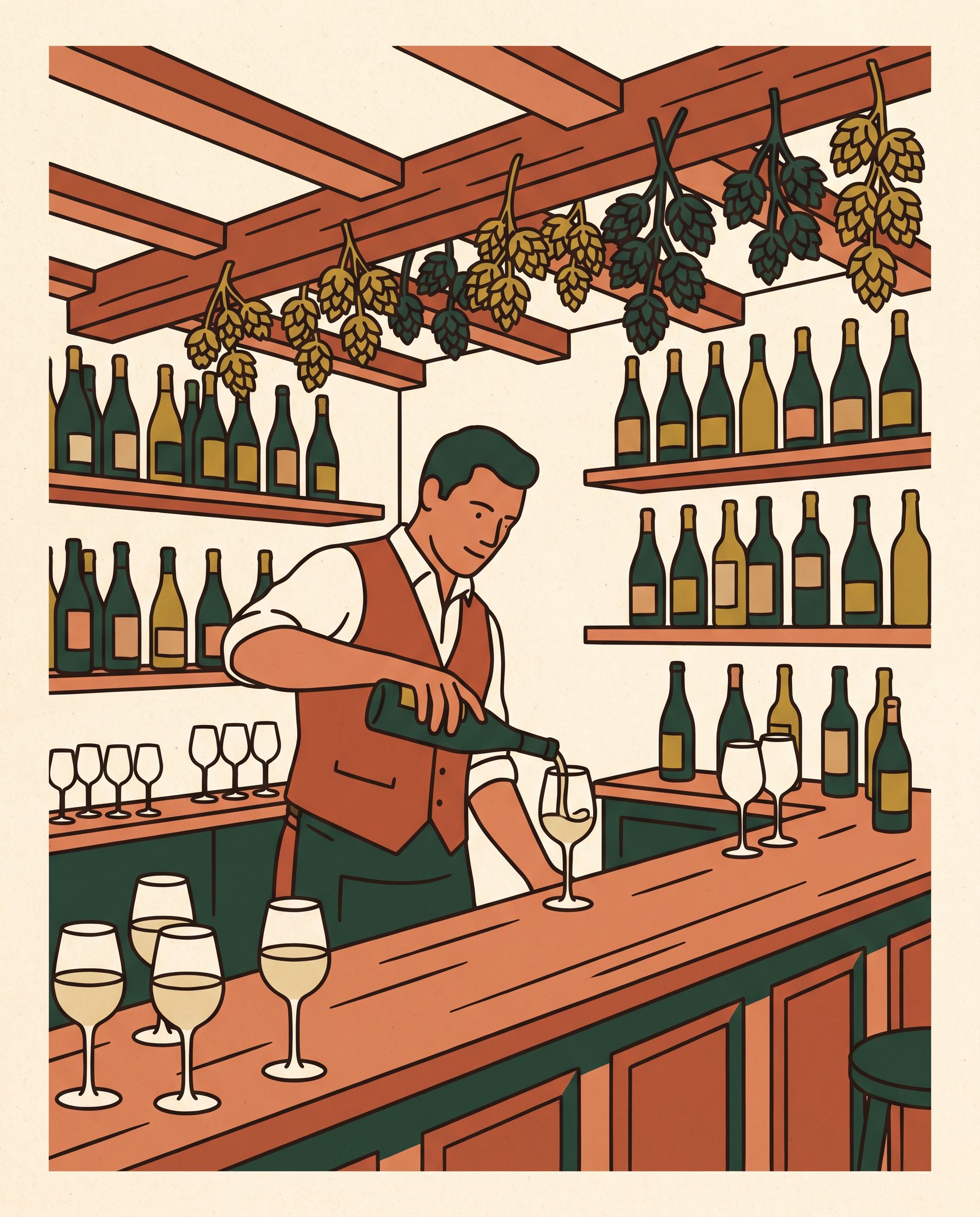
Strasbourg takes its thirsts seriously. It sits in a major wine region with seven grape varieties, it is the historic birthplace of French brewing, and for the last decade it has had a real speciality coffee scene.
Rather than another list of the ten best bars, here is a local's method: choose by what you actually feel like drinking, know which area to look in, and know what a normal price looks like so you can spot the ones taking advantage.
Six verified addresses to start with
The method below works anywhere in the city. These addresses, whose trading status and location we have checked, are what it looks like in practice.
Rouge
Krutenau: a natural and biodynamic wine bar with a serious local craft beer list alongside, and boards to share. The spirit of the Krutenau in one room.
Le XX Bar a Vins
Krutenau: the reliable choice in the quarter for drinking Alsatian by the glass, in a warm and unfussy room.
Cafe Bretelles
57 rue de Zurich in the Krutenau, and 36 rue du Bain-aux-Plantes in La Petite France: the pioneer of speciality coffee in Strasbourg, open since 2014, roasting from Mokxa, gentle extractions and home cooking.
La Kulture
Krutenau: speciality coffee by day, also from Mokxa, and a bar with a cultural programme at night. The hybrid address of the moment.
Academie de la Biere
17 rue Adolphe-Seyboth in La Petite France, and 29 rue des Juifs: over a hundred beers from Alsace and around the world, open late, with an old bistro interior on the Petite France side.
Further in: the connoisseurs' shortlist
A complementary selection, cross-checked against the 2025 nightlife guide published by the local press (Pokaa, "Le Lardon").
Le Purgatoire
34 rue de Zurich in the Krutenau: a wine bar installed in a former chapel, somewhere between a warm tavern and a cabinet of slightly unhinged bottles. One of the most surprising interiors in the city.
Jaja
4 place Saint-Nicolas-aux-Ondes in the Krutenau: a pocket-sized natural wine tavern with a sharp selection and a relaxed terrace.
Leobar
36 rue du Fosse-des-Tanneurs: around seventy wines, many of them biodynamic, properly made cocktails, and continuous service until late.
Cafe des Sports
16 rue Sainte-Helene: a vintage panelled bistro with a table football, hundreds of wines, many natural, and craft beer. The loudness is deliberate.
Le Grincheux
27 rue du Vieux-Marche-aux-Vins: the beer and whisky institution of the centre, and the pints are the best value in the area according to the local press.
Le Boui-Boui
28 rue Finkwiller: a twenty-two square metre neighbourhood bar run like somebody's front room, with local wine and beer. The exact opposite of the big addresses.
In the mood for Alsatian wine: the cellars and wine bars
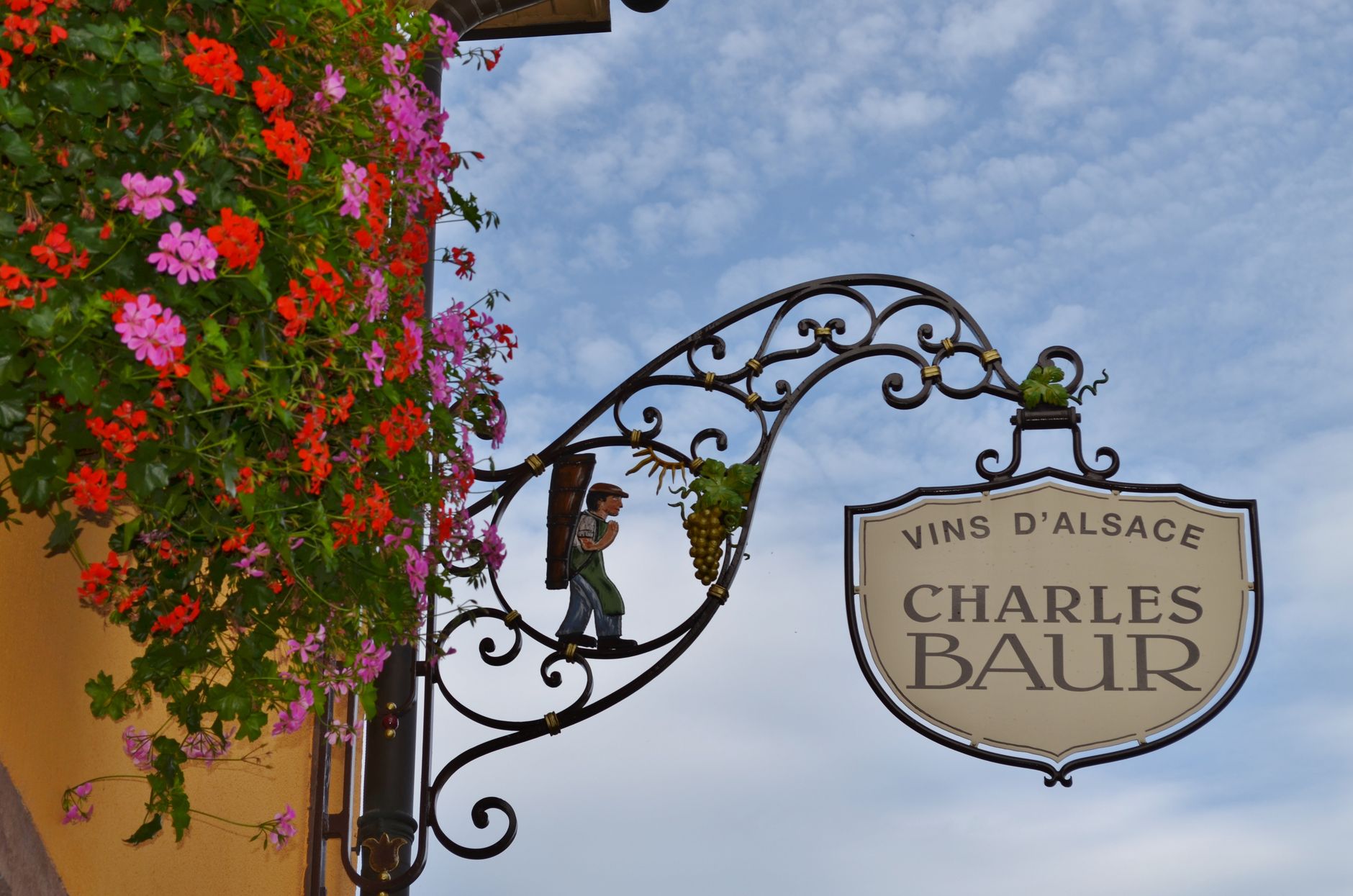
This is the obvious local move and the one visitors use worst. Most leave having tasted nothing but an entry-level gewurztraminer, which is a bit like judging Burgundy on supermarket chardonnay.
The cellars and wine bars of the centre pour the region by the glass, and that is the best school there is. Ask for a riesling from granite soil and then a modern pinot noir aged in barrel, and two glasses will tell you why Alsace is having a renaissance.
The signs that never lie: the list names the growers and not only the grape varieties, the staff can talk about every bottle, and natural and biodynamic wines sit alongside the classics. The areas to look in are the centre around rue des Tonneliers, and the Krutenau for the natural wine generation.
In the mood for beer: the brewing cradle owns it
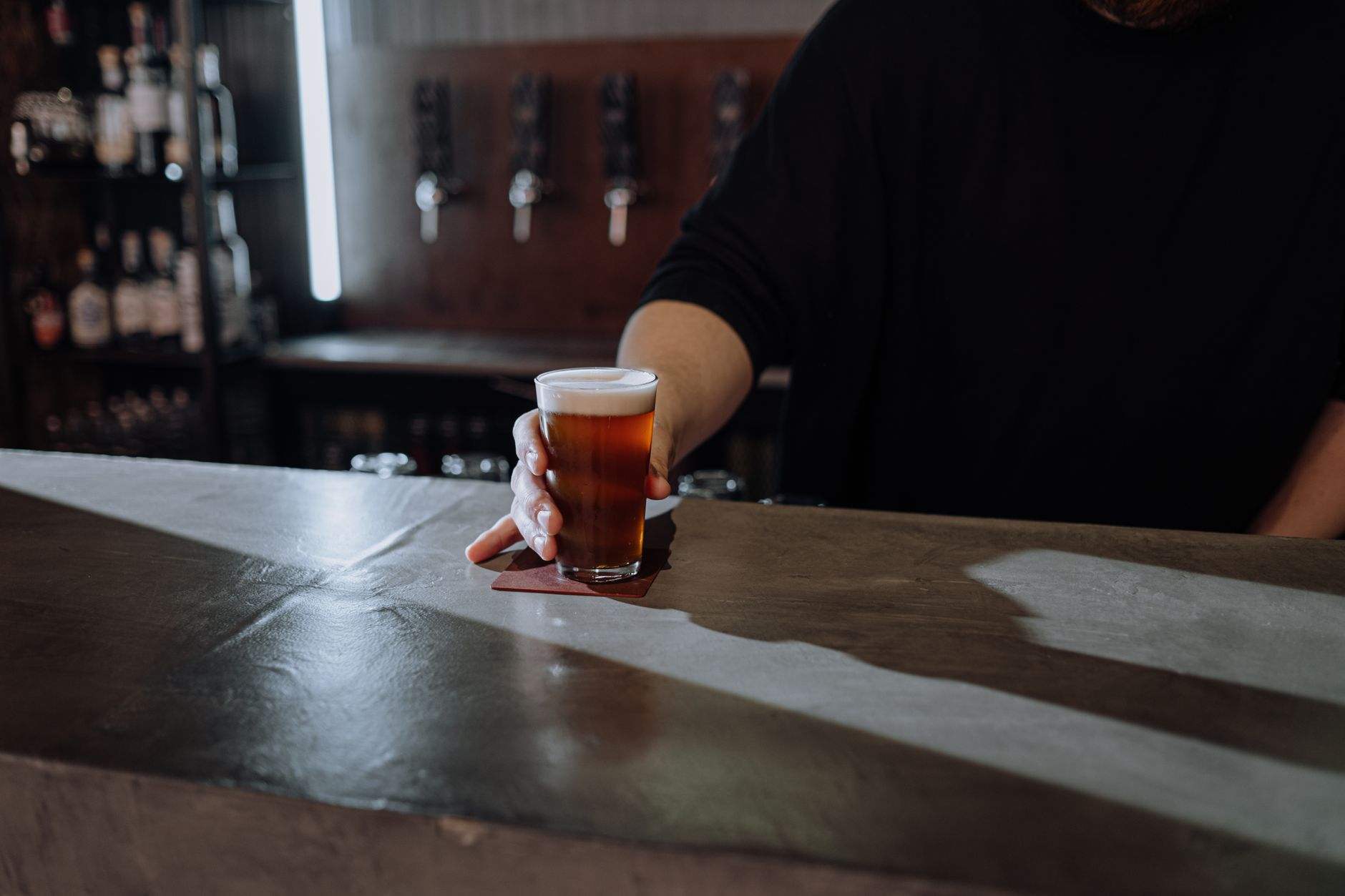
It is easy to forget, but French beer started here. Kronenbourg is named after a Strasbourg district, Fischer after a brewing dynasty from Schiltigheim, the neighbouring town that was once known as the city of brewers.
The industrial heritage has given way to a dense craft scene: the specialist bars of the centre and the Krutenau rotate Alsatian microbreweries on changing taps, local IPAs included. The right question to ask is what is brewed within 30 kilometres, about 20 miles.
One point of vocabulary that catches British and Irish visitors out. Ordering "une biere" gets you a demi, which is 25cl, roughly half a British pint. If you want the larger glass, ask for "une pinte".
The student atmosphere of Place d'Austerlitz makes it the natural starting point for a crawl, and the quayside terraces take over in warm weather.
In the mood for coffee: the new wave landed
Speciality coffee has properly taken hold in Strasbourg. Several local roasters serve precise filters, single-origin espresso and flat whites that deserve the name, usually in pared-back rooms that contrast nicely with all that winstub panelling.
You will find them in the centre, in the Krutenau and towards the Neustadt. They are the right answer for an afternoon break between two areas, or for a breakfast that is not another hotel croissant.
In the mood for winter: tea rooms and mulled wine
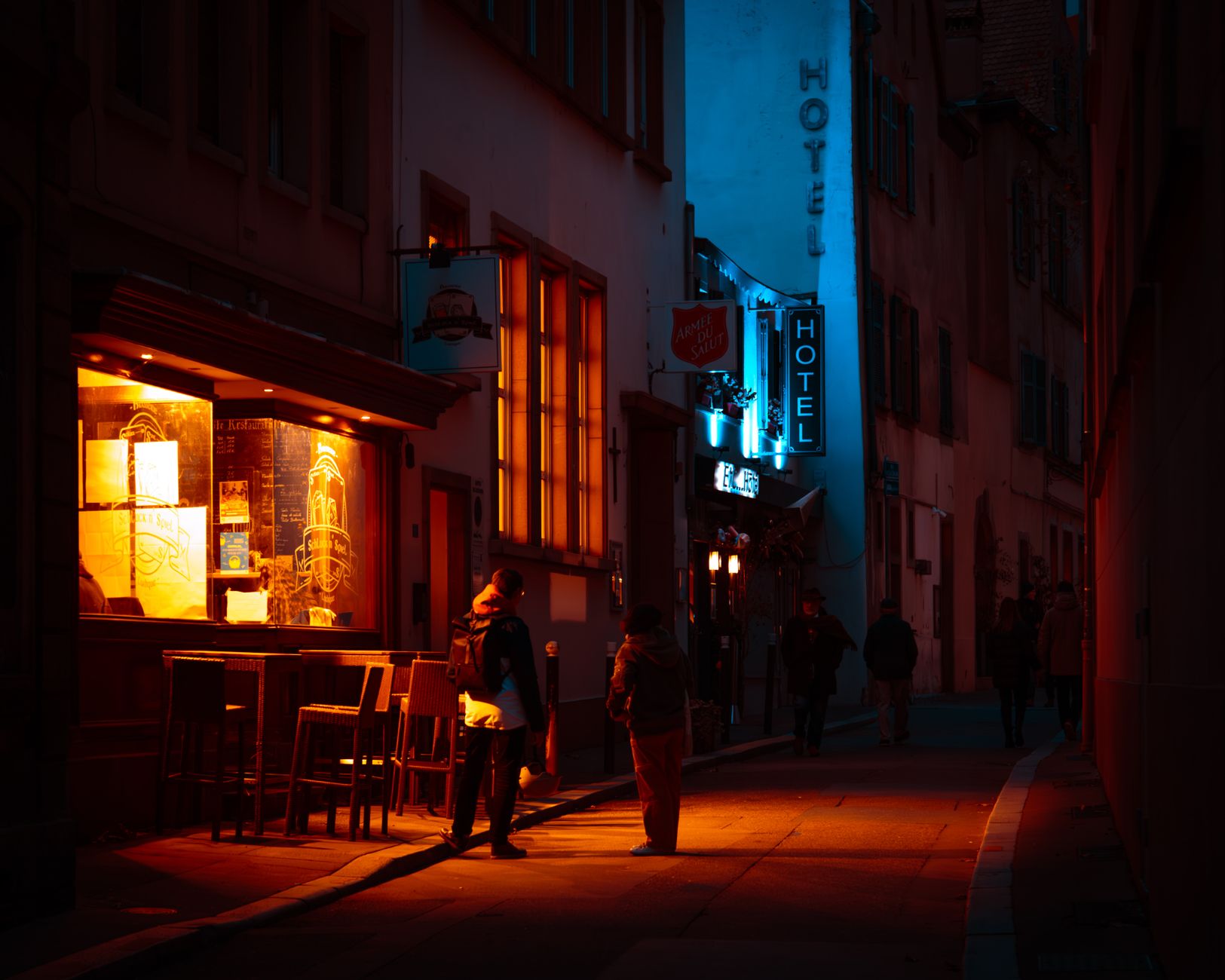
When the cold settles over the Alsace plain, the tea rooms take over: thick hot chocolate, kougelhopf, tarts, and bredele biscuits in season. Some of the old houses in the centre are closer to heritage sites than businesses, and you go as much for the mouldings and the tilework as for the pastry.
And from 27 November to 24 December, the mulled wine of the Christmas market becomes an open-air institution. Order the white version, which is the Alsatian one, less sweet and less heavily spiced than the red. Cups carry a refundable deposit, so hand yours back at the chalet rather than taking it home unless you want the souvenir.
In the mood for a terrace: summer by the water
An evening that starts early and finishes early is an argument for sleeping among the bars rather than beside the cathedral. The Krutenau and the quays are where that works, and our guide to where to stay in Strasbourg is honest about the trade, including which streets you will hear through the window.
Strasbourg moves outdoors the moment the weather allows. The best terraces are on the water: quai des Pecheurs and quai des Bateliers on the Krutenau side, Place du Marche-Gayot hidden in its courtyard in the centre, and the seasonal guinguettes that set up along the Ill.
The local ritual is the aperitif at six in the evening, when the sun comes in low across the facades. Be aware that Strasbourg is not a late-night city: the evening starts early, and most bars are shut not long after midnight.
The classic traps
- Cathedral-view terraces at cathedral prices: you are paying for the pink sandstone, not for what is in the glass.
- Gewurztraminer by default: it is the tree hiding the Alsatian forest. Let yourself be steered towards a dry riesling or a serious pinot noir.
- Mistaking volume for quality at happy hour: good cellars generally do not run one, and that is a good sign.
What comes next in this section
After an evening in the Krutenau or around La Petite France, the walk home matters. Our guide to where to stay in Strasbourg helps you book within a few streets of these bars rather than across the city.
If the wine is what brought you, the vineyard itself starts half an hour away: the Alsace Wine Route guide covers the seven grape varieties and how to reach the growers without a car. And to eat between rounds, see Alsatian food: what to eat.
Our rule here, as everywhere: we only list what we actually drink in, bills paid. Detailed pages for our favourite addresses are being added one by one, each with the area, the observed prices and the right occasion.
Prices noted on Strasbourg menus in 2025 and 2026: orders of magnitude that vary by address.
Frequently asked questions
Which is the best area for a drink in Strasbourg?
How do I order Alsatian wine by the glass properly?
What beer should I drink in Strasbourg?
Where can I drink mulled wine in Strasbourg in winter?
Do bars in Strasbourg stay open late?
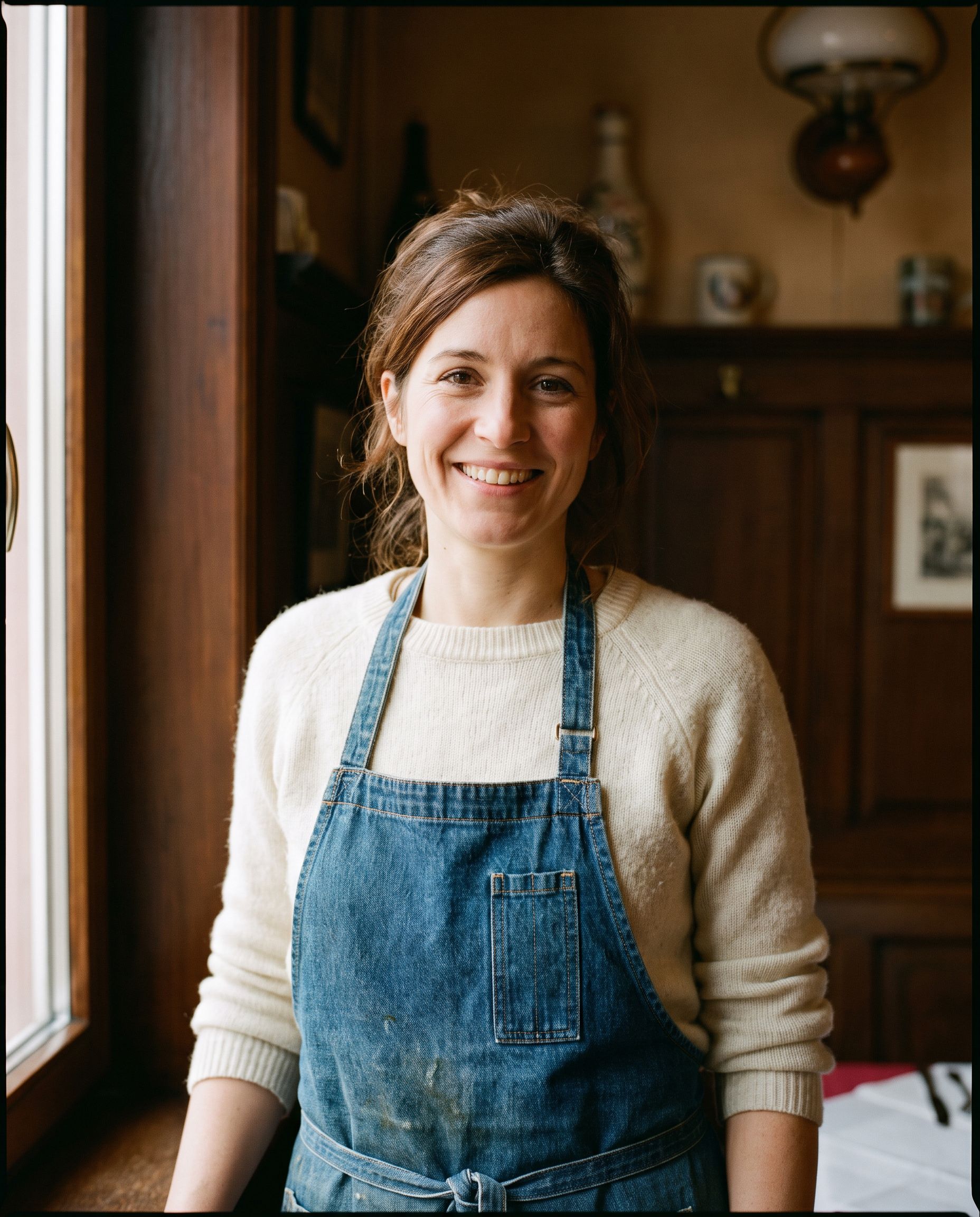
Camille Roth
Born in Schiltigheim, Camille spent ten years working in Strasbourg kitchens before swapping the apron for a notebook. She writes about winstubs, the city's newer tables and Alsatian produce. Her rule: never recommend an address she would not send her own parents to.