Strasbourg Off the Beaten Path: What Is Really Unusual
Half the hidden Strasbourg you read about is walled up or closed. Here is what genuinely opens its doors, and the quarter no English guide sends you to.
Hidden, secret, off the beaten path: these are the most abused words in Strasbourg tourism. They get attached to sights everyone already visits, to gift-box hotel stays, and to underground passages that have been bricked up for years.
We went through the list. Here is what genuinely opens its doors, what no longer does, and what nobody has ever been able to give an address for.
What is genuinely unusual, and genuinely open
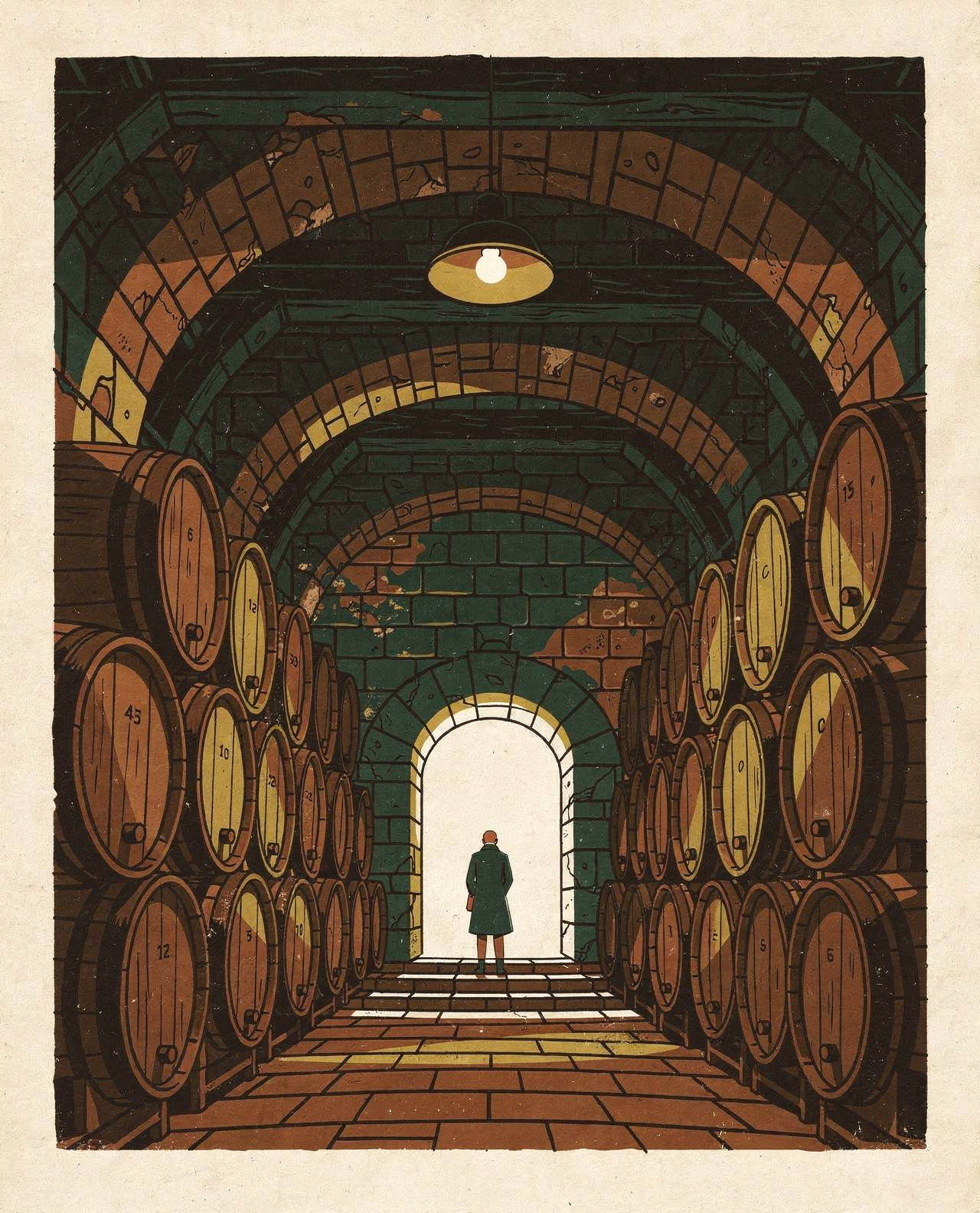
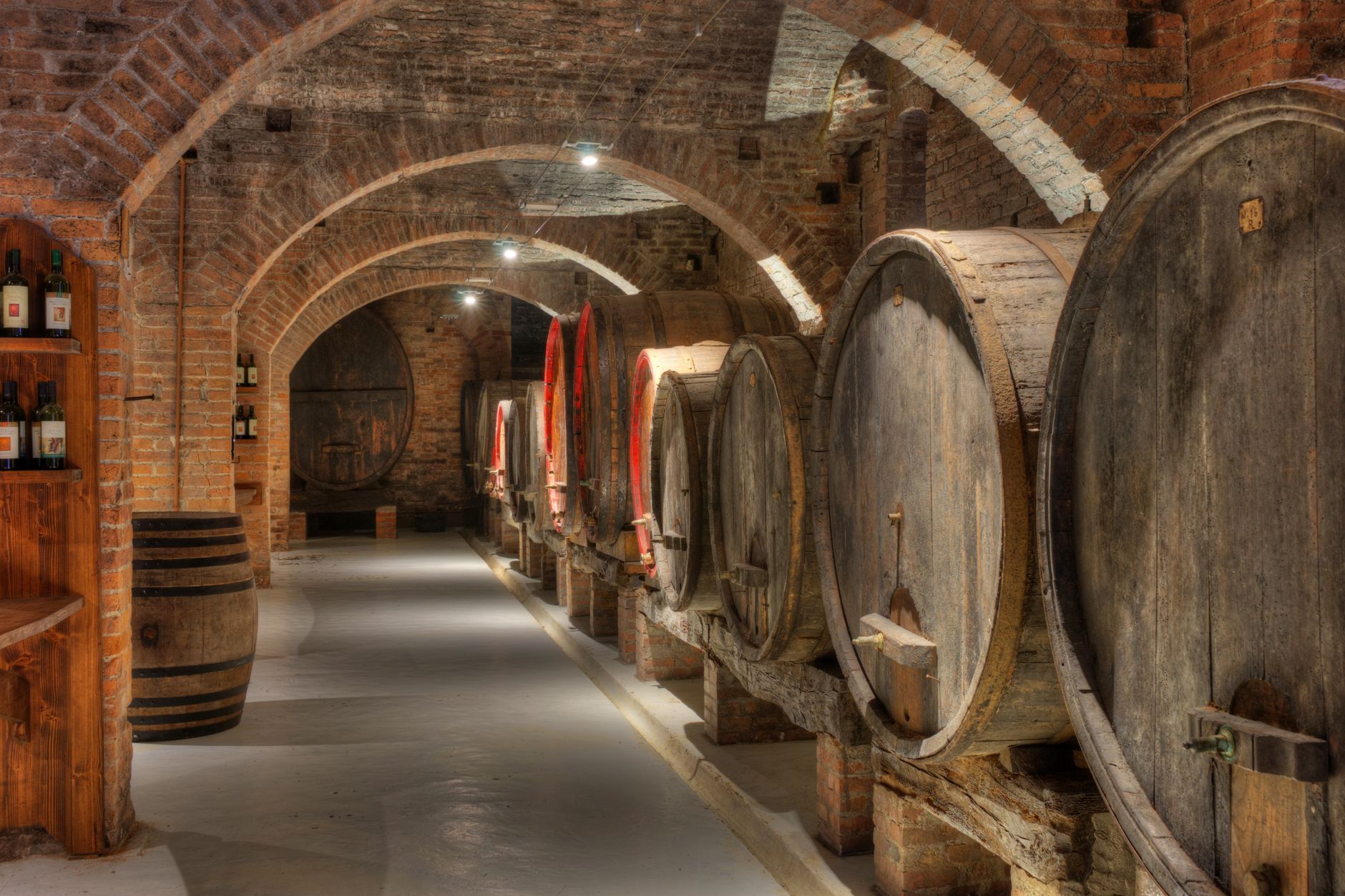
The historic cellar of the Hospices
Beneath the courtyard of the civil hospital at 1 place de l'Hopital, a fifteenth-century wine cellar with monumental casks and a barrel of 1472, one of the oldest wines in the world still in wood.
Walking round on your own is free during opening hours, and the audio guide costs €5. It is open on weekdays and Saturday mornings, and closed on Sundays and public holidays, which is the detail that catches out weekend visitors.
Our reservation, and it matters on a page like this: it is no longer a secret. The tourist office promotes it and it sits high in visitor rankings. It is extraordinary, but you will not be alone in it.
The Caveau Gurtlerhoft, a fourteenth-century cellar you can eat in
A short walk from the cathedral, a restaurant installed under fourteenth-century vaults. You get in as a customer, because there is no separate heritage visit.
It is the simplest way to see a real medieval Strasbourg cellar without waiting for a heritage weekend. We are not quoting prices: we could not verify the current menu.
The ring of Prussian forts
This is the genuinely overlooked seam, and it is outside the city walls. Strasbourg is encircled by a ring of German forts from the end of the nineteenth century, built when the city belonged to the German Empire, and several of them are opened by volunteer associations.
For anyone who came here for European military history rather than half-timbering, this is the most interesting thing in the region and nobody writes about it in English. Fort Ducrot-Podbielski, on rue du Fort-Ducrot at Mundolsheim, runs guided visits and open days.
The most reliable window is the European Heritage Days in September, when access is free. For the current edition that is 19 and 20 September, 2pm to 6pm on Saturday and 10am to 6pm on Sunday.
These openings are occasional and repeated from year to year without a permanent calendar, which is simply what volunteer-run sites are like. Look at the Heritage Days programme rather than hoping for a visit on a Tuesday in March.
The Maginot Line, less than an hour away
Several works in the Bas-Rhin run guided Sunday visits for a voluntary contribution, and shelters such as the Heidenbuckel at Leutenheim open free of charge on certain Sundays.
Again, these are dates rather than opening hours. Check the calendar before you set off: these sites have no permanent ticket office.
The Neustadt: the quarter nobody writes about in English
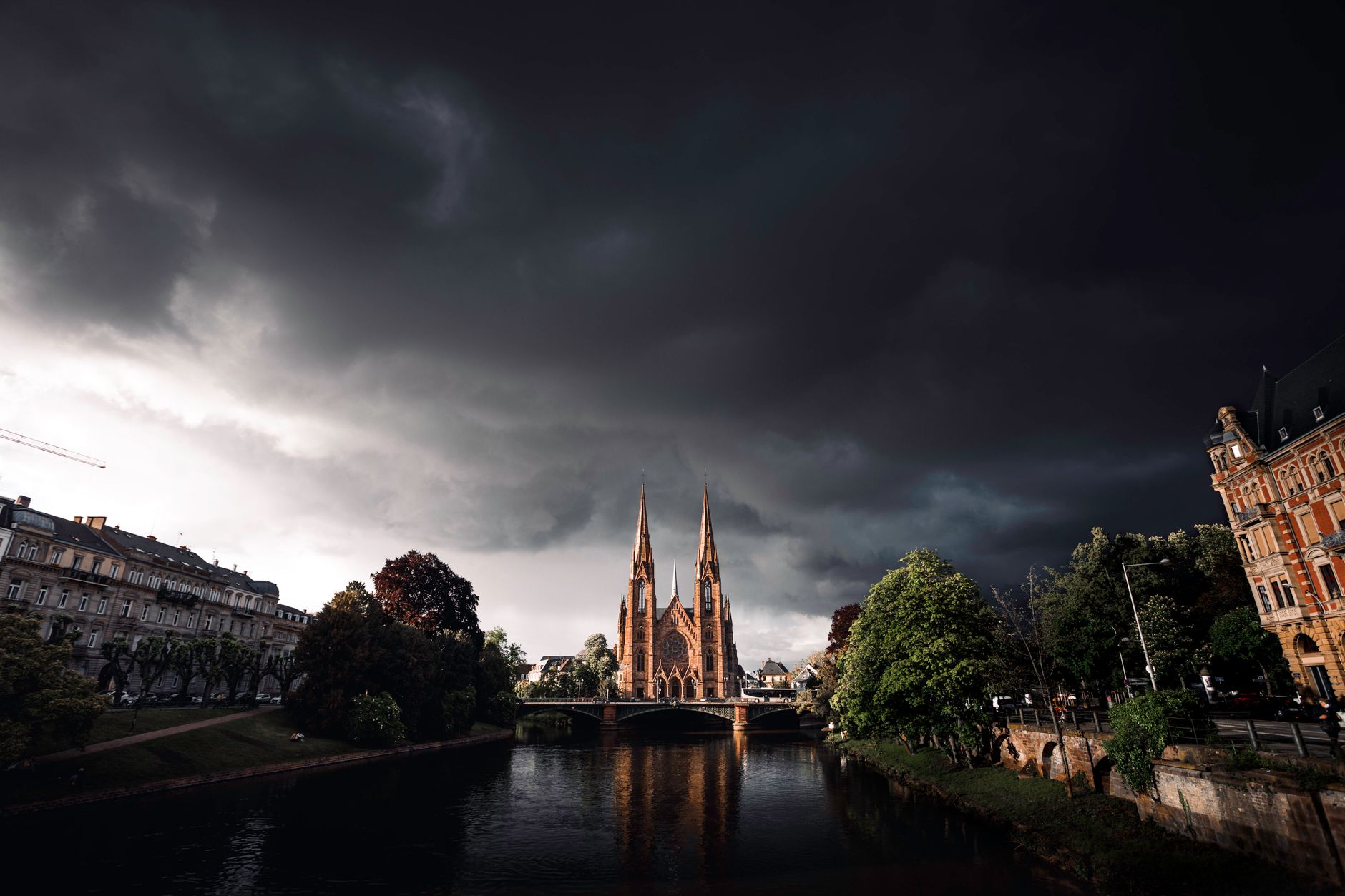
Every English-language guide to Strasbourg stops at the Grande Ile. The Neustadt has been on the UNESCO list since 2017 and remains almost entirely ignored by visitors, who turn back at place de la Republique.
The interest starts after that point. Strasbourg changed nationality four times between 1870 and 1945, and this quarter is the physical record of one of those changes: a whole new city laid out in a single go, monumental avenues, oversized facades, a circular garden ringed by state buildings, the Palais du Rhin.
You do not read that history on a panel here, you walk through it. It is free, it has no ticket and no crowd even in December, and it begins twelve minutes' walk from the cathedral. Ninety minutes on foot with no fixed route is the right dose, ideally at the end of an afternoon when the light hits the sandstone.
Further out, the Rhine port offers industrial heritage in the middle of being converted, between reclaimed docks and basins. It is not pretty in the postcard sense. That is exactly why it is interesting, and tram D takes you there.
The themed walks that really exist
The catch with all of those is the calendar and the language, neither of which is settled far in advance. If you want something that reliably runs and is given in English, a guided walk of the historic quarters is the dependable option, and it is only fair to say it is not off-piste: it is simply the one you can book before you travel.
The tourist office runs a walk billed as unusual Strasbourg, leaving from place de la Cathedrale and lasting about 1 hr 30, bookable online. It runs mainly in July and August, at the end of the day. Check which language it is given in when you book.
We are not publishing its price: it is not clearly displayed in public sources, and we would rather not invent a figure.
The same office runs other regular themes that leave the obvious route: Art Nouveau and Art Deco, surprising facades, the small squares of the old town, and a romantic Strasbourg walk. The calendar is not published a year ahead, so you look it up when you book.
On street art, the COLORS Urban Art festival turns entire quarters into an open-air gallery, free of charge, on 24 to 26 April. It is a festival rather than a guided visit, but the effect is the same.
What you cannot visit, whatever you read
This section is the reason this page exists.
- The underground bunker hospital at place des Halles. This military hospital of 1937 turns up in every secret Strasbourg article written. The city explicitly bans access and the entrances have been filled in or welded shut. A handful of tightly supervised visits have taken place, and there is no regular offer. Do not build anything on it.
- The shelter in the Heyritz park. A Second World War remnant, closed to the public, with at best exceptional openings run by associations.
- The tunnel under the civil hospices. A regional television report showed it, which was enough for it to start circulating as a visit. There are no scheduled public tours.
- The survival tunnels. The subject feeds sensational articles citing bunkers and crypts. None of it corresponds to anything you can actually book.
What we could not verify
Two staples of unusual-Strasbourg lists come up everywhere without ever carrying an address: the narrowest house in Strasbourg and the oldest shop sign in the city.
We looked. There are assertions on several blogs, no verifiable source, no confirmed location. Until that changes, we are not putting them on a map.
The same goes for the hidden inner courtyards of the old town. They exist, they are beautiful, and they are semi-private spaces with no hours and no visiting arrangement. You find them by wandering, you do not plan them.
Unusual places to stay, and what the word is doing there
If what you want is a building with something to say, you do not have to leave the city to find one. This one stands in the Neustadt, the quarter this page keeps sending you to, and its Art Nouveau glass roof is a good deal more unusual than a cabin an hour away with no bus to it.
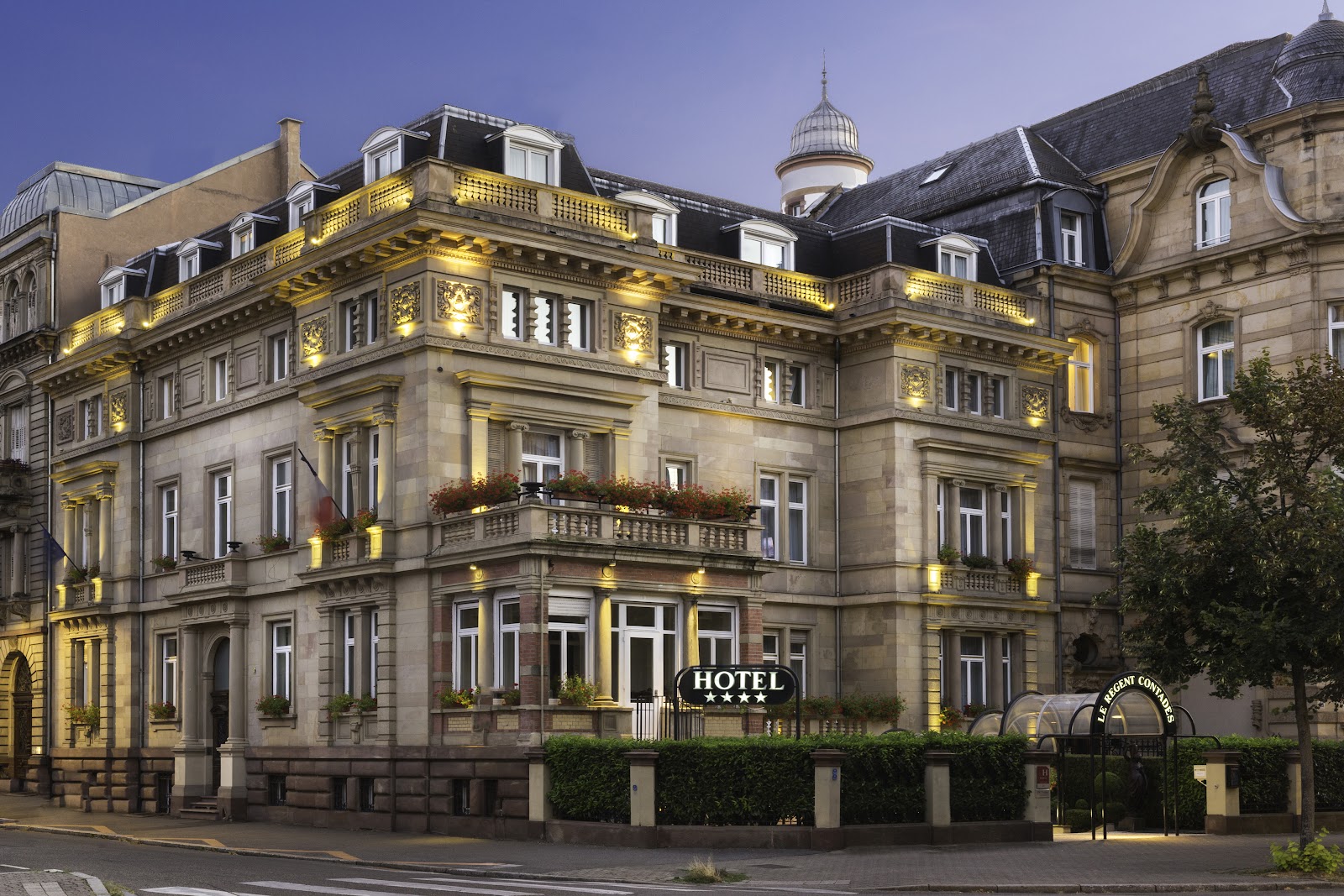
Régent Contades★ 4,4 · 874 reviews
Barges and houseboats on the canals, gypsy caravans, cabins in the woods: the offer exists in the region and it is pleasant.
Let us be clear on one point. In accommodation, unusual is a marketing argument, not a heritage category. These places are heavily marketed, often sold through gift-experience platforms, and several are far enough from Strasbourg to make visiting the city awkward.
Two checks before you book: the real distance to the centre, usually greater than the listing suggests, and public transport access, generally non-existent. If your aim is the city rather than the night, look at where the quarters actually are first.
An off-piste day
If you have already done the cathedral and Petite France, this is what we would do.
- Morning: the historic cellar of the Hospices, free, then the hospital quarter that nobody walks through.
- Midday: lunch under the fourteenth-century vaults at the Caveau Gurtlerhoft.
- Afternoon: the Neustadt beyond place de la Republique, on foot and without a route, then the Palais du Rhin.
- End of the day: the Rhine port and its docks, by tram D, for the contrast.
One day, free apart from lunch, and you will barely cross a tour group.
And if you want something genuinely rare
The honest answer is not a place, it is a date: the European Heritage Days in September. It is the only moment when the forts, the administrative buildings, the backstage areas and the association-run sites all open at once, free.
The rest of the year, unusual Strasbourg is mostly a question of walking through the quarters nobody crosses.
To plan the rest, our what to see in Strasbourg covers the essentials, La Petite France gives the detailed walk, and our itineraries fit both into a stay.
Sources: the historic cellar of the Hospices de Strasbourg, practical information page, for opening, free entry and the audio guide; Strasbourg tourist office for the themed walks; association calendars and regional press for the openings of Fort Ducrot-Podbielski, the Maginot Line and the Heidenbuckel shelter; the City of Strasbourg and local press for the closure and sealing of the place des Halles bunker; the COLORS Urban Art programme. The price of the unusual Strasbourg walk, the Caveau Gurtlerhoft menu, and the locations of the narrowest house and the oldest shop sign are not documented in a verifiable way, so they do not appear here. Association openings are occasional: check the date before you travel.
Frequently asked questions
Can you visit the underground bunker at place des Halles?
What is the most unusual thing to do in Strasbourg?
Can you visit the German forts around Strasbourg?
Is the Neustadt worth visiting?
When is the best time for hidden Strasbourg?
Théo Lindner
Théo grew up between Strasbourg and the Vosges. He walks every route before publishing it, times every leg, and would rather cut a stop than pretend a day is longer than it is.