Where to Eat Real Choucroute in Strasbourg
Three verified winstubs, the four signs of a properly made choucroute, and which areas of Strasbourg to search in and which to avoid.
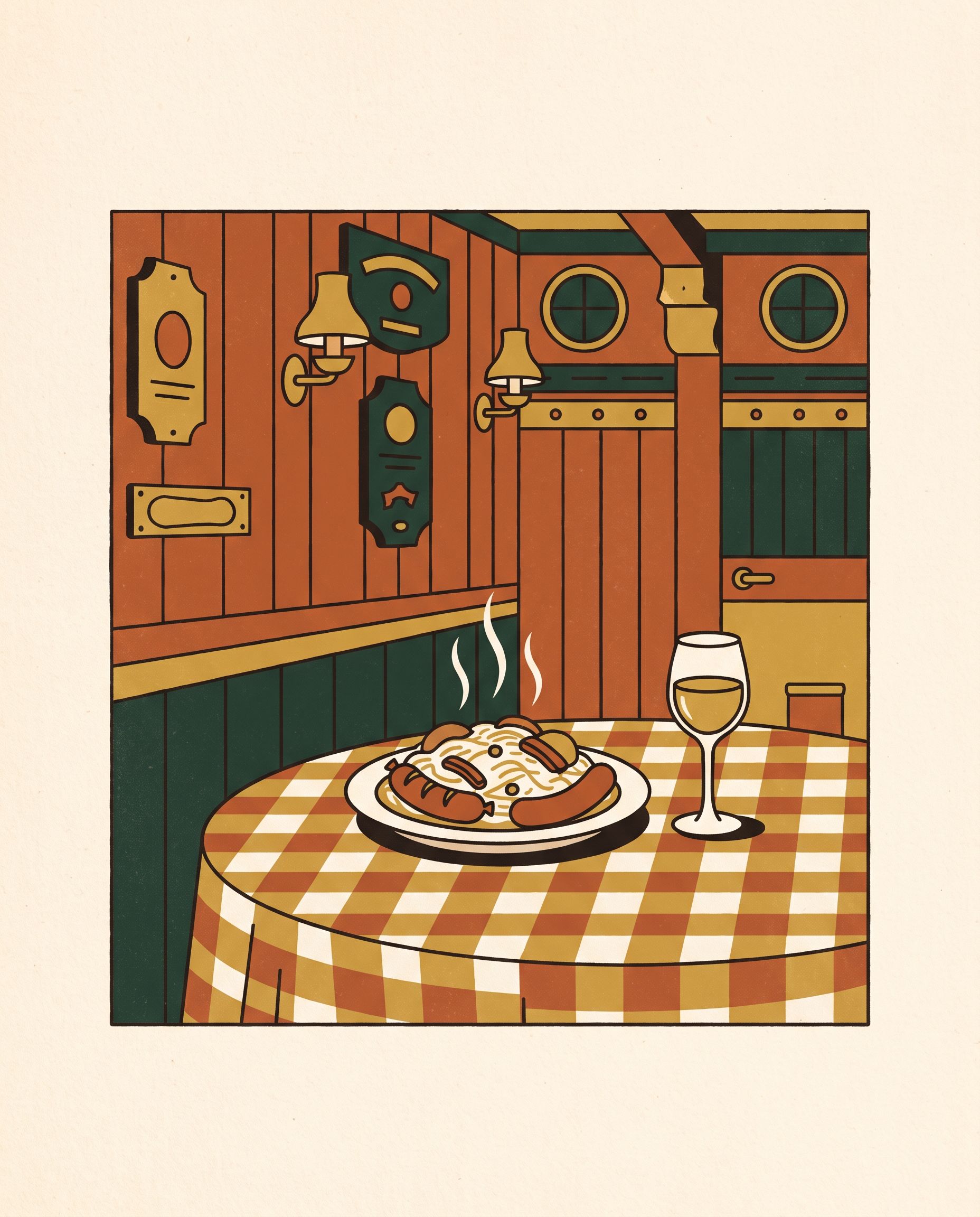
Choucroute is to Strasbourg what bouillabaisse is to Marseille: on every menu in town, rarely worth ordering. Between brasseries reheating catering trays and inflated tourist set menus, you need to know how to recognise a good one and where to go looking.
This page is about where to eat one. If you want to know what the dish actually is, how it differs from German sauerkraut and what else is on an Alsatian menu, that is covered in Alsatian food: what to eat.
First, what a winstub is
A winstub, pronounced roughly "vinn-shtoob", began as a wine room: an Alsatian grower's front room where the family sold its own wine, with simple local food alongside. Today it is the traditional Alsatian bistro, all dark panelling and checked tablecloths, and it is the natural home of choucroute.
The short menu is the point. A real winstub cooks a dozen dishes, changes the daily specials, and lists Alsatian growers on the wine card. Anything calling itself a winstub while offering forty dishes in six languages is a restaurant wearing a costume.
Three safe choices, verified
Three institutions whose address and trading status we have checked, and which locals and serious guides agree on. They are the obvious starting points, and they are booked accordingly.
Chez Yvonne, the benchmark since 1873
10 rue du Sanglier, two minutes from the cathedral. This is the reference winstub in Strasbourg: panelling, checked cloths, the Alsatian repertoire cooked seriously rather than performed.
The price of fame is that you book two to three weeks ahead outside the Christmas season. During the market the house suspends bookings entirely and seats people in the order they arrive, so turn up before 7pm.
Au Pont Corbeau, the last family winstub
21 quai Saint-Nicolas, beside the Alsatian Museum. Gault & Millau calls it the last family-run winstub in the city, and it reads that way from the door. Choucroute nouvelle when it is in season, a set lunch, and the quiet feel of a room full of regulars.
Zuem Strissel, the historic headquarters
5 place de la Grande Boucherie, facing the old customs house. One of the oldest winstubs in Strasbourg, and the interior alone justifies the visit. The choucroute keeps up with the room, which is not always the case in old buildings.
What makes a choucroute a real one
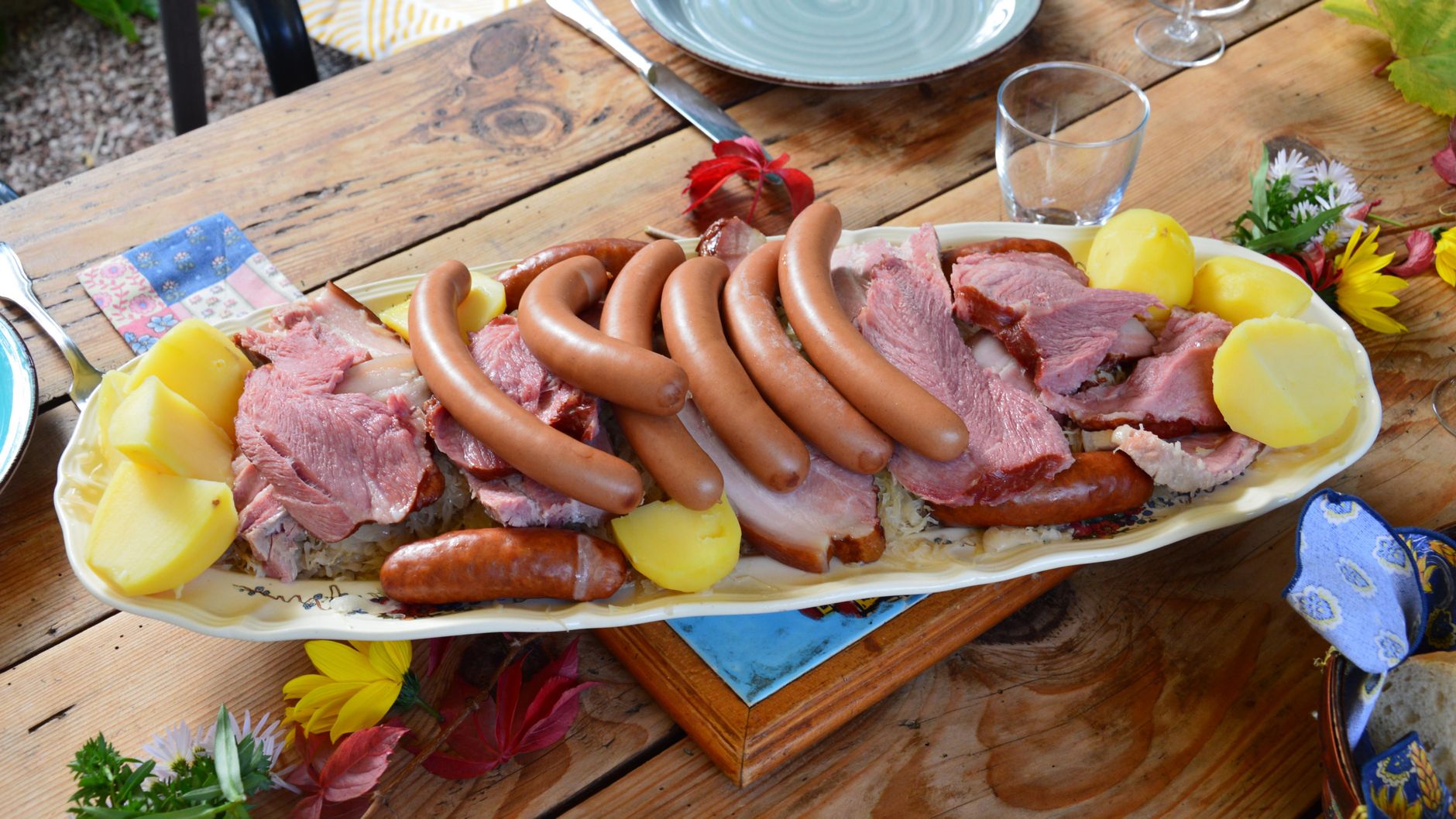
You can judge a plate before the first mouthful. Four things separate a kitchen that makes its own from a kitchen that opens a tin.
- Cabbage with bite, never drowned or greyish: it should keep a fresh edge of acidity. Alsatian choucroute cabbage has held a protected geographical indication since 2018, and most of the French crop grows in the Ried, a few kilometres from Strasbourg.
- Cooked in dry white wine, riesling or sylvaner, with juniper berries. Cabbage boiled in water gives itself away by its flatness on the first bite.
- Meats cooked separately: the smoked bacon, the Strasbourg sausages, the smoked shoulder and the knuckle have not simmered together in the cabbage. Each piece keeps its own taste.
- Whole potatoes, soft rather than collapsing, and ideally a liver dumpling, the traditional garnish that has become rare.
Price is the fifth test. A choucroute priced conspicuously below what the winstubs on the same street charge has been thinned out, and the cabbage came from an industrial bucket.
The rest of the tourist-trap checklist, the photographed menu in six languages and the man in Alsatian costume outside the door, is set out in our guide to Alsatian food.
Where to look, area by area
Which area you sleep in changes what you eat the next day, because you will not walk far for lunch. Our guide to where to stay in Strasbourg covers the same areas from the other side.
On the Grande Ile: the institutions
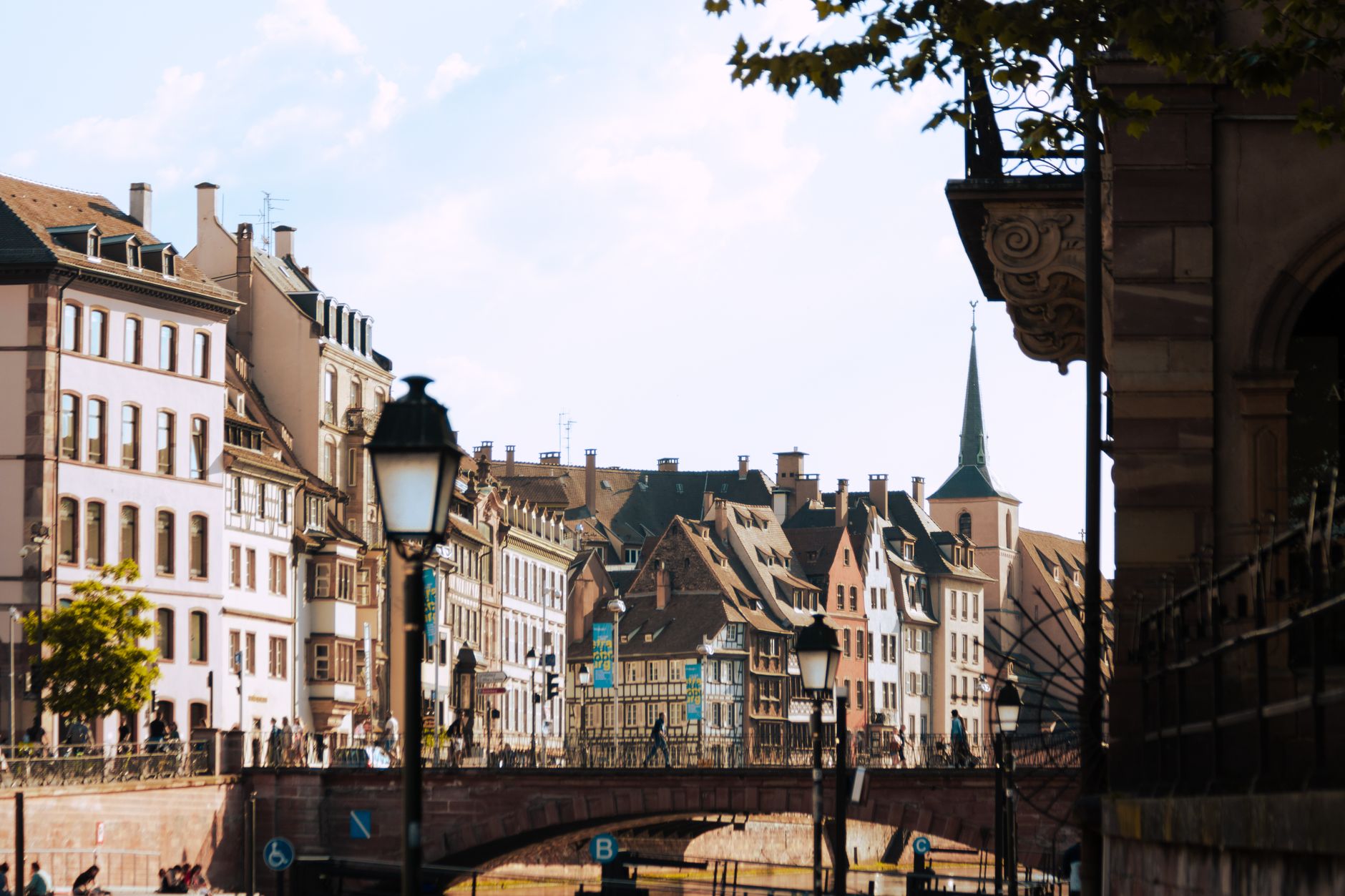
The historic centre holds the oldest winstubs, some of them trading since the sixteenth or seventeenth century. The reliable ones show three signs: a panelled room worn in by decades of use, handwritten daily specials that genuinely change, and tables of local people talking loudly.
Aim for weekday lunch. That is the service the kitchen runs for its regulars rather than for coach groups. The streets around the cathedral and towards Place du Marche-aux-Cochons-de-Lait are the historic heart of the genre.
In the Krutenau: the next generation
The student quarter, ten minutes' walk from the cathedral, hides a younger generation of tables that rework the Alsatian repertoire without betraying it: named farm suppliers, cabbage fermented in house, Alsatian wine by the glass from organic growers.
Portions stay generous and the bill is usually gentler than in the centre. This is where you take the friend who is certain they do not like choucroute, and they leave converted.
La Petite France: the trap and the exception
Let us be honest: the most photogenic quarter of Strasbourg also has the highest density of tourist traps. The canal-view terraces charge you for the view, and the plate arrives as an afterthought.
There are still a few serious houses, generally on the streets set back from the water. The golden rule applies here more than anywhere: walk away from the laminated menu in six languages with photographs of the food.
The variants worth ordering
Once you know the classic garnie, the rest of the repertoire is more interesting than the menus suggest. Fish choucroute, made with pike-perch and smoked haddock in a beurre blanc, is a genuine local speciality, finer and surprisingly light.
Choucroute nouvelle appears in September and October, made with cabbage from the first fermentation: milder, slightly crunchier, and only on the menu for a few weeks. And the liver dumpling divides tables but tells you where the dish came from.
What to drink with it
A dry riesling from Alsace is the canonical match: its acidity cuts the fat of the meats and answers the acidity of the cabbage. Sylvaner, quieter, works just as well at the table.
On the beer side, a local blonde is a perfectly legitimate popular pairing, and Strasbourg remains the birthplace of French brewing. To finish like an Alsatian, take a dry plum or raspberry schnapps as a digestif.
Booking, and when to turn up
Book the table, then book the bed in the same few streets. A choucroute is a long, heavy dinner and the last thing anyone wants afterwards is a tram across the city: our guide to where to stay in Strasbourg sets out which quarters put you a short walk from the winstubs.
Book. Real winstubs are small rooms, often under fifty covers, and heavily used by locals. The day before is enough in a normal week, several weeks ahead for a December dinner, and some houses stop taking bookings altogether during the Christmas market.
Watch the closing days too. Many traditional houses shut on Sunday evening and again on Monday, which is how visitors end up in the worst restaurant on the square.
How we choose
We eat at these places and we pay our own bills, we go back before recommending anything, and a table that slips comes out of the guide.
Detailed pages for our favourite winstubs are being added to this section one by one, each with the area and the right occasion.
Guide verified on the ground in Strasbourg. Prices noted on 2025 and 2026 menus: orders of magnitude that vary by establishment and by season.
Frequently asked questions
Where is the best choucroute in Strasbourg?
What exactly is a winstub?
Do I need to book a winstub in Strasbourg?
What should I drink with choucroute?
Is there an alternative to the classic choucroute garnie?
Camille Roth
Born in Schiltigheim, Camille spent ten years working in Strasbourg kitchens before swapping the apron for a notebook. She writes about winstubs, the city's newer tables and Alsatian produce. Her rule: never recommend an address she would not send her own parents to.